
Affiliate Marketing for Beginners: A Step-by-Step Guide

Modest Mitkus · November 12, 2026
Affiliate marketing for beginners boils down to this: you recommend someone else's product, and you earn a commission every time a person buys (or signs up) through your unique link. You don't need to create the product, handle support, or ship anything. You just need an audience, a trustworthy recommendation, and a program that pays you.
This guide walks through the whole thing in plain English: how the money flows, the ways you can get paid, where to promote, and a step-by-step plan for your first 90 days. There's also a twist near the end for people who'd rather run their own affiliate program than join someone else's.
How Does Affiliate Marketing Work?
Affiliate marketing works through three parties: a seller who owns the product, an affiliate who promotes it, and a customer who buys it. A tracking link connects all three so the seller knows exactly who sent each sale.
Here's the flow in practice:
- A seller (say, a software company) opens an affiliate program and offers a commission.
- You join, and you get a unique link or code.
- You share that link in a post, video, email, or social profile.
- Someone clicks, a small cookie remembers who referred them, and they buy.
- The seller pays you your cut, usually on a monthly schedule.
The customer pays the same price either way. The commission comes out of the seller's marketing budget, which is why companies love it: they only pay when something sells.
And it's a big business, not a side-hustle fad. The Performance Marketing Association found that U.S. affiliate marketing spending hit $13.63 billion in 2024, up 49.8% from $9.1 billion in 2021. That money generated $113 billion in e-commerce sales and accounted for 9.4% of all U.S. e-commerce sales that year. Companies keep pouring money in because it works.
The Main Ways Affiliates Get Paid
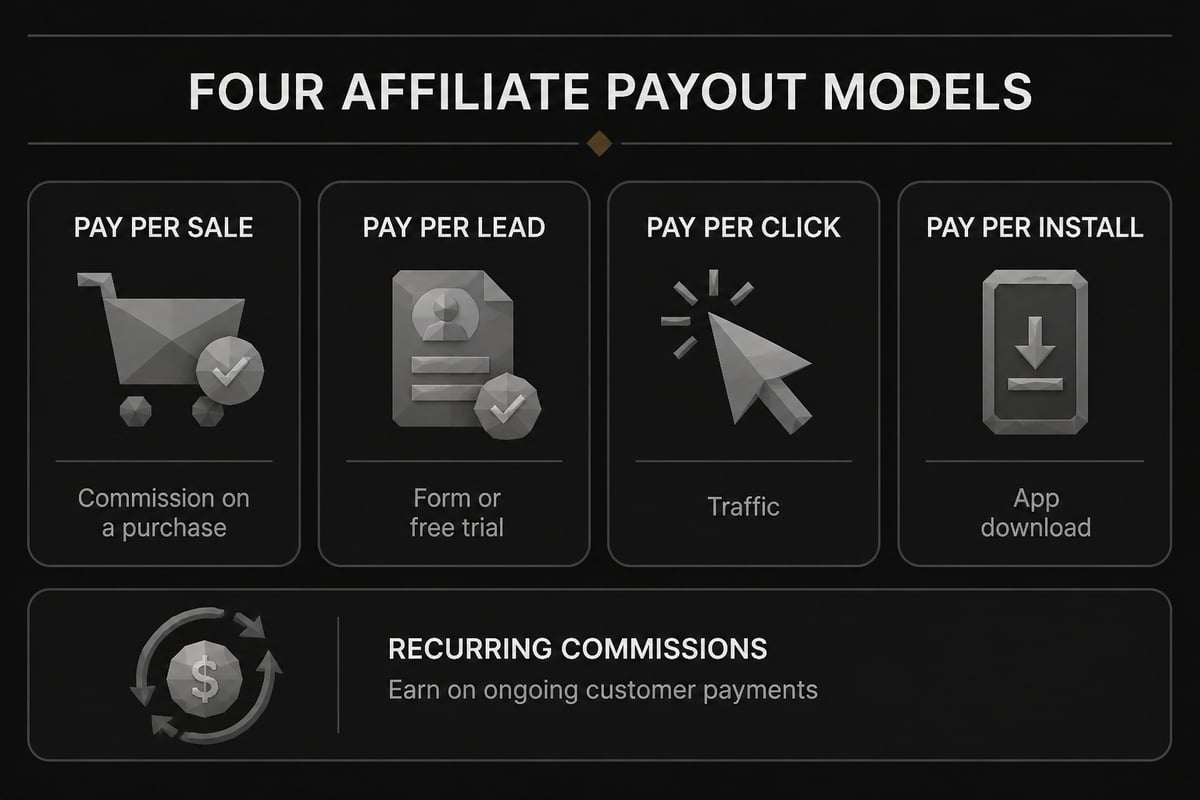
Affiliates typically get paid in one of four ways, depending on what action the seller wants to reward. The model matters because it changes how hard you'll work for each dollar.
- Pay per sale: You earn a percentage or flat fee when someone buys. This is the most common model and usually the best paying.
- Pay per lead: You earn when someone fills out a form, books a demo, or starts a free trial. Payouts are smaller, but conversions are easier.
- Pay per click: You earn for traffic itself, whether or not anyone buys. These programs are rarer and pay very little per click.
- Pay per install: You earn when someone downloads and opens an app. This one is popular with mobile apps and games.
Some programs pay once. Others pay recurring commissions, meaning you earn a slice every month for as long as the customer stays subscribed. For beginners, recurring programs are worth hunting for, because one good recommendation keeps paying you long after you hit publish.
Where to Promote Affiliate Products
You can promote affiliate links anywhere people pay attention to you, so pick the channel that matches how you naturally communicate. Trying to be everywhere at once is the fastest way to burn out in month two.
Blogs and search
A blog post that answers a specific question, like "best budgeting app for freelancers," can bring in buyers for years. It's slower to start, but traffic from search compounds. If this appeals to you, a basic grasp of SEO for startups will help your posts get found.
YouTube and short video
Video builds trust fast because people see you actually using the thing. Tutorials, honest reviews, and "how I built this" walkthroughs all convert well. Short-form platforms work too; the playbook in TikTok digital marketing applies directly.
Email lists
Email is the most underrated channel. Your subscribers chose to hear from you, so a well-timed recommendation converts better than almost anything else. Our guide to lead magnets shows how to grow a list from scratch.
Social media and communities
Instagram, X, Reddit, and Facebook groups all work if you add value first and link second. Communities punish spam fast, so lead with help. If you're weighing growth options, a social media growth services comparison can give you a feel for what's out there, though real engagement always beats bought numbers when it comes to affiliate conversions.
Affiliate Marketing for Beginners: A Step-by-Step Plan
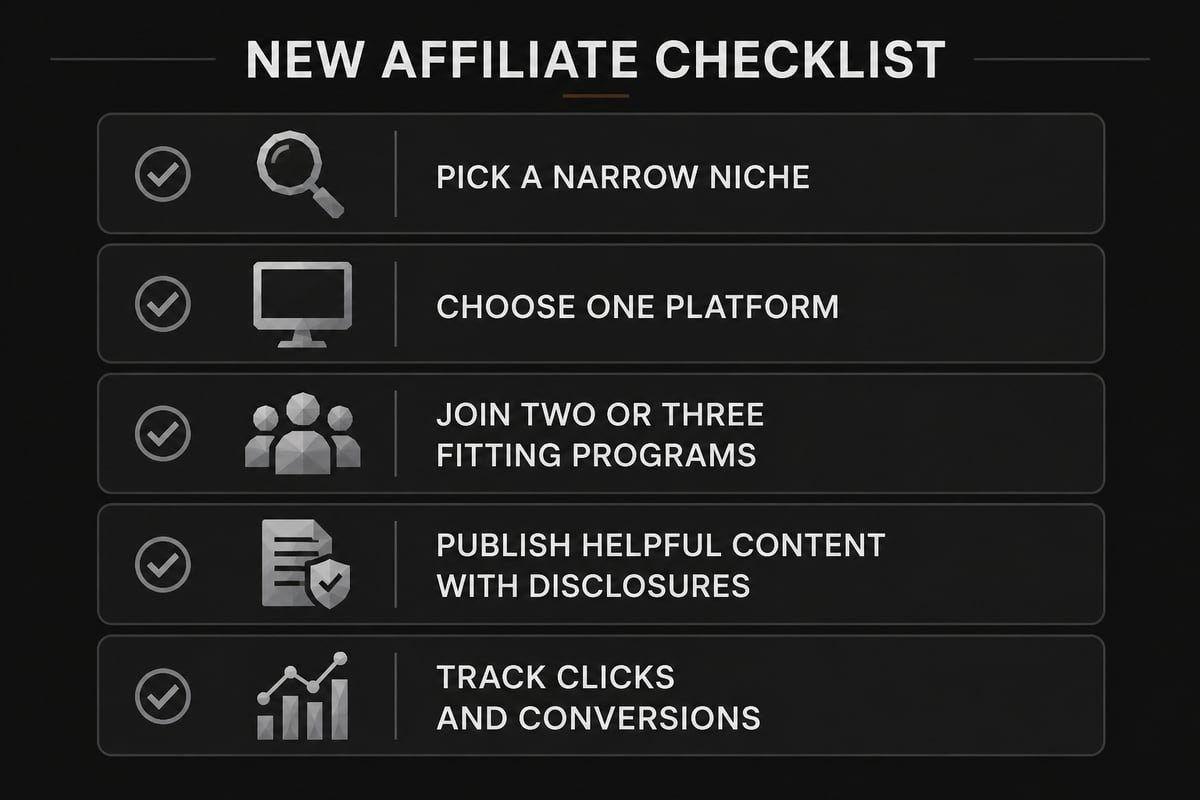
The best way to start affiliate marketing is to pick a narrow niche, build a small audience around it, join two or three relevant programs, and publish genuinely helpful content. Skip the "join fifty programs" advice and follow these steps instead.
- Choose a niche you can talk about for a year. Pick something you know or genuinely want to learn. "Productivity apps for freelancers" beats "technology."
- Define who you're helping. Write one sentence about your reader and their problem. Every piece of content should answer that problem.
- Pick a home base. One blog, one YouTube channel, or one email list. Start with one and add others later.
- Find programs that fit. Look for products you'd happily use yourself, with fair commission rates, decent cookie windows, and reliable payouts.
- Create helpful content first. Tutorials, comparisons, and honest reviews that solve the problem, with affiliate links placed where they're genuinely useful.
- Disclose and tag your links. More on that below.
- Track what works. Watch clicks and conversions, then double down on the posts and platforms that earn.
- Be patient. Most beginners need several months before meaningful income shows up.
What a realistic first 90 days looks like
Month one is setup: pick your niche, join programs, publish your first five pieces. Month two is consistency: keep publishing and start collecting an email list. Month three is review: find which pieces drive clicks, improve them, and write more like them. Don't expect riches here. Expect learning.
Do Affiliates Really Make Money?
Yes, affiliates really do make money, but the range is wide and most beginners earn very little at first. Income depends on audience trust, niche, commission rate, and how long you stick with it.
Can you make $10,000 a month? Some affiliates do, but they're usually years in, with a sizable audience and a handful of high-paying or recurring programs. Treat it as a long-term outcome, not a first-year promise. Nobody can guarantee a result, and you should be wary of anyone who does.
What separates earners from everyone else is usually simple:
- They focus on one niche instead of hopping around.
- They promote products they've actually used.
- They publish consistently for months, not weeks.
- They pick products with higher payouts or recurring commissions.
Staying Honest and Staying Out of Trouble
You need to disclose affiliate relationships and mark your links correctly, both for trust and for search. Readers appreciate transparency, and hiding the relationship backfires fast.
Add a short, clear disclosure near your links, something like "I earn a commission if you buy through this link, at no extra cost to you." On the technical side, Google recommends marking affiliate links with rel="sponsored", and rel="nofollow" remains acceptable. Google also notes that affiliate links are a common way for blogs and publishers to monetize traffic, as long as they're qualified properly. Do this from day one and you'll never have to go back and fix it.
A Smarter Angle: Run Affiliate Marketing for Your Own App
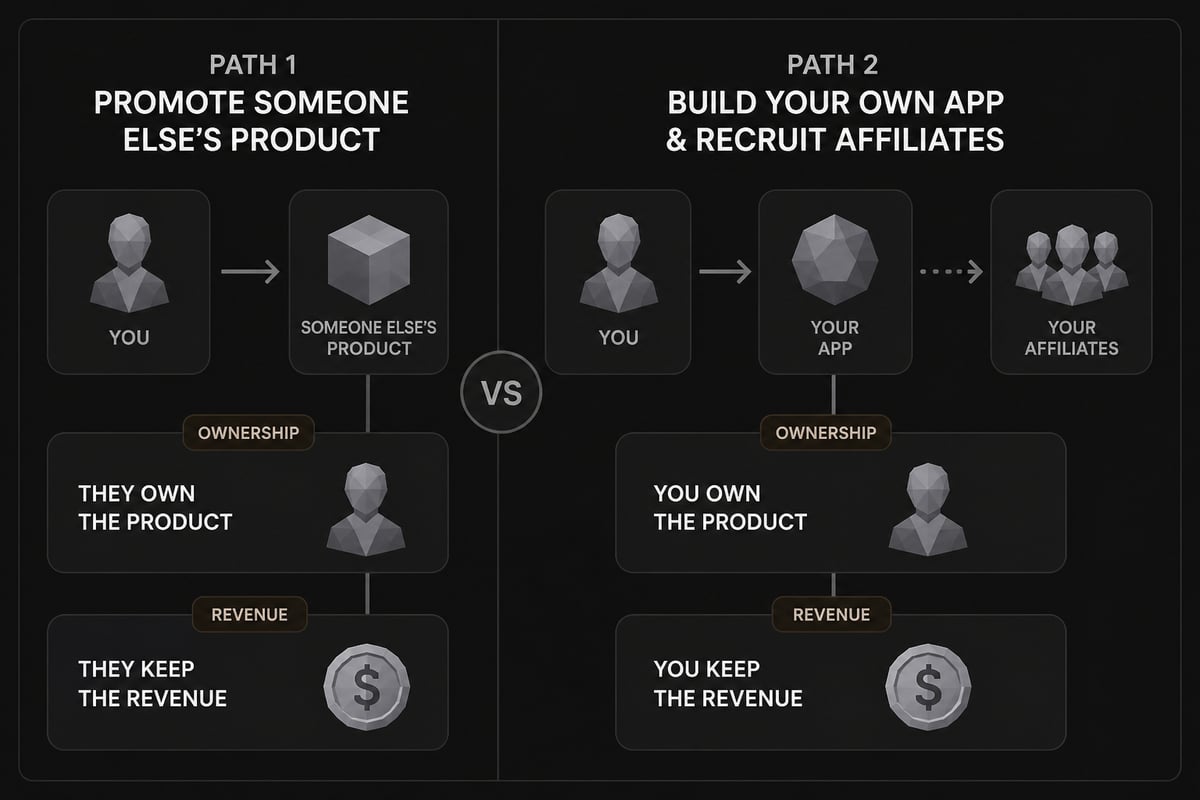
Instead of only promoting other people's products, you can build your own digital product and let affiliates promote it for you. This flips the model. You become the seller, and other creators earn commissions on your sales.
Why this matters if you're an aspiring app builder: affiliate commissions on someone else's product are capped by what they decide to pay. Your own product gives you the whole revenue line, plus a growth channel that costs you nothing until it sells. Even a small affiliate program can put your app in front of audiences you'd never reach alone.
You also don't need to code to get there. With vibe coding, you describe what you want and AI helps build it, which is covered in our guides on how to build an app with AI and vibe code. If you're starting from zero, mobile app development for beginners is a friendly place to begin.
The catch is that building the app is only half the job. Most app projects fail at marketing and selling, not at building. That's the gap CreateSell is built to close.

CreateSell teaches the full path, from finding an idea people will pay for to actually selling the app, and it works for web or iOS apps with no coding experience needed. It's built on a system that has been used to scale several products to tens of thousands of dollars per month, with products reaching $40k, $60k and $30k per month in revenue. There's also a community of builders shipping alongside you and sharing their first sales. It's paid, all sales are final, and it won't guarantee an income, so it's a fit only if you're ready to do the work.
What Are the Types of Digital Marketing?
Affiliate marketing is one of several digital marketing channels, and knowing the others helps you decide where to spend your time. The common ones are:
- Search engine optimization (SEO): earning free traffic from Google.
- Content marketing: blogs, videos, and guides that attract and educate.
- Email marketing: direct messages to people who opted in.
- Social media marketing: building an audience on social platforms.
- Paid advertising: buying traffic on search and social.
- Influencer marketing: partnering with creators who have an audience.
- Affiliate marketing: paying partners per result.
You don't need all of them. Most beginners do best by combining affiliate links with one content channel and one email list. For a broader view, our digital marketing 101 primer covers how these pieces fit together.
Common Beginner Mistakes to Avoid
Most early failures come from a short list of avoidable mistakes, so skip these and you're already ahead.
- Promoting anything that pays. If you wouldn't recommend it to a friend, don't recommend it to readers.
- Choosing a niche that's too broad. Narrow beats vague every time.
- Spamming links. One helpful link in a useful post beats ten in a thin one.
- Quitting after six weeks. Search traffic and audience trust take time.
- Ignoring email. Social platforms change; your list is yours.
- Skipping disclosure. It's the quickest way to lose trust.
FAQ
What is the best way to start affiliate marketing?
Pick a narrow niche you know, choose one platform such as a blog, YouTube channel, or email list, and join two or three affiliate programs for products you'd genuinely use. Then publish helpful content consistently and track what earns.
Do I need a website to do affiliate marketing?
No, but you need somewhere to share your links. A YouTube channel, email list, or active social profile can work, though owning a simple site or email list gives you more control over your audience.
How much does it cost to start?
You can start for very little. Most affiliate programs are free to join, so your main costs are optional ones like a domain, an email tool, or a course. Your biggest investment is time.
Your next step is simple: write down one niche and three products you'd happily recommend, then check whether each has an affiliate program. If you'd rather own the product and let others promote it, CreateSell shows you how to build and sell an app without coding, so join the waitlist and start turning your idea into something that sells.


