
Build App with AI: Your 2026 Guide to Creating Products

Modest Mitkus
May 23, 2026
Building apps used to mean learning complex programming languages, spending months in development, and burning through your savings before launching. But in 2026, artificial intelligence has completely flipped the script. You can now build app with ai tools that handle the heavy lifting while you focus on what matters: solving real problems for real people. Whether you're an entrepreneur looking to create your first digital product or someone ready to stop trading hours for dollars, AI-powered development is your ticket to building products that generate income while you sleep.
Why Build App with AI in 2026
The landscape has shifted dramatically. Traditional app development required teams of specialists, massive budgets, and months of back-and-forth iterations. Today's AI tools compress that timeline into weeks or even days.
AI-driven development isn't just faster. It's smarter. These platforms learn from millions of existing apps, understanding design patterns, user experience principles, and coding best practices that would take years to master manually. You're essentially getting a team of expert developers, designers, and QA testers rolled into one intelligent system.
Here's what makes AI app building different:
- No need to master Swift, Kotlin, or JavaScript from scratch
- Instant prototyping that turns ideas into working demos
- Built-in best practices that help you avoid common pitfalls
- Rapid iteration cycles that let you test and refine quickly
- Cost savings of 70-90% compared to traditional development
The democratization of app creation means anyone with a solid idea and willingness to learn can now compete in the digital marketplace. You're no longer locked out by technical barriers.
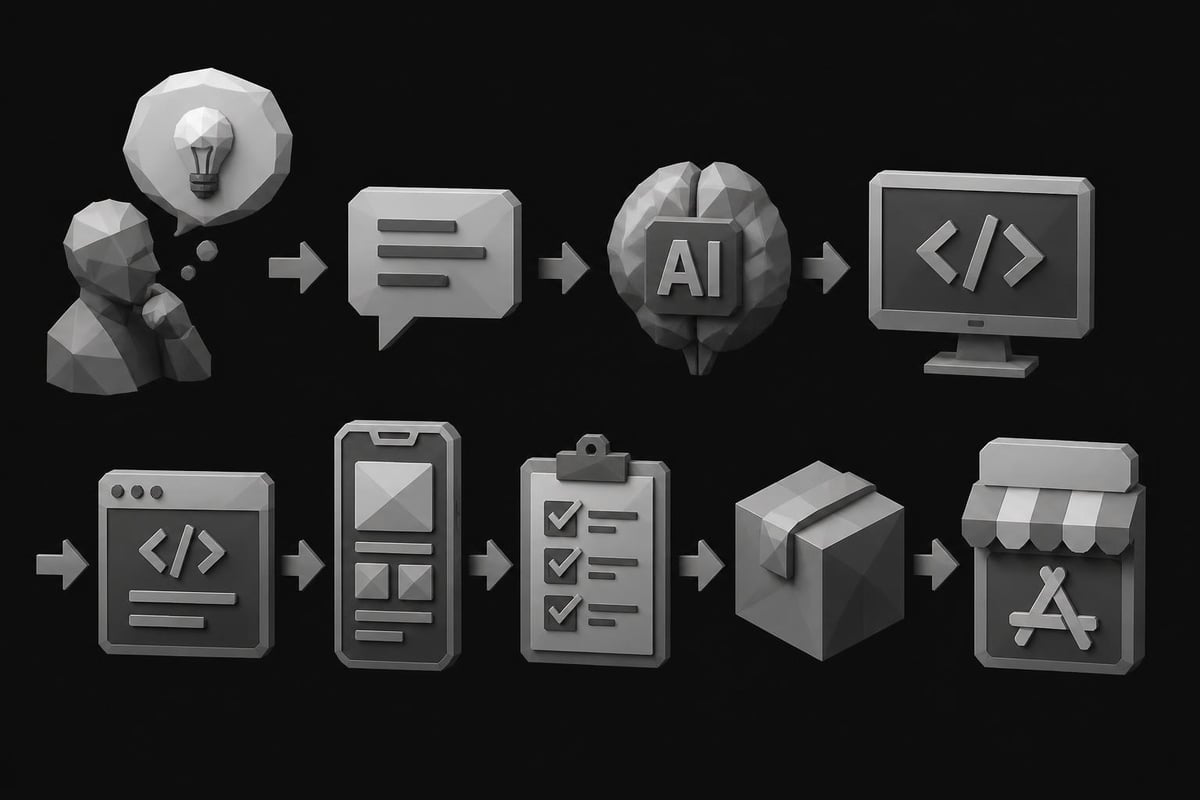
Getting Started: Choose Your AI Development Approach
When you build app with ai, you've got several paths to choose from. Each has its sweet spot depending on your technical comfort level and project complexity.
No-Code AI Platforms
These are your fastest route to a finished product. You describe what you want in plain English, and the AI generates the interface, functionality, and underlying code. Google's AI Studio represents this new wave, letting you create native Android apps from simple text descriptions.
The beauty here? You can literally say "I want a fitness tracking app that logs workouts and shows progress charts" and watch it come to life. These platforms handle the database structure, user authentication, and even basic UI design.
Low-Code with AI Assistance
This middle ground gives you more control. You work with visual builders but have AI copilots suggesting improvements, auto-completing complex functions, and catching errors before they become problems. Think of it like having an expert developer looking over your shoulder.
You'll drag and drop components, but the AI helps you connect them logically, optimize performance, and ensure everything works smoothly across devices.
Pro-Code Enhanced by AI
For those with some coding chops, AI tools augment your capabilities. You write the critical logic, and AI handles boilerplate code, generates test cases, and even refactors your work for better performance. Salesforce highlights how these pro-code, low-code, and no-code approaches are converging to streamline development.
| Approach | Best For | Time to Launch | Learning Curve | Flexibility |
|---|---|---|---|---|
| No-Code AI | Simple apps, MVPs | 1-2 weeks | Minimal | Limited |
| Low-Code AI | Most SaaS products | 2-4 weeks | Moderate | High |
| Pro-Code AI | Complex apps | 4-8 weeks | Steep | Maximum |
Essential Features When You Build App with AI
Not all AI development tools are created equal. You want platforms that give you the building blocks for real, profitable digital products.
Core capabilities to look for:
- Natural language processing that understands your intent
- Pre-built templates for common app types
- Database management without SQL headaches
- User authentication and security built-in
- Payment processing integration
- Analytics and tracking from day one
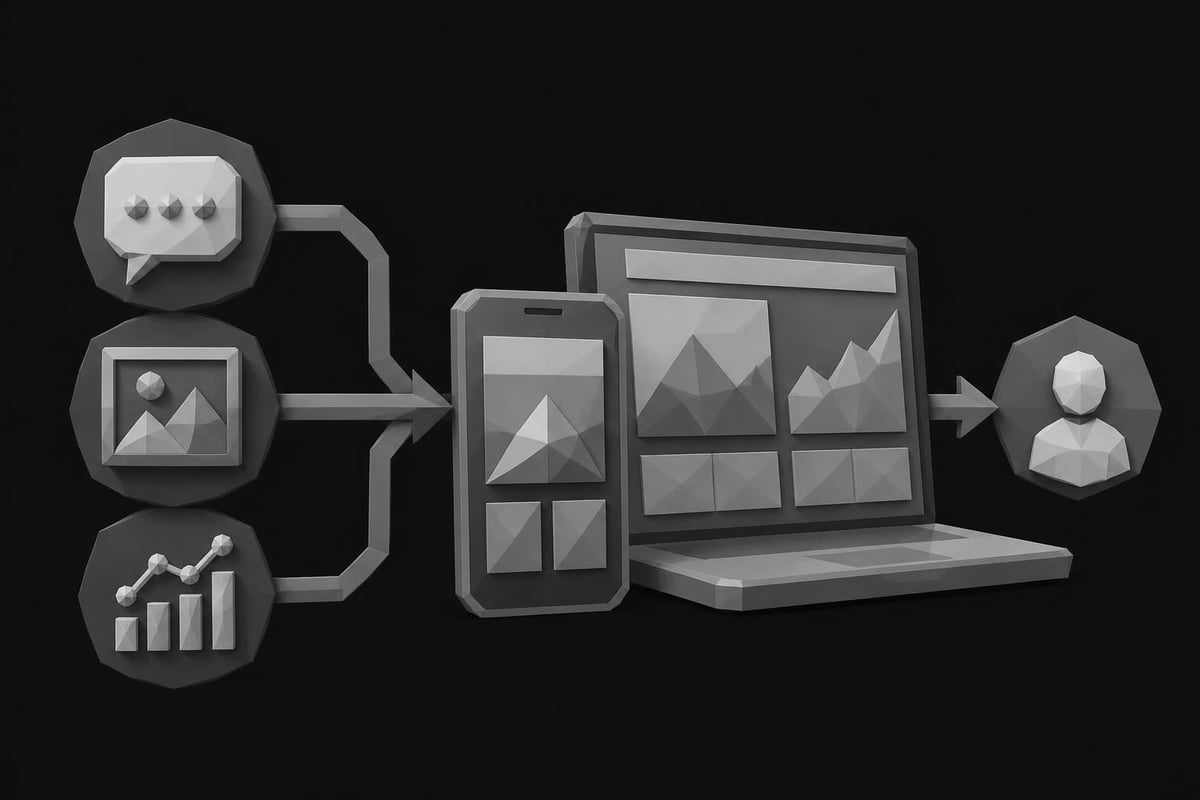
- Responsive design that works on all screen sizes
The goal isn't just to build an app. It's to build a product people will actually pay for. That means thinking beyond basic functionality to include features that drive conversion and retention.
Making Your App Intelligent
The real magic happens when you embed AI features directly into your product. Think recommendation engines, predictive text, image recognition, or chatbots that actually understand context.
Modern AI frameworks let you add these capabilities without a PhD in machine learning. You can integrate pre-trained models for common tasks or use AutoML platforms that build custom models based on your specific data.
For example, if you're building a recipe app, you could add image recognition that identifies ingredients from photos. Or a fitness app might use AI to analyze form in workout videos. These features transform a basic utility into something genuinely valuable.
Best Practices for AI-Powered App Development
Success with AI tools isn't guaranteed just because the technology is powerful. You need the right approach. Best practices for building AI-driven applications emphasize modular architecture and efficient data management as foundational principles.
Start with a crystal-clear problem statement. AI excels at implementation but can't define what problem you're solving. Spend time understanding your target users, their pain points, and what solution they'd actually pay for.
The Iterative Development Cycle
Build in sprints. Create a minimal viable product first, get it in front of real users, then iterate based on feedback. AI makes this cycle incredibly fast because you can modify and redeploy in hours instead of weeks.
- Define your core feature set (3-5 main functions)
- Use AI to generate the basic structure
- Test with a small group of beta users
- Gather feedback and identify friction points
- Refine and add secondary features
- Launch publicly and continue iterating
This cycle keeps you from over-building features nobody wants while ensuring what you do build actually solves real problems.
Data Quality Matters
Your app is only as smart as the data it works with. When you build app with ai that learns from user behavior, garbage data produces garbage results. Set up proper data collection from day one, establish clear privacy policies, and ensure you're capturing meaningful metrics.
Think about what actions indicate success in your app. Downloads don't matter if nobody uses it. Focus on engagement metrics, conversion rates, and retention statistics that tell you whether you're actually delivering value.
Security and Trust in AI-Built Applications
Here's something most people overlook: when AI generates your code, you still own the responsibility for security. The four-phase security approach for AI transformations should be part of your development workflow.
Phase one focuses on understanding what data your app handles and classifying sensitivity levels. Personal information, payment details, and health data all require extra protection.
Phase two involves implementing security measures at every layer. AI platforms typically handle basic security, but you need to configure permissions correctly, use encryption for sensitive data, and set up secure API connections.
Phase three is monitoring. Set up automated alerts for unusual activity, track failed login attempts, and regularly audit who has access to what data.
Phase four covers response planning. If something goes wrong, you need a plan to contain the damage, notify affected users, and prevent future incidents.
Most AI development platforms include security features, but they're not automatic. You have to turn them on and configure them properly.
Turning Your AI-Built App Into a Business
Building the app is step one. Turning it into a revenue-generating asset requires strategy. When you're ready to transform your technical skills into a sustainable business, programs like Build and Launch Your SaaS App in 14 Days provide the complete framework for going from concept to paying customers in two weeks, covering not just the build process but also marketing, pricing, and automation.
Pricing Your Digital Product
Don't fall into the trap of underpricing. Your app solves a problem, and that solution has value. Research what competitors charge, but also consider what result you're delivering. A productivity app that saves someone three hours a week is worth more than $2.99.
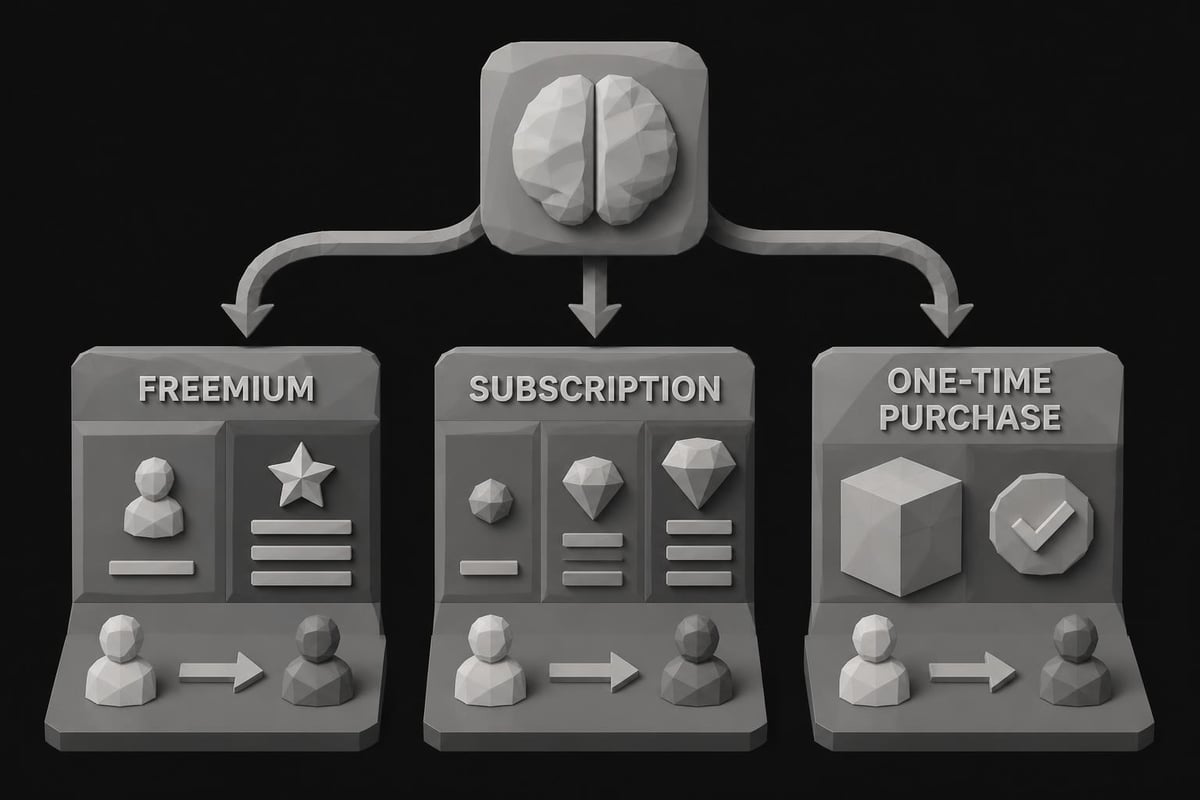
Consider these pricing models:
- Freemium: Basic features free, premium features paid
- Subscription: Monthly or annual recurring revenue
- One-time purchase: Single payment for lifetime access
- Tiered pricing: Multiple levels based on feature access or usage
Subscriptions create predictable revenue streams and work especially well for apps people use regularly. One-time purchases can work for utilities or tools people need occasionally.
Marketing Your AI-Built App
The best app in the world fails if nobody knows it exists. Start building your audience before you finish building your app. Share your development journey, show behind-the-scenes looks at how you're using AI, and collect email addresses from interested people.
When you launch, you'll have a built-in group of potential customers who've followed your progress and are invested in your success. This beats launching to crickets every single time.
Effective marketing channels for digital products:
- Content marketing through blog posts and tutorials
- Social media showing real use cases
- YouTube demos and walkthroughs
- Email marketing to your list
- App store optimization for discoverability
- Strategic partnerships with complementary products
The key is consistency. Pick two or three channels and commit to showing up regularly rather than spreading yourself thin across everything.
Common Pitfalls When You Build App with AI
Even with powerful AI tools, there are traps that snare first-time builders. Knowing what to avoid saves you months of frustration.
The feature creep monster is probably the biggest killer. AI makes it so easy to add functionality that you keep piling on features. Before you know it, your simple, focused app has become a bloated mess that confuses users. Resist the urge. Launch with core features, then expand based on actual user requests.
Ignoring mobile-specific considerations sinks a lot of projects. Just because AI can generate code doesn't mean it automatically optimizes for battery life, offline functionality, or varying screen sizes. Incorporating AI into mobile apps requires attention to user experience and personalization that goes beyond basic functionality.
Skipping user testing is tempting when you can build so fast. Don't do it. What makes perfect sense to you might completely confuse your users. Get your app in front of real people early and often.
Neglecting the business side happens to technical folks all the time. You get so focused on building that you forget to think about who will buy this, how they'll find it, and why they'd choose you over alternatives. Build the business alongside the product.
Staying Current with AI Development Tools
The AI landscape evolves weekly. New tools launch, existing platforms add features, and best practices shift as we collectively learn what works. You don't need to chase every shiny object, but staying informed helps you work smarter.
Follow key developers and platforms on social media. Join communities where builders share what they're working on. Most importantly, keep building. The best way to stay current is to have skin in the game with active projects.
Set aside time monthly to explore new tools or features in your existing platform. You might discover capabilities that let you add features you thought were impossible or streamline workflows that currently eat up time.
| Resource Type | What to Follow | Why It Matters |
|---|---|---|
| AI Dev Blogs | Platform updates, tutorials | Learn new capabilities |
| Builder Communities | Forums, Discord servers | Real-world problem solving |
| Case Studies | Success stories, launches | See what works in practice |
| Industry Reports | Trends, market analysis | Understand where things are heading |
The goal isn't to become an AI expert. It's to stay effective at turning ideas into products that people value enough to buy.
From Side Project to Revenue Stream
The real power of learning to build app with ai is the ability to create multiple revenue streams. Once you've built one successful product, you can replicate the process. The skills compound, the second app takes half the time of the first, and the third is even faster.
Think in terms of a product portfolio. Each app doesn't need to generate six figures. Five apps each bringing in $1,000 monthly creates a $60,000 annual income with diversified risk. If one product struggles, the others keep revenue flowing.
This is how you transition from selling your time to selling digital products. Instead of trading hours for dollars in client work or a day job, you invest time upfront building products that generate passive income over time.
Building your product pipeline:
- Start with one app to learn the process
- Launch and get it to profitability (even modest)
- Set up automation for maintenance and support
- Begin project two while project one runs
- Repeat, building a portfolio of income-generating products
Each product you launch increases your skills, expands your audience, and creates opportunities for cross-promotion. Someone who buys your productivity app might also want your focus timer app.
The Technical Foundation You Actually Need
Despite what you might fear, you don't need a computer science degree to build app with ai successfully. But you do need foundational understanding of how apps work, even if AI writes the code.
Learn the basics of databases, user authentication, and API connections. You need to know enough to guide the AI effectively and troubleshoot when things don't work as expected. Think of it like knowing enough about cars to describe problems to a mechanic versus rebuilding an engine yourself.
Understanding user experience principles matters more than coding syntax. How information is organized, how users navigate between screens, and where friction occurs in the user journey directly impacts whether people keep using your product.
Study successful apps in your niche. What features do they all include? How do they onboard new users? What makes them intuitive versus confusing? This research informs how you prompt AI tools and what requirements you specify.
The beauty of 2026's AI development landscape is that technical knowledge and business acumen now matter equally. You can learn enough technical foundation to be dangerous in weeks, then focus your energy on creating products people actually want.
Building apps with AI has never been more accessible or powerful than it is right now in 2026. The tools handle the technical complexity while you focus on solving real problems and creating genuine value for your users. Whether you're building your first digital product or your fifth, the ability to turn ideas into revenue-generating apps changes everything about how you work and earn. If you're ready to stop trading your time for money and start building digital products that generate income around the clock, CreateSell provides the complete roadmap, teaching you not just how to build apps with vibe coding, but how to grow your audience, automate your sales, and create a sustainable one-person business. Your journey from idea to profitable product starts today.