
TikTok Digital Marketing: A Practical Guide for Solo Creators

Modest Mitkus
November 9, 2026
TikTok digital marketing means using short vertical videos, creator partnerships, and paid ads on TikTok to get people to notice, trust, and buy what you make. For a solo creator with an app idea, it's one of the few channels where a brand-new account can reach strangers on day one, no audience required.
That's good news if you're building an app without coding skills and you need people to actually find it. Building is only half the job. The other half is getting eyes on your product, and TikTok is a surprisingly friendly place to start.
What is TikTok for business, and why should app builders care?
TikTok for business is the set of tools and habits that let brands and creators use the platform to find customers, from organic videos to a business account to paid ads. For you, that mostly means a free business profile, a steady stream of short videos, and a link that sends people to your app.
Here's why it's worth your time. TikTok's 2024 US Commerce Landscape Study, run with Ipos, found that 76% of TikTok users agree the platform is a go-to place to discover new brands and products. People aren't just scrolling for fun. A lot of them are actively looking for something new to try, which is exactly the mindset you want when you're launching an app.
There's also a quiet advantage for solo builders. You don't need a big budget or a polished brand. TikTok rewards videos that feel real, and a person explaining the problem their app solves usually beats a slick corporate ad.
Is TikTok digital marketing legit for a one-person business?
Yes, TikTok digital marketing is legit for a one-person business, as long as you treat it as a distribution channel and not a magic money button. It works when you show up consistently, test what resonates, and connect your videos to a product people want.
It stops working when people expect overnight results. Plenty of accounts post for two weeks, see modest views, and quit. The creators who win tend to post often, learn from the numbers, and keep adjusting.
A few honest realities:
- Views don't equal sales. A video can hit 500,000 views and drive almost no signups if the offer is vague.
- Your product matters more than your posting. If the app doesn't solve a clear problem, no hook will save it.
- Results vary a lot. Nobody can promise you a specific income from TikTok, and you should be wary of anyone who does.
If you want the bigger picture on selling what you build, our guide to digital product marketing covers how all the channels fit together.
How do you set up TikTok for marketing an app?
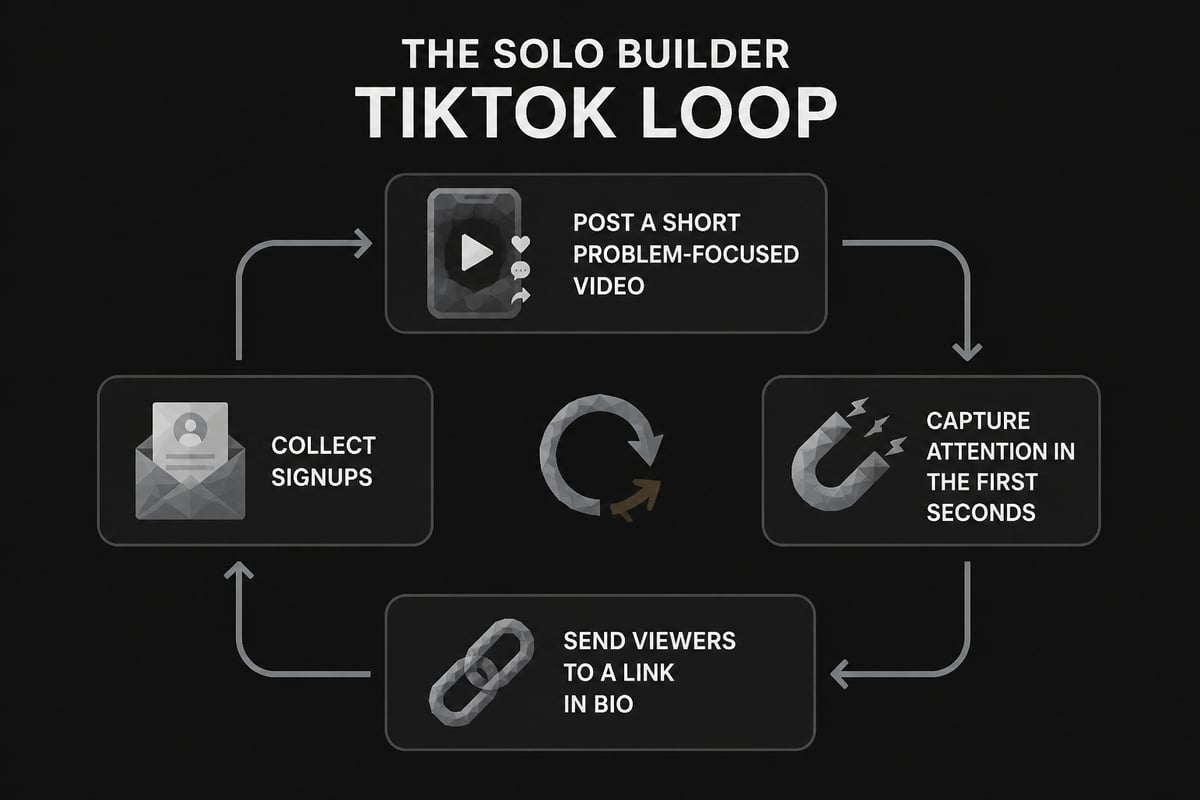
You set up TikTok for app marketing by switching to a business account, writing a one-line bio that says who the app helps, and putting a single clear link in your profile. Do this before you post anything, because every video is a chance for someone to land on your page.
Here's a simple setup order:
- Create or switch to a business account. It's free and gives you access to analytics and business features.
- Write a bio that names the problem. "I help freelancers track invoices with a simple app" beats "Entrepreneur | Builder | Dreamer."
- Add one link. Point it to a landing page, waitlist, or the app store listing. Don't scatter people across five options.
- Pick a profile photo you can recognize at thumbnail size. A clear face or a simple logo works.
- Pin your best three videos. Make one of them a short intro showing what your app does.
Keep the whole thing boring and clear. Your profile isn't the place to be clever. It's the place to make the next step obvious.
What content works best in TikTok digital marketing?
The content that works best is short, vertical, and clear about its value right away. TikTok recommends vertical 9:16 video at least 720p, with key content kept inside the interface safe zone, so text and faces don't get covered by buttons and captions.
The first seconds matter more than anything else. TikTok suggests putting the hook in the first 6 seconds and introducing the content proposition in the first 3. TikTok also reports that 90% of ad recall impact is captured within the first six seconds. So if your opening is a slow intro or a logo animation, you've already lost most of the value.
Content ideas that suit app builders
You don't need to be on camera dancing. These formats fit people building without code:
- Build-in-public clips. Show your screen while you make a feature, with a caption about what you learned.
- Problem demos. Open with the annoying problem, then show your app fixing it in ten seconds.
- Before and after. A messy spreadsheet turning into a clean app screen is satisfying to watch.
- Mistakes and lessons. "I launched with the wrong price, here's what happened" gets people curious.
- Answering comments. Reply to a question with a new video. It builds a trail of content from real demand.
Lean on humor and trends, carefully
TikTok reports that most viewers consider making people laugh one of the most enjoyable parts of watching TikTok ads, and that most users like it when brands use trends, memes, or challenges. You don't have to force jokes. But a light tone and a trending sound that fits your message can make a dry product feel approachable.
The key word is fits. Jumping on a trend that has nothing to do with your app just confuses people.
How can solo creators use TikTok influencer and creator marketing?
Solo creators can use influencer marketing on TikTok by paying small creators to demo the app in their own style, or by offering free access in exchange for honest videos. Smaller creators often cost less and have audiences that trust them more than a distant celebrity.
Start by looking for creators who already talk about the problem your app solves. If you built a budgeting app, find people who make money-tips content. Send a short, friendly message explaining what the app does and what you're offering.
TikTok has a hub of creator-focused articles for small and medium businesses if you want to see how brands structure these partnerships. A few practical tips:
- Offer a clear brief but let creators use their own voice.
- Ask for a specific action, like trying a feature and showing the result.
- Track each creator with a unique link or code so you know what worked.
- Start with two or three small partnerships before spending anything big.
Affiliate-style deals work too, where creators earn a cut when someone signs up through their link. That keeps your risk low, since you only pay when it works. For more on spreading the word without a big budget, take a look at these viral marketing examples.

How much do TikTok ads typically cost?
TikTok ad costs vary widely depending on your audience, goal, creative, and competition, so there isn't one reliable price to plan around. Rather than guess at a number, set a small test budget you're comfortable losing and let the results tell you what your cost per signup looks like.
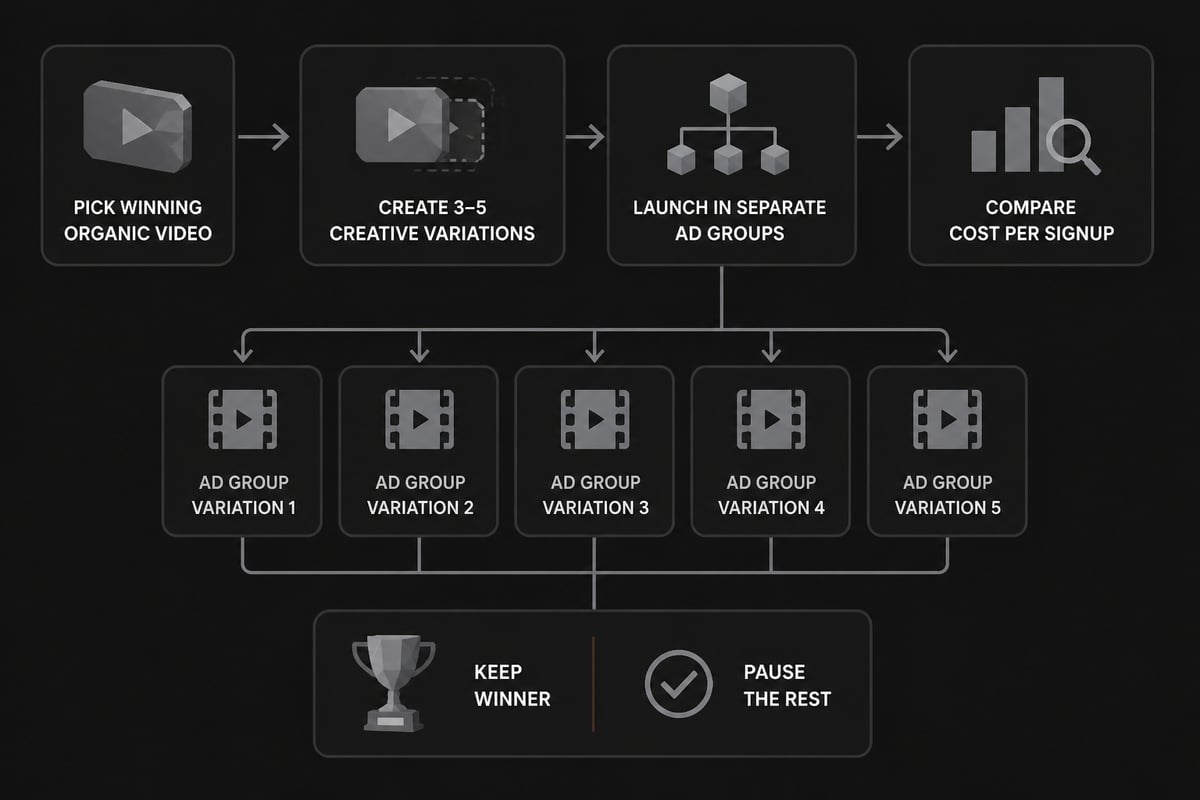
Here's the honest approach. Don't start with ads. Post organic videos first and notice which ones get traction. Those are your best candidates to promote, because they've already proven people care.
When you do try ads, TikTok suggests testing several different creatives per ad group and several diversified ad groups per campaign. That sounds like a lot for a solo builder, but it's really just a reminder to test a few versions, not bet everything on one video.
A few ad habits that keep costs sane
- Promote only videos that already did well organically.
- Keep your landing page matched to the video's promise.
- Judge ads by signups or installs, not by views.
- Turn off anything that isn't working after a fair test period.
If you ever outgrow doing it yourself, agencies like Good Karma Agency specialize in performance marketing across Meta, TikTok, Google, and other channels, though that's usually a later-stage move.
How many followers do you need to earn money from TikTok marketing?
There's no fixed follower count that guarantees income, and for selling an app, followers matter far less than the number of people who click, sign up, and pay. A small account with a focused audience can outsell a big one with a loose crowd.
Think about it as simple math. Your income depends on three things: how many people see your videos, what share click through, and what share buy. Followers are only a rough proxy for the first number.
To estimate what you'd need to reach a monthly goal, work backward:
- Decide your app's price or monthly subscription.
- Divide your income goal by that price to get the number of customers you need.
- Guess a realistic signup-to-paid rate (start low, since early numbers are usually small).
- Work out how many signups you'd need, then how many link clicks that takes.
You'll probably find the target depends more on your conversion and offer than on follower count. That's also why fixing your landing page and pricing often does more than posting extra videos.
For ideas on turning an audience into steady revenue, our piece on passive income from digital products is a good companion read.
A simple weekly TikTok routine for solo builders
A workable weekly routine for a solo builder is to batch-film once, post a few times, and spend a short block reviewing numbers. Consistency beats intensity here, because burning out in week three helps nobody.
Try this rhythm:
- One filming session (about 90 minutes). Record four to six short clips in one sitting. Screen recordings of your app are easy and don't need a fancy setup.
- Three to five posts a week. Space them out and mix formats: a demo, a lesson, a story.
- A 15-minute review. Check which videos kept people watching and which sent clicks. Do more of the first kind.
- Daily comment replies. Spend a few minutes answering questions. Good comments turn into your next video ideas.
TikTok reports that most viewers say TikTok-first ads catch their attention, which is a nudge to make content that feels native to the platform instead of repurposing a stiff promo from somewhere else.
One more habit worth building is to treat TikTok as part of a bigger system. The same ideas and comments that work in videos can feed your emails, landing pages, and other channels. If you're curious about another community-driven channel, here's a look at a Reddit marketing strategy that pairs well with short video.
What skills do you need for TikTok digital marketing success?
The core skills for TikTok digital marketing are clear messaging, basic video editing, and the habit of reading your own numbers. None of them require a marketing degree, and all of them improve with practice.
Here's what to focus on:
- Writing hooks. Practice opening lines that name a problem or promise a specific result in one sentence.
- Simple editing. Cuts, captions, and a clean screen recording are enough. TikTok's built-in editor handles most of it.
- Reading analytics. Watch time and click-through tell you more than likes do.
- Listening. Comments and DMs show you the exact words customers use, which you can reuse in videos and on your sales page.
- Patience. You'll post some duds. That's normal.
If you want a broader foundation, the guides on online marketing skills and digital marketing 101 lay out the basics that apply across every channel.
FAQ
What is the first thing to post on TikTok for a new app?
Post a short video showing the problem your app solves and a quick look at the fix. Keep it under 30 seconds, state the problem in the first three seconds, and end by telling people where to find the link.
Do I need to show my face on TikTok to market my app?
No. Screen recordings with a voiceover or text captions work well for app demos. If you're comfortable on camera it can build trust faster, but it isn't required to get results.
How long does it take to see results from TikTok marketing?
It varies a lot, and nobody can promise a timeline. Most solo creators need several weeks of consistent posting and testing before they spot a pattern worth building on, so plan for a steady effort and not a quick win.
Your next step is simple: record one 20-second video showing the problem your app solves, post it today, and check how many people watch past the first few seconds. Once you've got a feel for what grabs attention, the harder part is turning that attention into a product people pay for and a marketing system that keeps running. CreateSell teaches the whole path, from finding an idea people will pay for to selling it, with a community of builders shipping alongside you, so join the waitlist if you want help turning your app idea into something that sells.