
SEO for Startups: Your Guide to Organic Growth in 2026

Modest Mitkus
June 4, 2026
Starting a business in 2026 means competing in a crowded digital marketplace where organic visibility can make or break your success. For startups building digital products, mastering search engine optimization isn't optional - it's essential. The good news? You don't need a massive budget or a dedicated marketing team to get started. With the right approach to seo for startups, you can compete with established players and build sustainable traffic that grows your business while you sleep.
Why SEO Matters More for Startups Than Ever
Let's be real - paid advertising gets expensive fast. You're burning through budget trying to acquire customers, and the moment you stop paying, the traffic stops flowing. That's not sustainable for most startups.
SEO works differently. It's an investment that compounds over time. Every piece of optimized content you create continues working for you months and years down the road. Research shows that startups with strong SEO presence get discovered more frequently, even in AI-powered search results and large language model queries.
The Startup SEO Advantage
You might think established competitors have an insurmountable edge, but startups actually have unique advantages:
- Agility - You can pivot content strategy quickly without corporate approval processes
- Authenticity - Your founder story and unique perspective resonate with audiences
- Niche focus - You can dominate specific keywords that bigger companies ignore
- Direct connection - You're closer to your customers and understand their pain points
The key is leveraging these advantages strategically rather than trying to beat competitors at their own game.

Building Your SEO Foundation
Before you dive into tactics, you need solid groundwork. Think of SEO for startups like building a house - skip the foundation and everything crumbles.
Technical SEO Basics
Your website needs to be crawlable, fast, and mobile-friendly. Google won't rank what it can't read.
Essential technical elements:
- Clean URL structure (createsell.com/blog/topic, not createsell.com/?p=12345)
- SSL certificate (HTTPS everywhere)
- Mobile-responsive design
- Fast page load times (under 3 seconds)
- XML sitemap submitted to Google Search Console
- Proper header tags (H1, H2, H3 hierarchy)
Most modern website builders handle these automatically, but you should verify everything's working. Use Google's PageSpeed Insights to check your site speed and identify issues.
Setting Up Analytics
You can't improve what you don't measure. Set up Google Analytics 4 and Google Search Console before you publish a single piece of content. These free tools show you:
| Tool | What It Tracks | Why It Matters |
|---|---|---|
| Google Analytics 4 | User behavior, conversions, traffic sources | Understand how visitors interact with your site |
| Google Search Console | Search performance, indexing issues, keywords | See what people search to find you and fix technical problems |
| Google Tag Manager | Event tracking, conversions | Track specific actions without coding |
Install these on day one. Future you will thank present you for having historical data.
Keyword Research That Actually Works
Here's where most startups mess up - they target keywords that are either too competitive or completely irrelevant to their business.
The Startup Keyword Strategy
Forget trying to rank for "productivity app" or "digital products" right away. Those are dominated by sites with massive domain authority. Instead, focus on long-tail keywords that show buyer intent and have lower competition.
Your keyword research process:
- Brainstorm seed keywords - What would your ideal customer search for?
- Use free tools - Google Keyword Planner, AnswerThePublic, Ubersuggest
- Analyze search intent - Are people looking to buy, learn, or compare?
- Check competition - Can you realistically rank for this keyword?
- Prioritize by business value - Which keywords bring customers who'll actually buy?
For a digital product startup, "how to create a SaaS app without coding" is way more valuable than "SaaS apps." The first shows specific intent from your target audience. The second could be anyone - competitors researching, students writing papers, you name it.
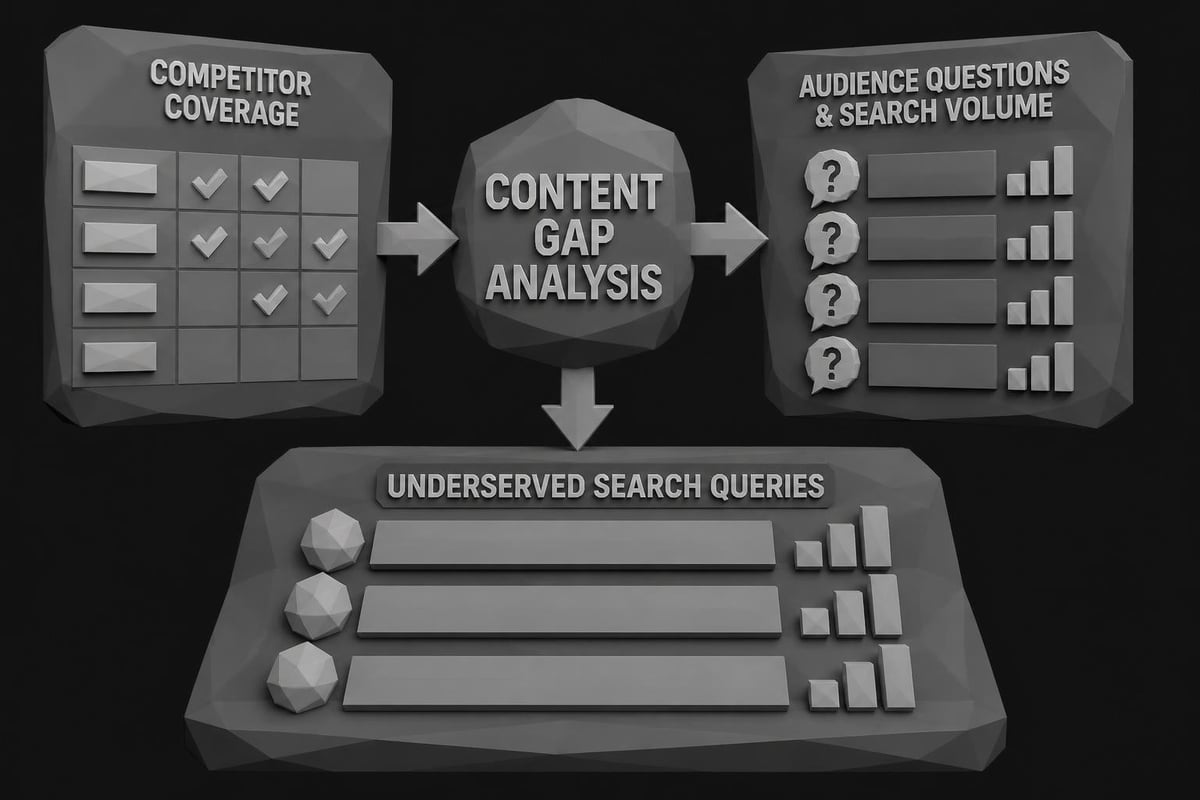
Finding Your Content Gaps
Look at what your competitors rank for and find the gaps. Use tools like Semrush or Ahrefs (they have limited free versions) to see competitor keywords. Then ask yourself - what questions are they NOT answering?
Maybe everyone's writing about "SaaS pricing models" but nobody's covering "SaaS pricing for solo founders." That's your opportunity.
Content Strategy for Maximum Impact
You've got keywords. Now you need content that ranks AND converts. This is where seo for startups gets fun - you're creating assets that work for you 24/7.
The Content Flywheel
Think of your content in tiers:
Tier 1: Pillar Content
- Comprehensive guides (2000+ words)
- Ultimate resources on core topics
- Target your most important keywords
- Updated regularly to stay fresh
Tier 2: Supporting Content
- Specific how-to articles (1000-1500 words)
- Answer individual questions
- Link back to pillar content
- Target long-tail variations
Tier 3: Quick Wins
- Short tutorials and tips (500-800 words)
- Trending topics in your niche
- Social-friendly content
- Fast to produce
This structure builds topical authority. Google sees you as an expert on your subject because you cover it comprehensively from multiple angles.
Writing for Humans AND Search Engines
The best SEO content doesn't feel like SEO content. It reads naturally, provides genuine value, and happens to include relevant keywords.
Content writing checklist:
- Use your target keyword in the title, first paragraph, and a few subheadings
- Include semantic variations (for "seo for startups" also use "startup SEO," "search optimization for new businesses")
- Answer the searcher's question in the first 200 words
- Use short paragraphs and bullet points for scannability
- Add internal links to related content
- Include external links to authoritative sources
- Use descriptive alt text for images
Don't keyword stuff. If you're forcing keywords where they don't fit, you're doing it wrong. Aim for around 1% keyword density naturally.
Link Building Without the Sleaze
Backlinks still matter in 2026, but the game has changed. Buying links or spammy guest posting doesn't work anymore - it can actually hurt you.
Earning Links Naturally
The best links come from creating content so valuable that people naturally reference it. For digital product creators, this might look like:
- Original research or data (surveys, case studies)
- Free tools or calculators
- Comprehensive guides nobody else has made
- Controversial but well-reasoned opinions
When you publish something genuinely useful, specialized SEO strategies suggest reaching out to people who've linked to similar (but inferior) content. Not to beg for links, but to let them know a better resource exists.
Strategic Partnerships
Connect with complementary businesses in your space. If you're building SaaS tools, partner with agencies who serve your target market. Create co-branded content, do podcast interviews, contribute expert quotes.
These relationships generate links, but more importantly, they build your reputation and bring qualified traffic.
| Link Building Tactic | Effort Level | Impact | Timeframe |
|---|---|---|---|
| Guest posting | Medium | Medium | 1-3 months |
| Original research | High | Very High | 3-6 months |
| Digital PR | High | High | 2-4 months |
| Resource page outreach | Low | Low-Medium | 1-2 months |
| Partnerships | Medium | High | 2-6 months |
Optimizing for Conversions, Not Just Traffic
Traffic means nothing if it doesn't convert. Your SEO strategy needs to connect search visibility to business outcomes.
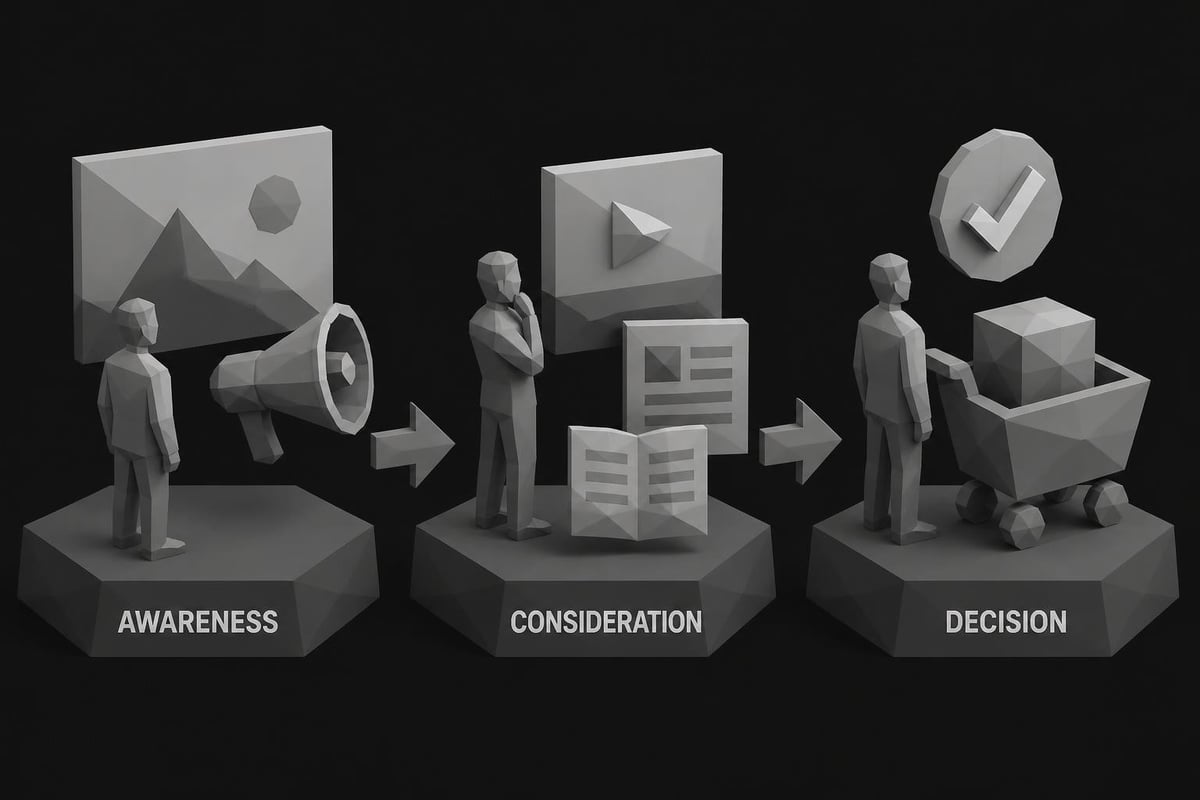
Aligning Content with Customer Journey
Map your content to different stages:
Awareness Stage
- Educational content answering basic questions
- Problem identification articles
- Industry trends and insights
- Goal: Build trust and capture email addresses
Consideration Stage
- Comparison guides
- Detailed how-to tutorials
- Case studies and examples
- Goal: Position your solution as viable
Decision Stage
- Product-specific content
- Pricing and features pages
- Free trials or demos
- Goal: Convert to customers
Most startups create only awareness content and wonder why they get traffic but no sales. You need the full funnel.
Conversion Optimization Tactics
Once someone lands on your site from search, guide them toward the next step:
- Clear calls-to-action above the fold
- Email capture with valuable lead magnets
- Product demos or free trials prominently featured
- Trust signals (testimonials, user counts, security badges)
- Exit-intent popups for those about to leave
For digital product businesses, offering a taste of your expertise builds credibility. Maybe that's a free mini-course, a useful template, or access to a community.
If you're ready to create your own digital product, Build and Launch Your SaaS App in 14 Days gives you everything you need to build a profitable SaaS without knowing how to code - turning your knowledge into a product that generates revenue around the clock.
Measuring What Matters
Vanity metrics feel good but don't pay the bills. Focus on measurements that tie directly to business growth.
Key Performance Indicators
Traffic metrics:
- Organic sessions (overall trend)
- Ranking positions for target keywords
- Click-through rate from search results
- Pages indexed by Google
Business metrics:
- Conversion rate from organic traffic
- Cost per acquisition (organic vs paid)
- Customer lifetime value by channel
- Revenue attributed to organic search
Track these monthly and look for trends. A dip in traffic isn't necessarily bad if conversions are up. More visitors from low-intent keywords doesn't help if nobody buys.
Using Data to Improve
Review your Google Search Console data monthly. Look for:
- Pages getting impressions but low clicks (improve titles and meta descriptions)
- Keywords where you rank positions 8-20 (opportunity to move to page one)
- Pages with high bounce rate (content doesn't match intent)
- Technical errors affecting crawling
This data tells you exactly where to focus your efforts for maximum impact.
Common SEO Mistakes Startups Make
Learn from others' failures so you don't repeat them.
Mistake 1: Targeting the Wrong Keywords
Chasing high-volume keywords you'll never rank for wastes time. A startup can't compete with established sites for broad terms. Go niche, go specific, go after buyer intent.
Mistake 2: Inconsistent Publishing
Publishing five articles one month then nothing for three months kills momentum. Google rewards freshness and consistency. Better to publish one quality article weekly than dump a bunch then disappear.
Mistake 3: Ignoring Technical Issues
Broken links, slow pages, mobile problems - these kill your rankings. Understanding common software development practices in startups shows that technical debt accumulates fast. Don't let SEO technical debt pile up.
Mistake 4: Duplicating Content
If you're selling multiple products, don't create nearly identical pages for each. Consolidate or make each page genuinely unique. Duplicate content confuses Google and dilutes your ranking power.
Mistake 5: Neglecting User Experience
Aggressive popups, intrusive ads, confusing navigation - all hurt your rankings in 2026. Google's Core Web Vitals factor user experience into rankings. Make your site pleasant to use.
Scaling Your SEO Efforts
Once you've got traction, you need systems to scale without sacrificing quality.
Building a Content Calendar
Plan content quarterly. Identify:
- Seasonal opportunities (tax season, new year resolutions, industry events)
- Evergreen topics that always matter
- Trending subjects in your niche
- Content refreshes for existing articles
Use a simple spreadsheet or tool like Trello. Include target keyword, content type, publish date, and promotion plan for each piece.
Repurposing Content
One pillar article can become:
- A YouTube video or tutorial
- An email course broken into lessons
- Social media posts highlighting key points
- An infographic summarizing data
- A podcast episode discussing insights
This maximizes your effort and reinforces your message across channels. Each format links back to the original, building authority.
Outsourcing Strategically
As you grow, you can't do everything yourself. Effective SEO practices suggest focusing your time on strategy and high-value creation, outsourcing:
- Keyword research (freelancers on Upwork)
- First drafts of supporting content (with detailed outlines)
- Technical audits (one-time specialists)
- Link outreach (virtual assistants)
Keep pillar content and strategy in-house. These define your voice and positioning.
SEO Tools Worth Using
You don't need expensive enterprise tools as a startup, but some investments pay off.
Free Tools That Work
- Google Search Console - Essential for tracking performance
- Google Analytics 4 - Understand user behavior
- Google Keyword Planner - Basic keyword research
- AnswerThePublic - Find question-based keywords
- Screaming Frog (free version) - Technical audits up to 500 pages
Paid Tools to Consider
| Tool | Starting Price | Best For | Worth It? |
|---|---|---|---|
| Semrush | $129/month | All-in-one SEO suite | Yes, if you're serious |
| Ahrefs | $99/month | Backlink analysis, keyword research | Yes, great data |
| Surfer SEO | $59/month | On-page optimization | Maybe, nice to have |
| Clearscope | $170/month | Content optimization | No, too expensive for startups |
Start with free tools. Invest in paid tools once SEO is generating measurable revenue.
The Long Game Mindset
Here's the truth about seo for startups - it takes time. You won't see results overnight. Most sites don't see significant traction for 6-12 months.
That's actually good news. It means your competitors are probably giving up too early. The startups that commit to consistent, quality SEO win in the long run.
Setting Realistic Expectations
Months 1-3: Building foundation, seeing minimal traffic Months 4-6: First rankings appearing, small traffic increases Months 7-12: Momentum building, traffic growing noticeably Year 2: Compounding effects, significant organic traffic
This timeline assumes consistent effort - publishing quality content, building links, fixing technical issues. Cut corners and you'll extend the timeline or stall completely.
Staying Motivated
Track small wins along the way:
- First page one ranking (even for a small keyword)
- First organic customer acquisition
- Surpassing a competitor for a keyword
- Content getting naturally shared or linked
These milestones prove your strategy works. Celebrate them.
Adapting to Algorithm Changes
Google updates its algorithm constantly. Major updates in 2026 continue emphasizing user experience, content quality, and expertise.
Future-Proofing Your Strategy
The tactics change, but the principles don't:
- Create genuinely helpful content
- Build real relationships and earn natural links
- Maintain a fast, user-friendly site
- Demonstrate expertise and trustworthiness
- Focus on user intent, not gaming algorithms
If you follow these principles, algorithm updates might cause temporary fluctuations, but you'll recover and grow. Chase shortcuts and you'll constantly fight to stay afloat.
SEO for startups isn't about overnight success or magic tricks - it's about building a sustainable traffic engine that grows your business over time. By focusing on the right keywords, creating valuable content, and optimizing for both search engines and human readers, you can compete effectively even with limited resources. If you're ready to turn your expertise into digital products that generate passive income, CreateSell provides the courses and resources you need to build, launch, and scale your own SaaS or mobile app - no coding required. Stop trading hours for dollars and start building products that sell while you sleep.