
Seed Funding Guide: How to Raise Your First Round

Modest Mitkus · November 16, 2026
Seed funding is the first outside money a startup raises, usually in exchange for a small slice of ownership, and it's meant to carry you from idea to a product with real users. For most rounds that means anywhere from tens of thousands to a few million dollars, depending on who's writing the check and how far along you are. If you're building an app without a coding background, you also need to know something else up front: you might not need a seed round at all.
This guide covers how seed rounds work, who invests, how to get ready, how to pitch, and a cheaper route that plenty of solo builders take instead.
What Is Seed Funding?
Seed funding is early-stage capital that a startup raises from outside investors, typically in return for equity or a convertible instrument, so it can build a product and find its first customers. The name fits. It's the "seed" you plant before anything has grown.
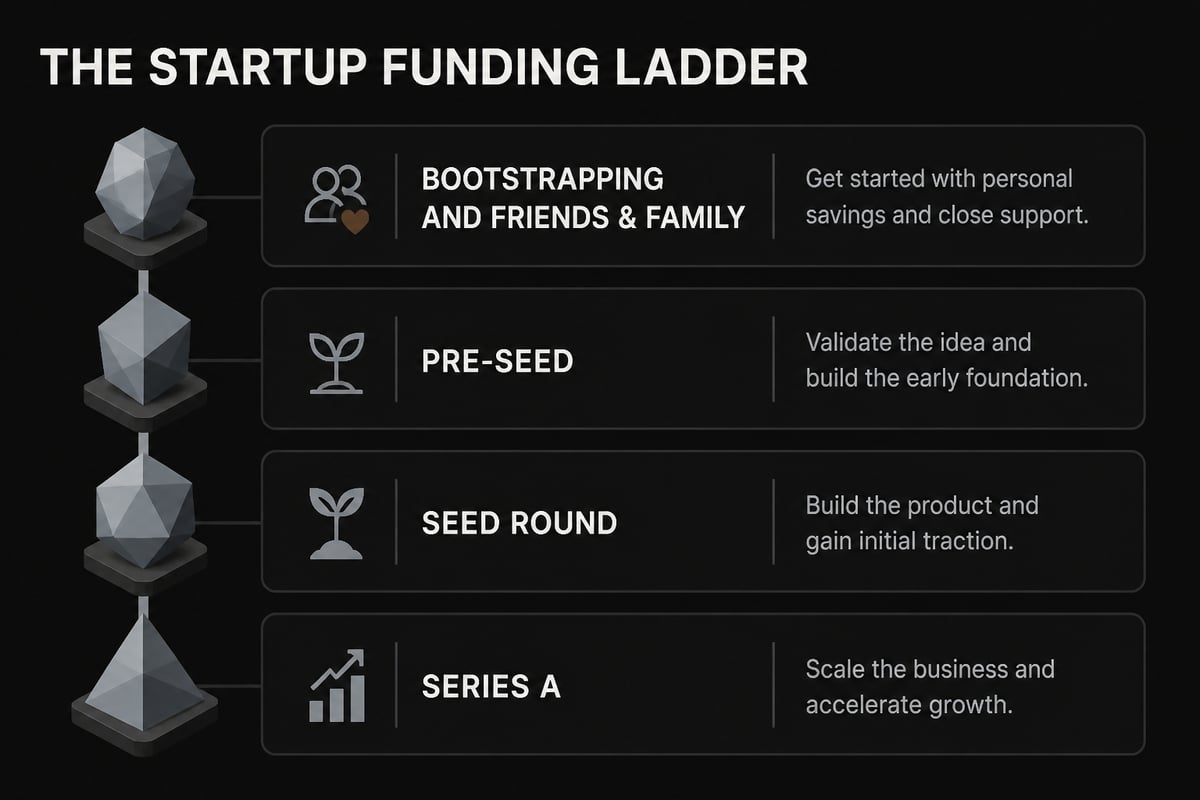
It sits at the very start of the funding ladder. Here's the usual order of things:
- Bootstrapping or friends and family: your own savings, plus small checks from people who believe in you.
- Pre-seed: a small first round, often just enough to build a prototype.
- Seed round: the first formal round, used to ship a product and prove people want it.
- Series A and beyond: bigger rounds for companies that already have traction and a repeatable way to grow.
One thing worth knowing is that venture money is generally exchanged for an ownership share and may involve an active role for the investor. It's equity, not a loan. You don't pay it back on a schedule, but you do give up a piece of your company and, often, some control over decisions.
The "four stages of startup" question pops up a lot too. Different people slice it differently, but a common version is idea, validation, growth, and maturity. Seed funding mostly lives in the jump from idea to validation.
Do You Actually Need Seed Funding?
Probably not yet, especially if you're building a simple app on your own. Outside money makes sense when your costs are high and the upside is huge. It's a poor fit when you can build and launch for the price of a few software subscriptions.
Here's the honest math. A decade ago, building an app meant hiring developers, and that took real cash. Today you can describe what you want and let AI write much of the code. If you're curious how that works, vibe coding is the approach to look at, and there's a good walkthrough on how to build an app with AI that doesn't assume any technical skills.
That changes the whole question. When your first version costs a few hundred dollars instead of a few hundred thousand, taking investor money early often just means giving away ownership you didn't need to give away.
Seed funding tends to make sense when:
- Your product needs serious infrastructure, regulation, or hardware before it can earn anything.
- You're racing a well-funded competitor and speed matters more than ownership.
- You want to hire a full team right away rather than staying a one-person business.
- You've already got early traction and money would clearly speed it up.
And it tends not to make sense when you haven't validated the idea yet, when you just want a bit of income from a focused app, or when you'd rather keep 100% of what you build.
How Much Does a Seed Round Cost You?
A seed round costs you equity, the size of your ownership stake that you give up, plus legal fees and a lot of your time. That's the real price tag, and it's easy to underestimate.
A few things shape the number:
- Valuation: what your company is worth on paper. A lower valuation means you give up more ownership for the same check.
- Round size: raising more than you need means more dilution for no good reason.
- Instrument: a priced round, a SAFE, or a convertible note each split costs and control differently.
- Legal and admin costs: lawyers, paperwork, and the hours you'll spend away from building.
The more subtle cost is attention. Raising money can eat three to six months of your focus. Every hour you spend on investor calls is an hour you're not talking to users or shipping features.
If you want a sense of what the market looks like, the NVCA Venture Monitor collects reports and data on U.S. venture activity, which helps you see how conditions are shifting before you start pitching.
Who Invests in Seed Rounds?
Seed rounds are funded by angel investors, early-stage venture funds, accelerators, and sometimes crowdfunding or government-backed programs. Each group wants something slightly different, so it pays to know who you're talking to.
Angel investors
Angels are individuals who invest their own money, often former founders or operators. Checks are usually smaller, and they tend to be more flexible on terms. A good angel can also open doors and give honest advice.
Seed-stage venture funds
These are firms that invest other people's money. They write bigger checks, but they expect a path to a very large outcome, because their model depends on a few huge wins. If your app is a solid small business rather than a rocket ship, a VC fund likely isn't the right match.
Accelerators
Accelerators hand over a small amount of cash, mentorship, and a network in exchange for a stake. They work best if you want structure and a built-in group of peers.
Crowdfunding and other sources
Equity crowdfunding lets many small investors back you at once. There are also government-linked options. For example, SBICs (Small Business Investment Companies) make investments ranging from $100,000 to $5 million and can invest through debt, equity, or a combination.
How to Prepare Before You Pitch
Preparing for a seed round means proving three things: people have the problem, your product solves it, and you're the one to build it. Investors at this stage are betting on you and your early signals more than on a polished business.
Work through this checklist:
- Validate demand. Talk to real users. Get signups, a waitlist, or even a handful of paying customers. If you need ideas to test, browse app ideas that make money and see which ones have real demand behind them.
- Build something people can touch. A working prototype beats a slide deck every time.
- Know your numbers. How much you need, what you'll spend it on, and what you expect to achieve in 12 to 18 months.
- Clean up the basics. A simple cap table, a clear company structure, and a short list of risks you can speak to honestly.
- Build a target list. Twenty to fifty investors who actually back companies like yours, not a random spray of emails.
Traction does more than any argument. An investor who sees paying users and growing numbers needs far less convincing than one who's just looking at a promise.
How to Value Your Company at the Seed Stage
At the seed stage, valuation is more negotiation than math, because there's usually no revenue history to anchor it. It's driven by traction, team, market size, and how much competition there is for your round.
That makes it tempting to either overreach or sell yourself short. Both hurt. Set the price too high and you may struggle to raise the next round at a higher one. Set it too low and you hand over more of your company than you needed to.
A few practical ideas help:
- Look at what comparable startups in your category have raised recently.
- Let demand set the price. If several investors are interested, you have leverage.
- Think in terms of dilution. Decide how much ownership you're willing to give up, then work backward to a round size.
- Consider a SAFE or convertible note if you'd rather postpone the valuation conversation until you have more data.
A startup lawyer earns their fee here. The terms in your documents, such as liquidation preferences, board seats, and anti-dilution protections, often matter more over time than the headline valuation.

Building a Pitch That Gets Meetings
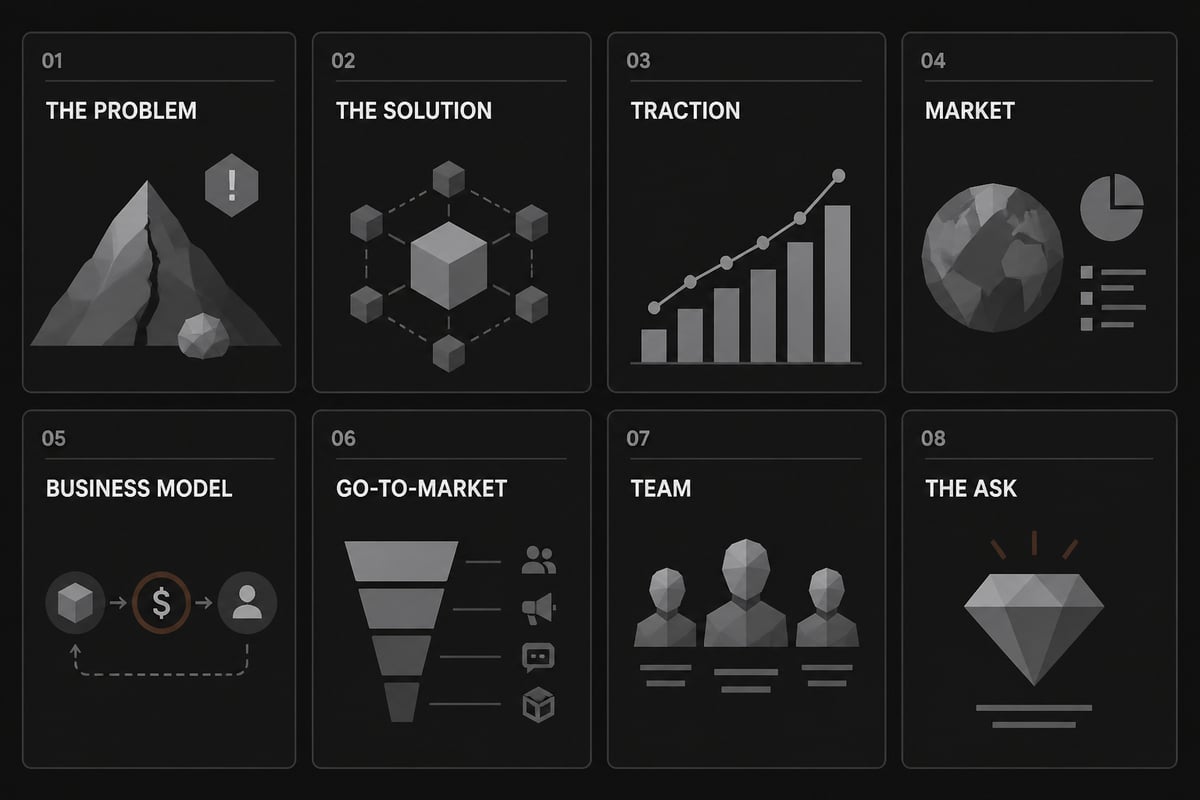
A strong seed pitch tells a short, clear story: the problem, your solution, proof it's working, and what you'll do with the money. Aim for a deck of around 10 to 15 slides that someone can read in a couple of minutes.
Here's a flow that works:
- Problem: who hurts, how badly, and what they do today.
- Solution: your app and why it's better.
- Traction: users, revenue, waitlist, retention, anything real.
- Market: who the customer is and how big the opportunity could be.
- Business model: how you make money.
- Go-to-market: how you'll actually reach customers.
- Team: why you, and what you've already shipped.
- The ask: how much you're raising and what it buys you.
The go-to-market slide is where a lot of first-time founders go vague. Investors have seen plenty of products. What they want to know is how you'll get them in front of buyers. If you're not sure, it helps to study how digital product sales actually happen and how to make sales without a big team.
How Hard Is It to Get VC Money?
It's hard. Most startups that pitch venture investors never get funded, and many strong businesses simply don't fit what VCs are looking for. That isn't a verdict on your idea. It's a mismatch of models.
Venture funds need a small number of companies to return enormous multiples, so they pass on plenty of good, profitable businesses that will never get big enough. If you're building an app that could comfortably earn a solid monthly income, you're likely better off skipping that world.
Things that raise your odds if you do go this route:
- Real, measurable traction before you ask.
- A founder-market fit story that's easy to believe.
- A warm introduction rather than a cold email.
- A clear reason the market could be very large.
- A realistic ask that matches your stage.
Expect lots of "no" and plenty of silence. Treat each conversation as feedback and keep your list moving.
The Fundraising Process, Step by Step
A typical seed raise takes a few months and follows a predictable pattern. Knowing the sequence helps you avoid dragging it out.
- Prepare materials. Deck, one-page summary, financial basics, and a data room with key documents.
- Line up warm intros. Founders, advisors, and other investors can all open doors.
- Run a tight process. Schedule your first meetings close together so interest builds at the same time.
- Follow up with updates. Short, honest notes about progress keep investors engaged.
- Negotiate terms. Get a lawyer involved before you sign anything.
- Go through due diligence. Investors will check your claims, your numbers, and your legal setup.
- Close and wire. Once documents are signed and funds arrive, get back to building.
Tell the truth at every step. Investors talk to each other, and a stretched claim in a pitch can sink a round during diligence.
What About Founder Pay After a Seed Round?
Founder salaries after a seed round are usually modest, because investors expect the money to go into the product and growth rather than into personal income. There's no single standard figure, and it varies widely by location, round size, and how much runway you want.
Many early-stage founders pay themselves just enough to cover living costs, so the company's cash lasts longer. Investors tend to look at this closely, since a founder drawing a large salary from a small round signals the wrong priorities.
If your goal is to replace a paycheck with income from your own product, it's worth being clear-eyed about that. A funded startup often pays you less at the start, not more. A small, profitable app you own outright can sometimes pay better, sooner.
A Different Path: Skip the Round and Build for Revenue
Many solo builders choose to fund their app with its own revenue instead of investor money. It's slower on paper, but you keep your ownership and your decisions, and you start earning from the first sale.
This is the idea behind one-person digital businesses, and it fits first-time app builders especially well. You build a focused product, find a niche that will pay for it, and grow from real customers instead of promises. If you need a place to start, these resources help:
- Micro SaaS ideas for small, focused products with a clear buyer.
- Mobile app monetization strategies to pick how your app earns.
- The recurring revenue model for steady monthly income.
The hardest part usually isn't building. It's marketing and selling, which is where a lot of app projects stall. That's why seeing how others did it matters. Some products built with CreateSell's system have reached $40k, $60k, and $30k per month in revenue, and the approach covers the full path from finding an idea people will pay for to selling the app. It works for web or iOS apps with no coding experience needed.
Bootstrapping doesn't have to mean building alone, either. Having a community of builders shipping alongside you, sharing progress and first sales, keeps momentum up when motivation dips.
FAQ
What is the meaning of seed fund?
A seed fund is a pool of money, or an investor, dedicated to backing startups at their earliest stage. The "seed" refers to planting an early investment before the company has grown, usually in exchange for equity or a convertible instrument.
What are the four stages of startup?
A common breakdown is idea, validation, growth, and maturity. Seed funding usually arrives between the idea and validation stages, helping a founder turn a concept into a product with real users.
Can I raise seed funding without a technical co-founder?
Yes, but investors will want proof that you can get a product built and in front of users. Showing a working prototype and early customers goes a long way, and modern AI-assisted tools make it much easier for a non-coder to get there without a big upfront budget.
Your next step is simple: before you write a single pitch slide, put a basic version of your app idea in front of ten real people and see whether anyone would pay for it. That one test tells you whether you need investors at all or whether you can grow from customer revenue. If you'd rather learn a proven way to build and sell an app with no coding background, join the CreateSell waitlist and be first in line when the doors open.


