
App Ideas That Make Money in 2026: Build & Launch

Modest Mitkus
May 26, 2026
Everyone's got a smartphone glued to their hand these days, and if you've ever thought about building an app, you're probably wondering which ideas actually generate real income. The good news? There's never been a better time to turn your app concepts into profitable digital products. Whether you're a solo developer or someone who's tired of trading hours for dollars, the right app idea combined with smart monetization can create income while you sleep. Let's dive into the app ideas that make money in 2026 and how you can get started building them.
Why Apps Remain a Goldmine for Solo Entrepreneurs
The app economy isn't slowing down. We're talking about a market that's matured beyond the "gold rush" phase into something more sustainable and predictable. What changed? People now understand that throwing an app into the store and hoping for downloads doesn't work. The app ideas that make money today solve specific problems for defined audiences.
Here's what makes apps such a powerful digital product:
- Scalability: Build once, sell infinitely with minimal marginal costs
- Recurring revenue: Subscription models create predictable monthly income
- Global reach: Your app can generate revenue from users worldwide
- Automation: Once launched, apps can sell and onboard customers 24/7
- Multiple monetization paths: Subscriptions, ads, in-app purchases, and more
The shift from traditional employment to digital product creation means you're no longer limited by geography or hourly rates. Apps let you package your expertise, creativity, or solutions into something that compounds over time.
High-Profit App Categories That Actually Work
Not all app ideas are created equal. Some niches are oversaturated, while others are ripe with opportunity. Let's break down the categories where profitable app ideas are thriving in 2026 based on market demand and monetization potential.
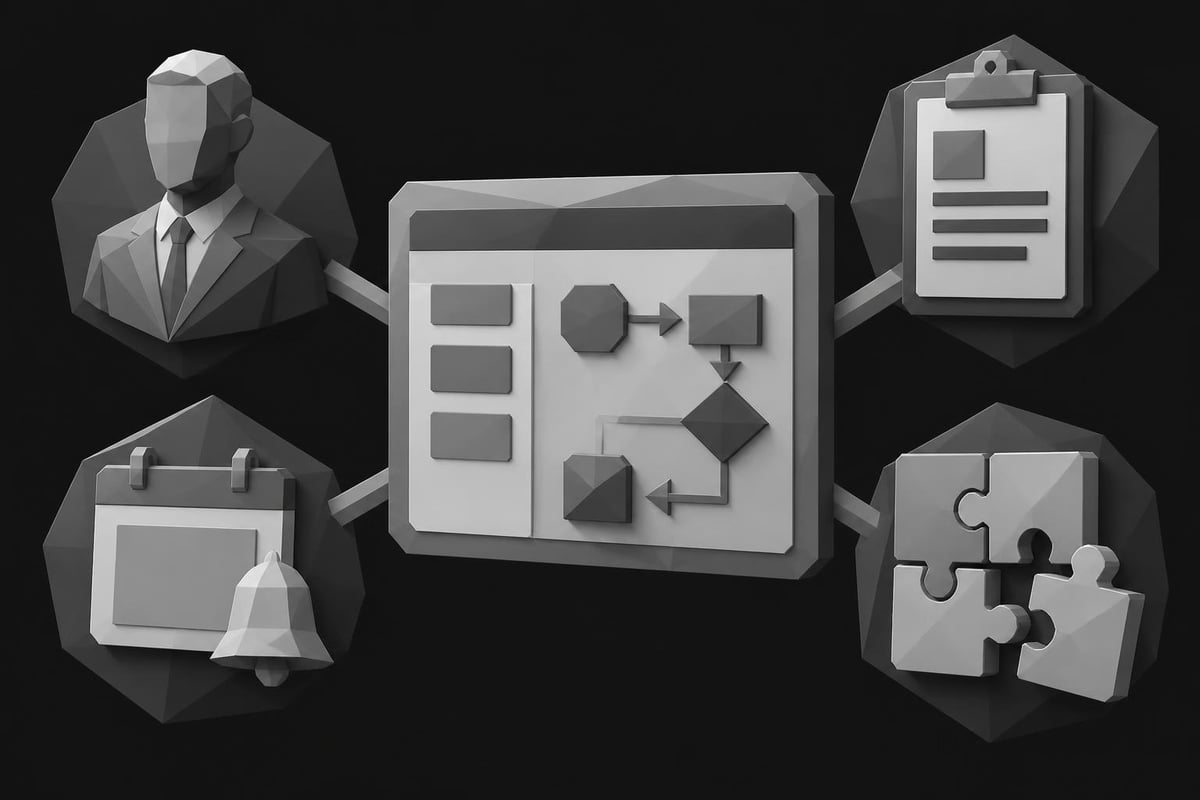
Productivity and Task Management Apps
People are drowning in information and desperately need tools to stay organized. The beauty of productivity apps? Users will pay premium prices for tools that save them time.
Think beyond basic to-do lists. Consider apps that:
- Integrate with existing workflows
- Use AI to automate repetitive tasks
- Focus on specific professions (realtors, lawyers, freelancers)
- Combine productivity with wellness tracking
Health and Wellness Tracking
The wellness market continues exploding, but generic fitness apps face tough competition. The app ideas that make money in this space are hyper-focused on specific outcomes or audiences.
| App Type | Target Audience | Revenue Model | Avg. Monthly Potential |
|---|---|---|---|
| Menopause tracker | Women 45-55 | Subscription + coaching | $3K-$15K |
| Posture correction | Remote workers | Freemium + in-app | $2K-$10K |
| Sobriety companion | Recovery community | Subscription | $5K-$20K |
| Sleep optimization for parents | New parents | Subscription | $4K-$12K |
Financial Management and Budgeting
Money apps print money when done right. People need help managing finances, but they're tired of complex banking apps. The opportunity lies in simplifying specific financial challenges.
Focus areas that work:
- Debt payoff calculators with gamification
- Expense splitting for roommates or couples
- Freelancer income tracking and tax prep
- Investment education for beginners
- Side hustle income optimization
Learning and Skill Development
The education space is shifting from courses to micro-learning experiences. Apps that teach specific skills in bite-sized formats are crushing it. Think 5-minute daily lessons rather than hour-long videos.
What's working? Apps teaching:
- Language learning for specific situations (business Spanish, medical terminology)
- Technical skills through interactive coding challenges
- Creative skills with daily prompts and feedback
- Professional development for niche industries
AI-Powered Utility Apps
This is where AI app ideas are generating serious revenue in 2026. We're not talking about generic chatbots. The winning apps use AI to solve annoying daily problems.
Examples pulling in $50K+ monthly:
- Email summarizers for executives
- Meeting transcription and action item extraction
- Content repurposing tools for creators
- Personal shopping assistants that learn preferences
- Resume builders with AI optimization
Monetization Strategies That Actually Convert
Having a great app idea means nothing if you can't convert users into paying customers. The most effective app monetization strategies combine multiple revenue streams rather than relying on a single method.
The Subscription Model Dominance
Subscriptions remain king because they create predictable, recurring revenue. But users are subscription-fatigued, so you need to justify the ongoing cost.
Make subscriptions work by:
- Offering genuine ongoing value (new content, features, or data)
- Starting with a generous free tier to build habits
- Pricing monthly at $4.99-$9.99 or annually at $39.99-$79.99
- Providing family or team plans for higher revenue per user
- Including exclusive community access or expert support
Freemium Done Right
The freemium model works when your free version is genuinely useful but leaves users wanting more. Too generous and nobody upgrades. Too limited and nobody sticks around.
The sweet spot: Give away 70% of functionality, charge for the remaining 30% that power users desperately need. This might be unlimited projects, advanced analytics, integrations, or priority support.
In-App Purchases and Upgrades
One-time purchases work beautifully for specific features or content packs. Users who resist subscriptions often happily pay $2.99-$9.99 for permanent upgrades.
What sells as IAP:
- Premium templates or themes
- Additional storage or project slots
- Advanced reporting features
- Ad removal (if you're using ads)
- Exclusive content or tool packs
Hybrid Monetization Models
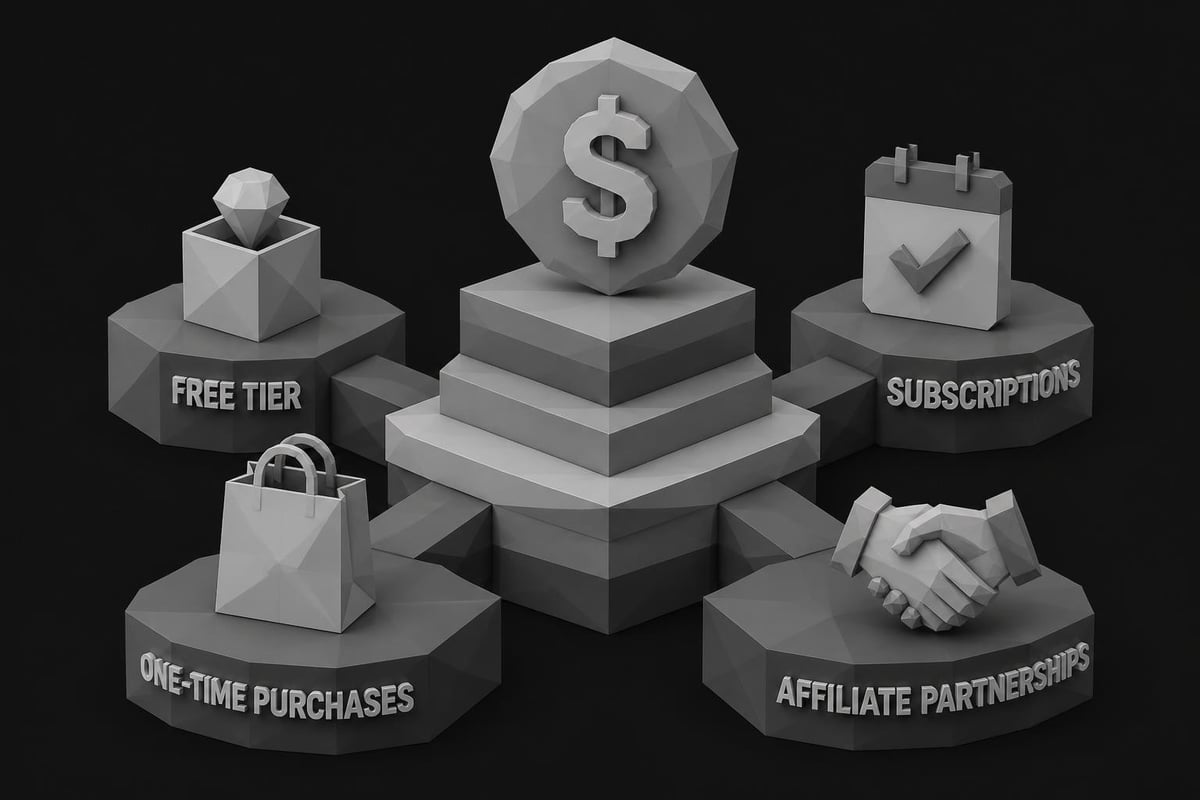
Here's the truth: subscription models work best when combined with other revenue streams. The apps making serious money in 2026 typically use 2-3 monetization methods simultaneously.
Example hybrid model:
- Free tier with ads
- $6.99/month subscription removes ads and adds features
- One-time purchases for premium content packs
- Affiliate commissions for recommended tools or products
Validating Your App Idea Before Building
Here's where most people screw up. They spend months building an app nobody wants. The app ideas that make money are validated before a single line of code is written.
The Validation Framework
Step 1: Define the Problem Sharply
Don't just say "help people be productive." Get specific. "Help freelance graphic designers track billable hours across multiple clients without switching between tools."
Step 2: Find Your People
Where does your target audience hang out online? Join those communities. Reddit, Facebook groups, Discord servers, LinkedIn groups. Lurk, then participate genuinely.
Step 3: The Conversation Test
Post about the problem (not your solution yet). See if people relate. Ask questions like:
- "How are you currently solving this?"
- "What frustrates you most about existing solutions?"
- "Would you pay for something that fixed this?"
Step 4: The Landing Page Experiment
Build a simple landing page describing your app. Include features, pricing, and an email signup. Spend $100-$200 on Facebook or Google ads. If you can't get 100 email signups from 1,000 visitors, rethink your idea.
Step 5: Pre-Sell Before Building
This is the ultimate validation. Offer founding member pricing (50% off) for people who commit now. If nobody bites, you've saved yourself months of wasted effort.
Building Apps Without Traditional Coding
You don't need to be a developer to create app ideas that make money. The tools available in 2026 have democratized app creation in ways that seemed impossible just a few years ago.
No-code and low-code platforms let you build functional apps by:
- Dragging and dropping interface elements
- Connecting pre-built components
- Using templates as starting points
- Integrating existing services via APIs
- Testing with real users before committing to custom code
If you're ready to turn your app idea into reality fast, programs like Build and Launch Your Mobile App in 14 Days teach you to create profitable iOS apps without knowing how to code, getting you from concept to launched product in two weeks.
The mindset shift needed here: you're not trying to build the next Instagram. You're building a focused tool that solves a specific problem for a defined audience. That doesn't require millions in VC funding or a team of engineers.
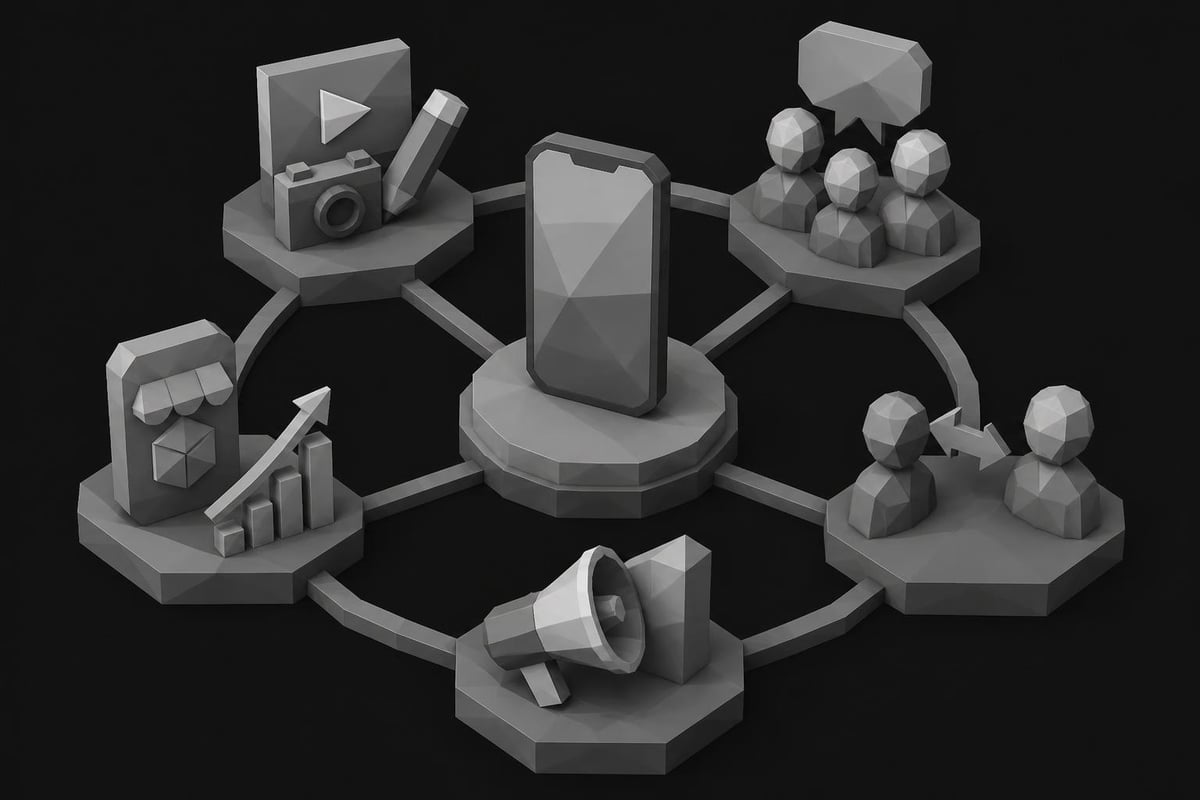
Marketing Your App for Consistent Revenue
Building the app is half the battle. The app ideas that make money have deliberate marketing strategies from day one. You can't just launch and pray for App Store magic.
Pre-Launch Momentum Building
Start marketing before you finish building:
- Email list: Collect emails throughout development
- Social proof: Share progress updates and behind-the-scenes
- Beta community: Recruit 50-100 early testers who become advocates
- Content creation: Write blog posts, make videos about the problem you're solving
- Partnerships: Connect with influencers or complementary products
App Store Optimization (ASO)
Your app listing is your storefront. Optimize everything:
| Element | Best Practice | Impact |
|---|---|---|
| App Name | Include primary keyword naturally | High |
| Subtitle | Clear value proposition | High |
| Keywords | Research competitors, use all available character space | High |
| Screenshots | Show benefits, not features | Medium |
| Video Preview | Demo the aha moment in 15 seconds | Medium |
| Description | Front-load benefits, include social proof | Low |
Organic Growth Tactics
Paid ads work but eat profits early on. Focus first on organic channels:
- Content marketing: Answer questions your target users are asking
- Community engagement: Provide value in Reddit, forums, Facebook groups
- Product Hunt launch: Time it right for a visibility boost
- Referral programs: Give existing users reasons to invite friends
- Integration partnerships: Connect with tools your users already use
Paid Acquisition (When You're Ready)
Once you've proven your conversion funnel, strategic ad spending accelerates growth. Start small with:
- Facebook/Instagram ads targeting specific interests
- Google App Campaigns for keyword-based discovery
- TikTok or YouTube ads if your app is visually demonstrable
- Influencer sponsorships in your niche
Budget $500-$1,000 initially, track every metric, and scale only what converts profitably.
Avoiding Common App Failure Traps
Let's talk about why most apps fail, so you can dodge these landmines. The app ideas that make money avoid these critical mistakes.
Building for Everyone
The fastest path to zero revenue is trying to appeal to everybody. "An app for anyone who wants to be productive" is dead on arrival. "An app for real estate agents managing 50+ property listings" has a fighting chance.
Narrow your focus ruthlessly. You can always expand later.
Overbuilding Before Launch
Perfectionism kills more apps than bad ideas. You don't need 47 features at launch. You need one core feature that works brilliantly and solves the primary pain point.
Ship fast, get feedback, iterate. The app that launches imperfectly in 3 months beats the perfect app that never ships.
Ignoring User Feedback
Your initial assumptions will be wrong. Some features you thought were essential? Users won't care. Some feature they're begging for? You never considered it.
Create feedback loops:
- In-app feedback button
- User interviews (Zoom calls with 10-20 users monthly)
- Analytics tracking actual behavior
- Support email responses analyzed for patterns
Pricing Too Low (or Free Forever)
Underpricing signals low value. If your app genuinely solves a painful problem, people will pay real money. Don't be afraid to charge $9.99/month instead of $2.99.
Free apps can work, but monetization needs to be baked in from the start. Adding it later feels like a bait-and-switch.
Treating Launch as the Finish Line
Launch is the starting line, not the finish. The app ideas that make money treat launch as the beginning of continuous improvement.
Plan for ongoing:
- Feature additions based on user requests
- Performance optimization
- Marketing experiments
- User onboarding improvements
- Competitive analysis and differentiation
Real Examples of Solo Developer Success
Let's ground this in reality. Here are app ideas that make money for solo developers or tiny teams in 2026, with realistic revenue figures.
Tally Forms - Solo developer created a form builder focused on beautiful, no-code forms. Revenue: ~$120K/year through freemium subscriptions.
NotePlan - One developer built a markdown-based calendar and task manager for Mac/iOS. Revenue: ~$250K/year via one-time purchases and upgrades.
Indie Budget - A budgeting app specifically for freelancers and side hustlers. Revenue: ~$8K/month via $4.99/month subscriptions.
Tempo - Time-tracking app for creative freelancers with automatic invoicing. Revenue: ~$15K/month through $9.99/month subscriptions.
Notice the pattern? Specific audience, clear problem, simple solution, direct monetization. None of these required millions in funding or teams of dozens.
The Human Skills That AI Can't Replace
While we've talked a lot about AI-powered apps, there's an interesting counterpoint worth considering. As automation increases, the uniquely human skills become more valuable. If you're building apps, think about how they might enhance rather than replace human capabilities that AI can't replicate, like judgment, creativity, and emotional intelligence.
Apps that help users develop or apply their irreplaceable human skills create deeper value and stronger retention. This might mean building tools that:
- Facilitate better human conversations or relationships
- Enhance creative expression rather than generating it
- Support decision-making without removing human judgment
- Build community and genuine connection
This perspective can guide you toward app ideas that make money while creating lasting impact.
Launching Your Second and Third Apps
Once you've successfully launched one app, your second becomes dramatically easier. You've learned the technical process, marketing fundamentals, and what resonates with users.
Many successful app entrepreneurs follow the portfolio approach:
- First app: Validates your ability to ship and monetize
- Second app: Built faster with lessons learned, different niche
- Third app: Leverage your audience from apps 1 and 2
Cross-promotion between your apps creates a moat. Someone using your productivity app might be perfect for your related time-tracking app. Bundle them for increased revenue per user.
The compounding effect is real. Three apps each making $3K/month is $108K/year. That's a solid one-person business.
Platform Decisions: iOS vs Android vs Web
Where should you launch? The platform choice impacts development time, monetization potential, and audience reach.
iOS First if you're targeting:
- US/European markets
- Professional users willing to pay
- Premium positioning
- Higher revenue per user (iOS users spend 2-3x more on apps)
Android First if you're targeting:
- Global markets (especially Asia, Latin America, Africa)
- Maximum user base
- Ad-supported models
- Younger demographics
Web App First if you're building:
- SaaS products with complex workflows
- B2B solutions
- Tools requiring large screens
- Cross-platform necessity from day one
For solo builders, starting with one platform and expanding later usually makes more sense than trying to be everywhere simultaneously. Focus creates better products.
Sustainability and Long-Term Thinking
The app ideas that make money over years, not months, are built with sustainability in mind. This means considering:
Technical Debt Management
Choose technologies and frameworks that:
- Have strong community support
- Won't require complete rewrites yearly
- You actually understand (don't cargo-cult the latest trends)
- Balance simplicity with capability
User Retention Metrics
Acquisition costs money. Retention compounds value. Track:
- Day 1, 7, 30, and 90 retention rates
- Feature adoption over time
- Customer lifetime value (LTV)
- Churn reasons (survey users who cancel)
Improving retention by 5% can double your revenue over time.
Sustainable Development Pace
Burning out helps nobody. Building apps should enhance your life, not destroy it. Set boundaries:
- Fixed working hours (even for yourself)
- Scheduled deep work for feature development
- Dedicated support windows (not 24/7 availability)
- Regular breaks and actual vacations
Apps make money while you sleep, but only if you build them smartly and sustainably.
The app ideas that make money in 2026 aren't about luck or viral moments. They're about solving real problems for specific people, validating before building, and monetizing strategically. Whether you're creating productivity tools, wellness trackers, or AI-powered utilities, the fundamentals remain the same: narrow focus, genuine value, and sustainable monetization. Ready to stop trading your time for money and start building digital products that generate income around the clock? CreateSell teaches you to create and sell apps from scratch, turning your ideas into products that work for you instead of the other way around.