
How to Improve Your SaaS Conversion Rate Step by Step

Modest Mitkus · November 19, 2026
Most SaaS products convert somewhere around 2% to 4% of visitors at the top of the funnel, though the number shifts a lot depending on what you're measuring and who you're selling to. Unbounce's benchmark data puts the median conversion rate for SaaS landing pages at 3.8%, and First Page Sage reports a visitor-to-lead benchmark for SaaS overall. Those saas conversion rates are a rough compass, not a scorecard. What really matters is finding the weakest step in your own funnel and fixing it first.
This guide walks you through that process one step at a time, written for people building their first app without a coding background.
What Counts as a Good SaaS Conversion Rate?
A good SaaS conversion rate depends on which stage you're measuring, so there's no single number to chase. A visitor-to-signup rate and a trial-to-paid rate are completely different animals.
Here are the benchmarks from the sources we have, stage by stage:
| Funnel stage | Benchmark | Source |
|---|---|---|
| Landing page visitor to conversion | 3.8% median | Unbounce |
| Visitor to lead | 1.9% | First Page Sage |
| Lead to MQL | 39% | First Page Sage |
| Qualified lead to booked meeting | 62% median, 88% for best performers | RevenueHero |
Notice how the numbers get bigger as people move down the funnel. That's normal. Someone who's already raised a hand is far more likely to take the next step than a stranger who just landed on your homepage.
A 2.5% conversion rate sits between the 1.9% and 3.8% benchmarks above, so it's a reasonable result for cold visitors landing on a SaaS site. The same rate would be weak for a trial-to-paid step, where users are already motivated.
Traffic size matters too. A 2025 benchmark report says visitor-to-demo-request rates fall below 1% for B2B software sites with more than 25,000 monthly visitors, based on 100 websites. So a tiny rate on a big audience isn't automatically a problem.
Step 1: Map Your Funnel and Find the Leak
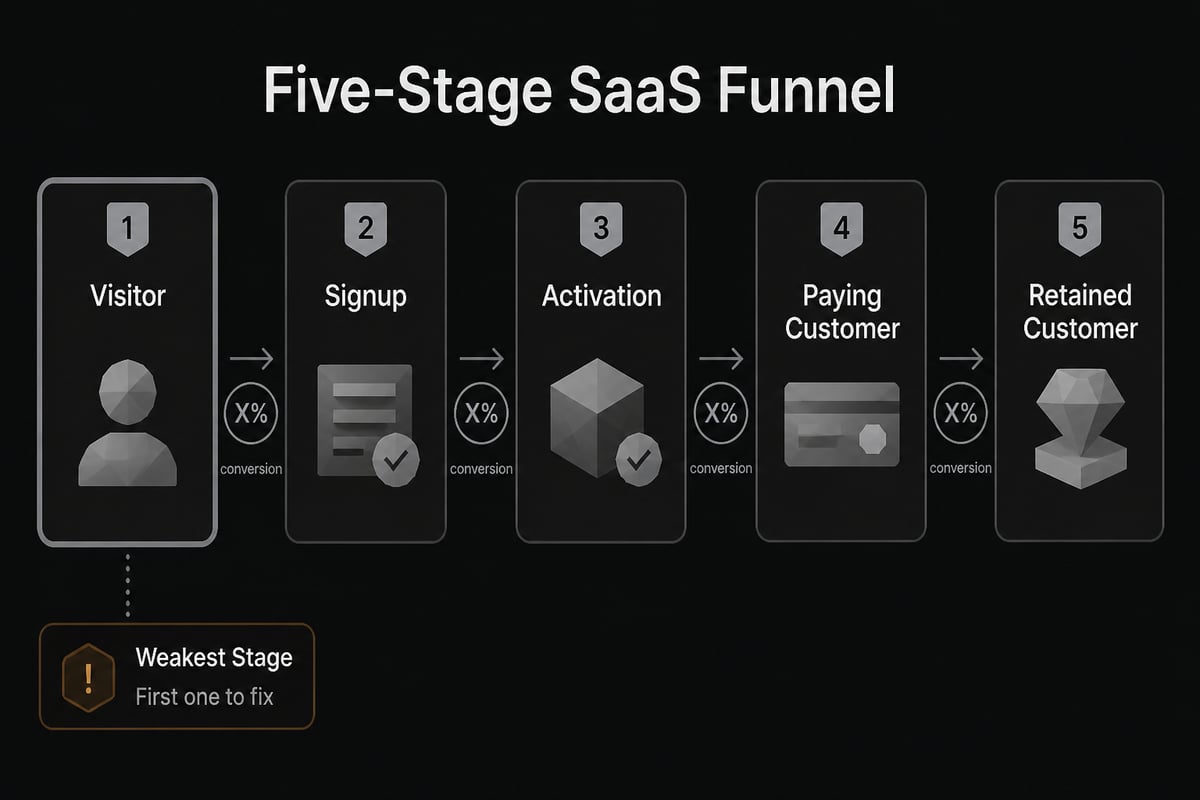
Start by writing down every stage between a stranger and a paying customer, then count how many people reach each one. You can't improve what you haven't measured.
A simple funnel for a solo-built app usually looks like this:
- Visitor lands on your page
- Visitor signs up or joins a waitlist
- User activates (does the one thing that proves the app works for them)
- User starts paying
- User stays past the first month or two
Divide each stage by the one before it. Whichever ratio looks worst compared to the benchmarks above is your leak. If 1,000 people visit and only 5 sign up, work on the page. If 100 sign up and none activate, the problem lives inside the product.
This is also where the key SaaS metrics come in. You don't need a dozen dashboards. Visitors, signups, activations and paying customers are enough to start.
One more habit that helps: track your numbers weekly, not daily. Small apps have small samples, and a single slow Tuesday can make a healthy funnel look broken.
Step 2: Sharpen the Promise on Your Landing Page
Your landing page converts when a stranger understands, within a few seconds, who the app is for and what it fixes. Vague headlines are the most common reason pages underperform.
Try this structure for the top of your page:
- A headline that names the outcome. "Plan your week in two minutes" beats "The all-in-one productivity platform."
- One sentence for who it's for. Specific beats broad every time.
- One clear button. Pick a single action, like "Start free trial," and repeat it down the page.
- Proof near the button. A screenshot, a short demo clip, or a real number from real use.
If you're still working out which problem your app should solve, browsing micro SaaS ideas can help you pick a narrow audience, and narrow audiences make for sharper headlines. A page that speaks to one person converts better than a page that tries to speak to everyone.
For more on page structure, this breakdown of product landing pages covers the building blocks in detail.
Step 3: Cut Friction From Your Signup Form
The fewer decisions you ask for at signup, the more people finish it, but form length isn't the whole story. Relevance matters more than field count.
Here's a finding that surprises people. In a 2025 inbound benchmark of B2B SaaS form fills from RevenueHero, top performers booked more than 77% of qualified leads with forms containing just two fields, and forms with 13 fields also exceeded 76%. So long forms aren't automatically bad, as long as the questions feel like they belong.
What does that mean for your app? A few practical rules:
- Ask for email only, unless you truly can't deliver value without more.
- Skip "company size" and "phone number" for self-serve products.
- Let people sign in with Google or Apple if your tools support it.
- Collect extra details after signup, inside onboarding, when people are already invested.
If you're running a demo or booking flow instead of self-serve signup, that same benchmark reports a 62% median qualified-to-booked meeting rate, with the best performers reaching 88%. Getting people on a calendar quickly, right after they submit the form, is a big part of how top teams get there.
Step 4: Fix Your Pricing Page
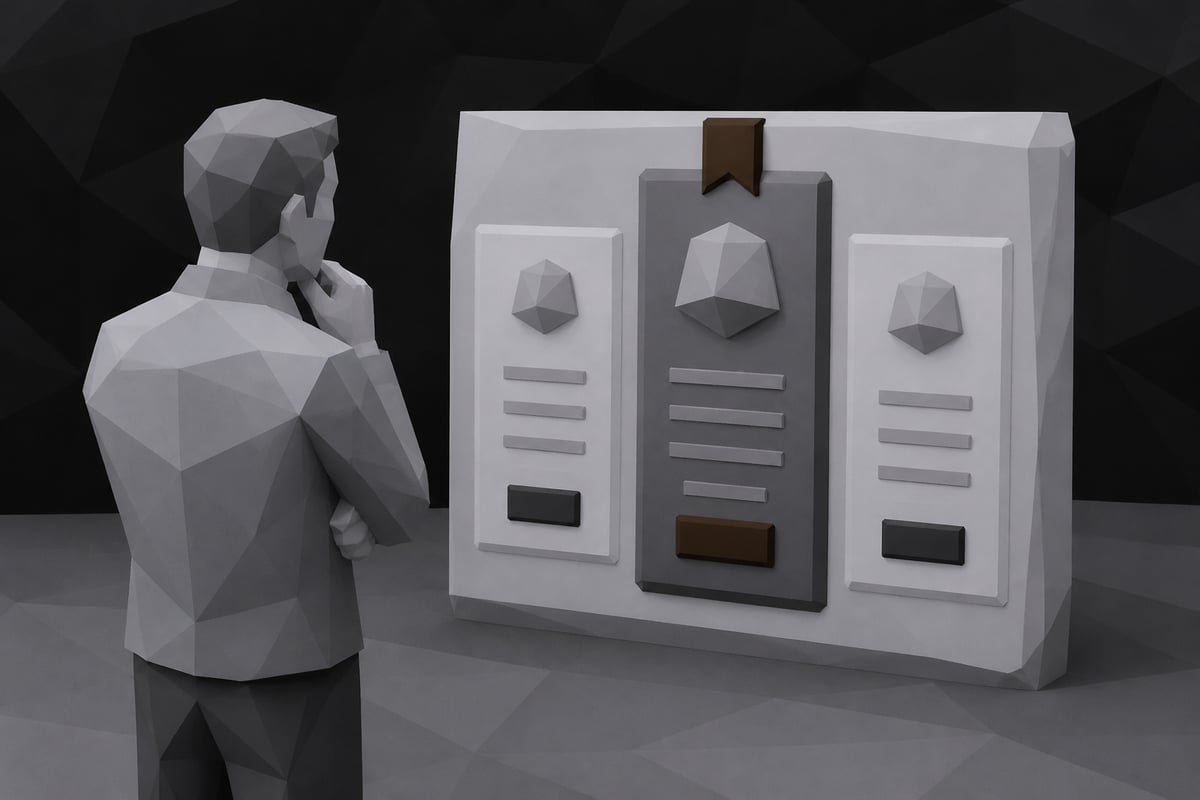
A pricing page converts when people can tell in seconds which plan fits them and what they'll pay. Confusion here kills deals quietly, because nobody emails you to say your tiers made no sense.
Keep it simple, especially for a first app:
- Two or three plans at most. More choices means more hesitation.
- Name plans by who they're for, not by vague labels like "Pro" or "Plus."
- Show the price clearly. Hiding it makes people assume it's expensive.
- Add a short FAQ under the plans covering cancellation, refunds and what happens after a trial.
Your pricing model shapes all of this, so it's worth reading up on SaaS pricing strategy and SaaS revenue models before you lock in numbers. A low price doesn't guarantee more sales. A price that matches the value people see does.
Step 5: Get Users to Their First Win Fast
Trial-to-paid conversion depends mostly on how quickly a new user experiences the main benefit of your app. If they never reach that moment, they won't pay.
Think of it as the time-to-value problem. Ask yourself what the single action is that makes a user say "oh, this works," then design everything to get them there.
- Cut the setup. Pre-fill sample data so the app doesn't look empty on day one.
- Show a short checklist of two or three steps, not ten.
- Send a welcome email within minutes that points to that one first action.
- Follow up if they sign up but don't activate within a day or two.
There's more detail in this guide to SaaS onboarding best practices, and pairing it with solid email marketing for SaaS gives you a simple automated nudge system that works while you sleep.

Step 6: Add Proof Where Doubt Shows Up
Social proof lifts conversion when it sits next to the moment someone hesitates. Plastering logos at the bottom of the page does much less than a relevant result beside your signup button.
If you're brand new with no customers yet, you still have options:
- Share your own build story and why you made the app.
- Show a real screenshot or short screen recording of the product working.
- Offer a clear guarantee or an easy cancellation promise, if you're able to honor one.
- Collect your first three testimonials by simply asking early users a couple of questions, then quote them with permission.
Early proof doesn't need to be impressive. It needs to be honest and specific. "Saved me an hour a week on invoicing" beats "Great product!"
Step 7: Test One Change at a Time
Run one test at a time, give it enough traffic to mean something, and write down what you learned. Changing five things at once teaches you nothing.
With a small audience, formal A/B testing can be shaky because samples are tiny. A more realistic approach for a new app:
- Pick the leakiest stage from Step 1.
- Make a single change, such as a new headline or a shorter form.
- Run it for at least two to four weeks, or until you've had a few hundred visitors.
- Compare the rate before and after.
- Keep what works, revert what doesn't, and move on.
For a deeper framework on testing across different sales models, Conversion Sciences' SaaS CRO guide breaks down funnel benchmarks for marketing-led, high-touch and low-touch approaches.
If you're building the product itself and want a faster path to a testable page, Futur Media is a Cardiff-based Shopify agency that designs, builds and optimises eCommerce stores, which can be a helpful reference point for how professionals think about page layout and checkout flow.
Step 8: Keep the People Who Convert
A conversion only counts if the customer sticks around long enough to pay for the cost of winning them. Retention is where a decent funnel becomes a real business.
Watch two things after launch. First, how many paying users cancel in their first couple of months, which you can compare against average churn for SaaS. Second, how much a customer is worth over time, which is the idea behind customer lifetime value for SaaS.
If churn is high, more traffic won't save you. Go back to onboarding, check whether people reach their first win, and ask cancelling users one simple question: why are you leaving? Those answers are free research.
Where CreateSell Fits for First-Time App Builders
Conversion work is a lot easier when you've built your app around a problem people already pay to solve. For aspiring builders with no coding background, Build and Launch Your SaaS App in 14 Days walks through the full path from finding an idea people will pay for to selling the finished app, including the marketing and selling side where many app projects stall.
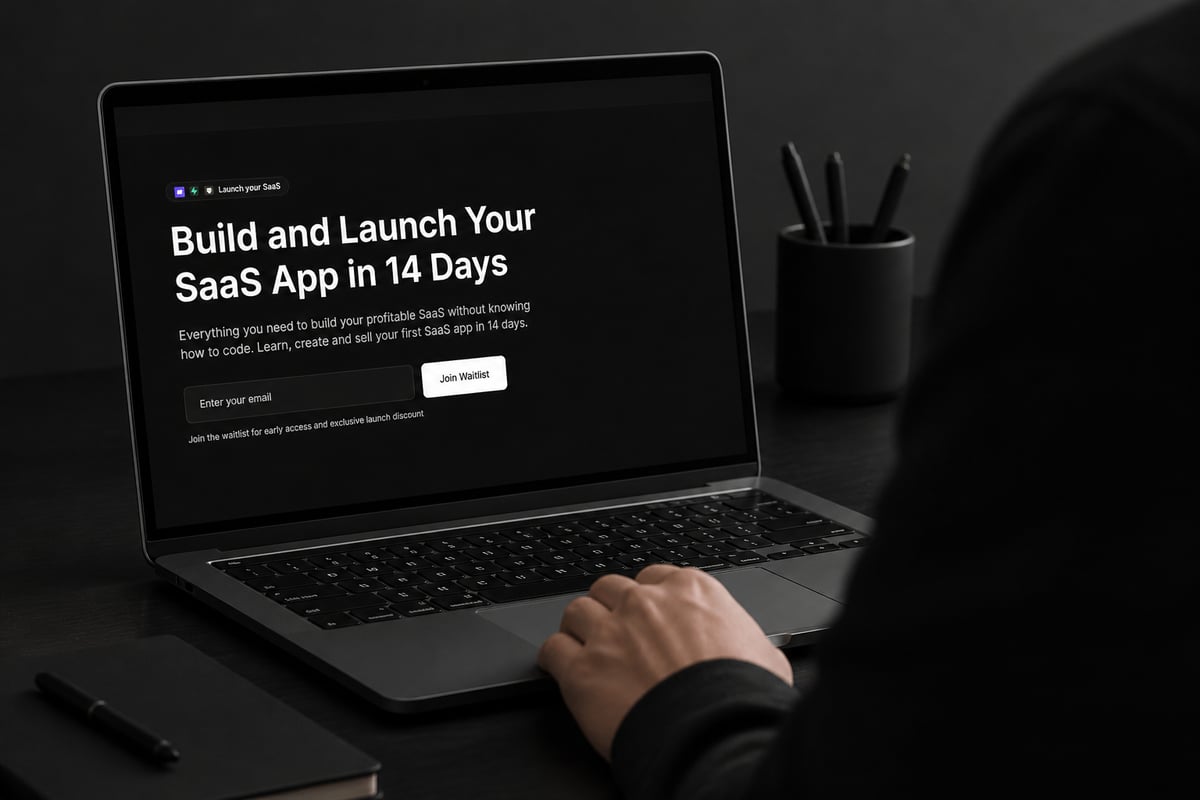
It's built on a system that has been used to scale several products to tens of thousands of dollars per month, and it works for web or iOS apps without any coding experience. Check the product page for current details on what's included.
FAQ
What is the typical conversion rate for B2B sales?
It depends on the stage. First Page Sage reports a visitor-to-lead rate and a lead-to-MQL rate for SaaS, and the RevenueHero benchmark shows a 62% median for qualified leads booking a meeting. Treat each as a stage-specific yardstick rather than one overall figure.
What is the average conversion rate of leads?
For SaaS, First Page Sage reports a lead-to-MQL benchmark of 39%. Lead quality, traffic source and how fast you follow up all move that number up or down.
What is the 3 3 2 2 2 rule of SaaS?
It's a growth-planning heuristic for venture-style growth, not a sourced benchmark. It's a rule of thumb for venture-style growth, and it isn't a requirement for a solo app. A small, steadily growing product can be a great business without hitting it.
Your next step is simple: open your analytics today, calculate the conversion rate for each funnel stage, and circle the weakest one. Fix that before touching anything else. If you'd like a guided route from idea to a selling app, Build and Launch Your SaaS App in 14 Days lays out the path, and you can join the CreateSell waitlist to be first in line for what's coming next.


