
Sell Templates Online: Your Complete 2026 Guide

Modest Mitkus
May 30, 2026
If you've ever thought about making money while you sleep, templates might be your ticket. They're one of the most scalable digital products out there because you create them once and sell them endlessly. Whether you're a designer, developer, or just someone with organizational skills, there's probably a template you could create that people would happily pay for. The template market is booming in 2026, and honestly, it's never been easier to jump in and start earning.
Why Templates Are Perfect Digital Products
Templates solve real problems fast. That's their magic.
People don't want to start from scratch when they're building a website, creating a social media post, planning a budget, or designing a presentation. They want a shortcut that looks professional and works immediately. That's exactly what templates provide, which is why they're such hot sellers.
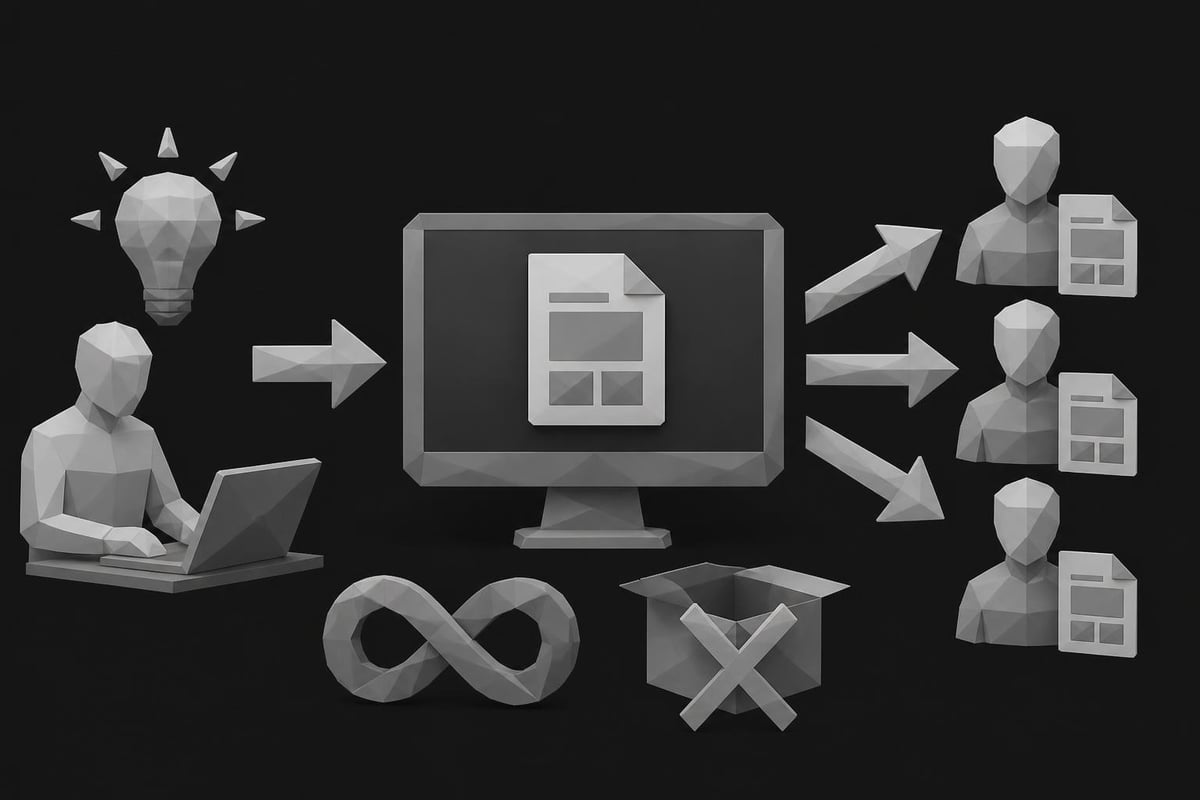
Here's what makes templates brilliant for creators:
- Low production costs - You need basic design or coding skills and some software
- Infinite inventory - Digital means no storage, shipping, or manufacturing
- Recurring income potential - Sell the same template hundreds or thousands of times
- Quick creation time - Many templates can be made in a weekend
- Global market - Sell to anyone, anywhere, 24/7
The barrier to entry is lower than you might think. You don't need fancy equipment or a huge budget. You need a skill, an understanding of what people struggle with, and the willingness to package your knowledge into a format others can use.
Types of Templates You Can Sell Online
The template world is way bigger than you might realize. Let's break down the major categories that are crushing it right now.
Design Templates
These are probably what you think of first. Canva templates, Adobe templates, Figma files - anything that helps people create visual content faster. Selling Canva templates has become particularly popular because Canva's user base is massive and growing.
Social media templates, resume designs, logo kits, Instagram story templates, Pinterest pins - the list goes on. If people post it or print it, there's probably a template market for it.
Website and App Templates
Web developers and designers can sell website themes, landing page templates, WordPress themes, Shopify themes, and mobile app UI kits. These typically command higher prices because they're more complex and save buyers serious development time.
Business and Productivity Templates
Think spreadsheets, business plans, project management boards, invoice templates, contract templates, budget planners, and content calendars. These appeal to entrepreneurs, freelancers, and small business owners who need professional tools without hiring specialists.
Creative and Educational Templates
Course outlines, lesson plans, ebook layouts, presentation decks, email sequences, and newsletter templates all fit here. Educators, coaches, and content creators gobble these up.
Choosing Your Template Niche
You can't serve everyone, so don't try. The riches are in the niches, as they say.
Start by asking yourself what you're good at and what problems you see people struggling with in your circles. Maybe you're a wedding photographer who's created the perfect client questionnaire. That's a template. Maybe you've built a content calendar system that keeps you organized. That's a template too.
Research your niche by:
- Browsing existing template marketplaces to see what's selling
- Joining Facebook groups or Reddit communities in your target area
- Reading reviews on competitor templates to find gaps
- Searching keywords on Pinterest to gauge interest
- Checking Google Trends for related search terms
The sweet spot is where your skills meet market demand. You want enough competition to prove there's a market, but not so much that you can't stand out with a unique angle or better quality.
Creating High-Quality Templates
Your template needs to actually help people. Sounds obvious, but too many creators rush this part.
Put yourself in your customer's shoes. What would make this template genuinely useful versus just pretty? Functionality beats flashiness every time. Your Instagram template might look gorgeous, but if it's hard to customize or doesn't work on mobile, people won't buy it twice or recommend it.
Quality checklist for any template:
- Clear instructions included - Never assume people know what to do
- Easy to customize - Swapping colors, text, and images should be intuitive
- Properly organized - Layers labeled, files structured logically
- Multiple variations - Give options so it fits different use cases
- Compatible formats - Offer files that work with popular software
Test your template with someone who represents your target customer. Watch them use it without helping. Where do they get stuck? What questions do they ask? Those insights are gold for improving your product.
Platforms to Sell Templates Online
Choosing the right platform can make or break your template business. Each has different fee structures, audiences, and features.
| Platform | Best For | Fees | Built-in Traffic |
|---|---|---|---|
| Creative Market | Design templates | 30-50% commission | High |
| Etsy | Beginner sellers | $0.20 listing + 6.5% transaction | Very High |
| Gumroad | Simple setup | 10% of sales | Low |
| Shopify | Full control | $29-299/month | None (you drive traffic) |
| Your own website | Maximum profit | Hosting costs only | None (you drive traffic) |
Marketplace pros: They bring customers to you. Creative Market and Etsy have massive audiences actively searching for templates. You pay for that exposure through higher fees, but it's worth it when you're starting.
Self-hosted pros: You keep more money and own the customer relationship. Building your own site means you can collect emails, create bundles, and control your brand completely. The tradeoff is you handle all the marketing yourself.
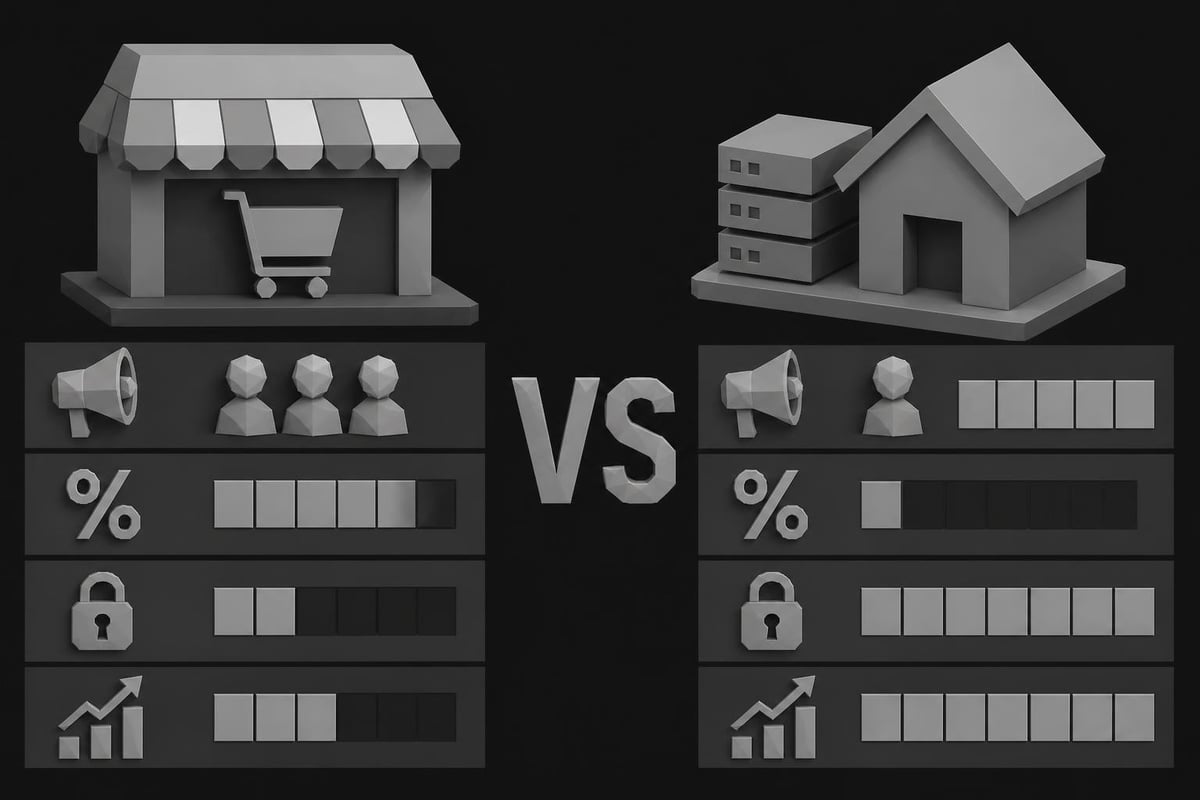
Many successful template sellers use a hybrid approach. They list on marketplaces to get initial traction and build credibility, while simultaneously growing their own website for long-term sustainability. This strategy lets you benefit from marketplace traffic while building an asset you control.
If you're thinking about creating digital products beyond templates, building your own products from scratch opens up even more possibilities. Build and Launch Your SaaS App in 14 Days shows you how to create web applications without traditional coding, perfect for taking your template skills to the next level with interactive tools.
Pricing Your Templates
Pricing is part psychology, part math. Get it wrong and you'll either leave money on the table or scare away buyers.
Research what similar templates sell for, but don't just copy those prices. Consider your quality level, how much time you save buyers, and what they'd pay for a custom version. If a designer charges $500 for a custom Instagram template set, selling a done-for-you template for $27 is a steal.
Pricing strategies that work:
- Tiered pricing - Offer basic, standard, and premium versions
- Bundle discounts - Sell related templates together at a reduced rate
- Launch discounts - Start lower to get initial sales and reviews
- Seasonal pricing - Adjust for holidays or busy seasons in your niche
- Pay-what-you-want - Lets customers choose, often with a minimum
Don't undervalue your work. A $5 template might seem more appealing, but you'd need to sell a ton to make decent income. Starting at $15-30 for simpler templates and $50-150 for complex ones is more realistic. Premium, comprehensive template packs can easily hit $200+.
Remember that when you sell templates online, you're competing globally. Price competitively for the value you deliver, not just your time invested.
Creating Compelling Template Listings
Your listing is your salesperson. It needs to convince browsers to become buyers.
Start with a title that's clear and keyword-rich. "Instagram Templates" is okay, but "50 Instagram Story Templates for Health Coaches - Canva" is way better. It tells exactly who it's for and what they get.
Your description should hit these points fast:
- What problem it solves - Lead with benefits, not features
- What's included - Be specific about file types, quantities, variations
- Who it's for - Name your ideal customer
- How to use it - Brief overview of the process
- Technical requirements - Software needed, compatibility notes
Visual presentation matters hugely:
- Show the template in action, not just static screenshots
- Include before/after comparisons if relevant
- Display multiple variations or color schemes
- Add mockups showing real-world usage
- Create a preview video if possible
Reviews and social proof seal the deal. Once you get your first sales, follow up asking for feedback. Feature your best testimonials prominently. Nothing converts like hearing from happy customers who've used your template successfully.
Marketing Your Templates
Creating amazing templates is only half the battle. You've got to get them in front of buyers.
Content marketing works incredibly well for templates. Blog about the problems your templates solve. Create YouTube tutorials showing how to use them. Post examples on Instagram or Pinterest with links to buy. Platforms for selling digital products often have built-in discovery features, but you can't rely solely on those.
Building Your Audience
Email marketing is your secret weapon. Offer a free template in exchange for an email address. Send helpful tips, showcase new releases, and occasionally promote your paid templates. This list becomes one of your most valuable assets.
Social media drives template sales like crazy, especially visual platforms. Pinterest is phenomenal for design templates. Instagram works great for creative and business templates. LinkedIn can be perfect for professional and productivity templates.
SEO and Discoverability
If you're selling on your own site or want to rank in marketplace searches, optimize everything:
- Use relevant keywords in titles, descriptions, and tags
- Create detailed, helpful product descriptions
- Include alt text on all images
- Write blog content targeting buyer keywords
- Build backlinks through guest posting or collaborations
The goal is to show up when someone searches for exactly what you're selling. Understanding content management systems can help if you're building your own template-selling website and need to optimize for search engines.
Scaling Your Template Business
Once you've got a few templates selling, it's time to think bigger.
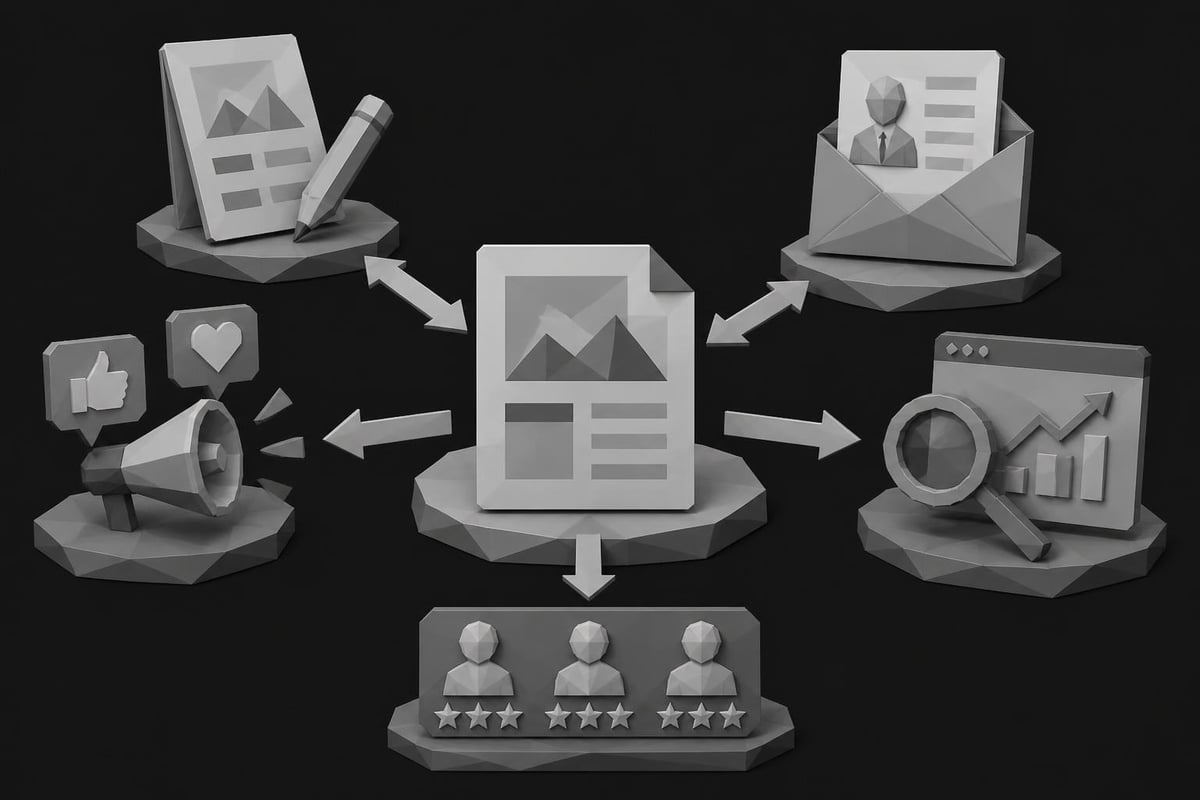
Create template families: If your Instagram template sells well, make a matching Facebook template set. Then Pinterest templates. Then a complete social media bundle. Customers who bought one often buy related products.
Update existing templates: Release Version 2.0 with more options, fresh designs, or new features. Offer discounts to previous buyers. This shows you're committed to quality and brings customers back.
Collaborate with others: Partner with someone whose skills complement yours. A designer and a copywriter could create stunning, pre-written social media templates together. Split the work and the profits.
Build a membership or subscription: Instead of one-time purchases, offer monthly access to your entire template library plus new releases. This creates predictable recurring revenue and increases customer lifetime value.
| Growth Strategy | Time Investment | Revenue Potential | Difficulty |
|---|---|---|---|
| New individual templates | Medium | Medium | Low |
| Template bundles | Low | High | Low |
| Template memberships | High | Very High | Medium |
| Custom template services | High | Medium | Medium |
| Teaching template creation | Very High | Very High | High |
The beauty of selling templates online is that your income can grow without proportionally increasing your time investment. Your tenth customer costs you nothing more to serve than your first.
Common Mistakes to Avoid
Let's talk about what trips people up so you can skip those headaches.
Overcomplicating templates is huge. Your template should solve one problem really well, not try to be everything to everyone. A focused, excellent template beats a bloated, confusing one every time.
Ignoring licensing and legal stuff can bite you. Be crystal clear about what buyers can and can't do with your templates. Can they use them for client work? Resell them? Modify them? Spell it out in your terms. E-signature software can help you manage agreements professionally if you're doing custom template work.
Not protecting your work matters too. Add subtle branding to free previews. Use watermarks on sample images. Make sure buyers can't easily redistribute your templates as their own products.
Poor customer support kills repeat business. Answer questions promptly and helpfully. If someone's struggling to use your template, it's in your interest to help them succeed. Happy customers leave good reviews and buy more.
Giving up too early is probably the biggest mistake. Your first template might not be a home run. That's okay. Each one teaches you more about what your audience wants. Treat this as a learning process, not a lottery ticket.
Analyzing and Improving Your Results
You can't improve what you don't measure. Pay attention to what's working.
Track which templates sell best and ask why. Is it the topic? The price point? The preview images? The platform you listed it on? Once you identify patterns, you can double down on what works.
Read every piece of feedback, especially criticism. Negative reviews sting, but they're incredibly valuable. If three people mention the same issue, fix it in the next version.
Key metrics to watch:
- Conversion rate (views to purchases)
- Average order value
- Customer acquisition cost
- Refund rate
- Repeat purchase rate
- Revenue per template
A/B test different elements. Try two different preview images and see which converts better. Test different price points. Experiment with bundle configurations. Small improvements in conversion rate compound over time into significantly more revenue.
Survey your customers occasionally. Ask what other templates they wish existed. What problems are they trying to solve? This direct feedback often reveals your next product ideas.
The Long-Term Template Business
Building a sustainable business selling templates online isn't about creating one viral product. It's about consistently delivering value, building a reputation, and growing your catalog.
Think of each template as a tiny employee working for you 24/7. It sits on your store shelf, ready to serve customers while you sleep, travel, or work on your next creation. The more quality "employees" you add to your team, the more passive income you generate.
Diversification protects you too. Don't rely on one platform, one template type, or one traffic source. Selling design work online requires adapting to changing platforms and customer preferences, so build your business with flexibility in mind.
The template market will keep evolving. New tools emerge, design trends shift, and customer needs change. Stay curious, keep learning, and be willing to adapt. The core principle remains: create something genuinely useful, market it to the right people, and deliver exceptional value.
Your template business can start as a side hustle and grow into your primary income. Many successful creators now earn six figures annually from templates they created years ago. That's the power of digital products - they compound over time rather than depreciating.
Selling templates online offers one of the clearest paths to building passive income through digital products. Whether you start with simple social media templates or complex web themes, the key is getting started, learning from your customers, and consistently improving. If you're ready to expand beyond templates and create more sophisticated digital products that generate income while you sleep, CreateSell can guide you through building web and mobile apps from scratch using vibe coding, even if you've never written a line of code before. Your ideas can become products, and those products can become your freedom.