
Newsletter Monetization: How to Earn From Your List

Modest Mitkus · November 27, 2026
Newsletter monetization means turning your subscriber list into income, usually through sponsorships, affiliate links, paid subscriptions, or your own product. The model that works best depends on how big your list is and how much trust you've built, and for most beginners the biggest payoff comes from selling something you own.
If you're an aspiring app builder with no coding background, that last part matters. A newsletter can be the warmest audience you'll ever have for a first product. Let's walk through the main ways to earn, what each one demands, and how to pick one without wasting months.
What Is the Best Way to Earn From a Newsletter?
The best way to earn from a newsletter is the one that matches your list size and your goals: sponsorships and affiliates for quick income, paid tiers for recurring revenue, and your own product for the highest ceiling.
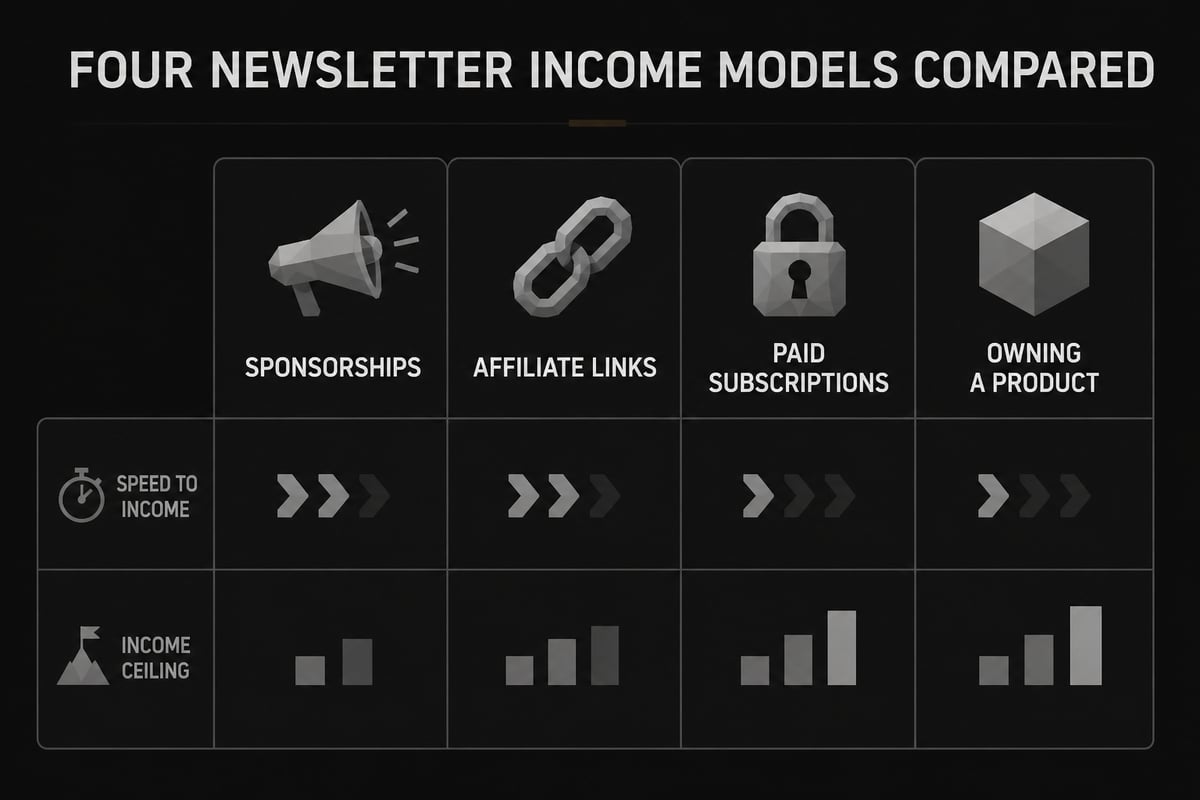
Here's a quick side-by-side so you can see the tradeoffs.
| Model | Speed to first income | Income ceiling | What you need |
|---|---|---|---|
| Sponsorships | Fast (with enough subscribers) | Medium | A focused audience |
| Affiliate links | Fast | Low to medium | Products you'd actually recommend |
| Paid subscription | Slow | Medium to high | Content people can't get elsewhere |
| Your own product | Slowest to build | Highest | An idea people will pay for |
None of these are exclusive. Most successful writers stack two or three over time. Start with whichever one fits your current stage, then layer on the others.
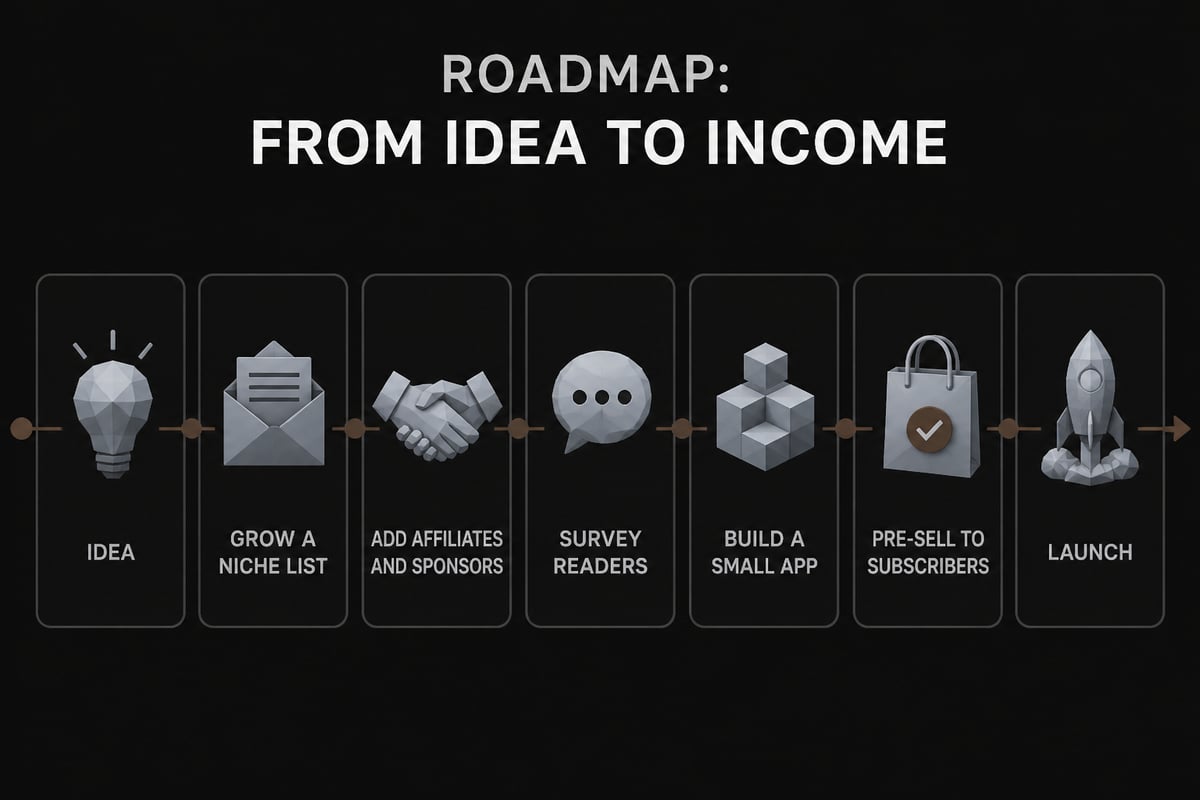
A simple way to sequence them: if your list is small but engaged, begin with a couple of affiliate recommendations you already use and trust. Once replies and clicks show people act on what you send, test a sponsor slot. In the background, keep asking readers what they're stuck on, because those answers point to a product idea. The paid tier usually fits once you've got a steady archive of work that shows what members would get. Picture a newsletter about budgeting for freelancers: it could earn from a tool affiliate link now, a sponsor later, and a spreadsheet-style app down the road. Each step builds on the trust from the last one, and none of them force you to start over.
How Do You Get Subscribers to Your Newsletter?
You get subscribers by offering a clear reason to sign up, usually a free resource tied to one specific problem, and then promoting it everywhere your ideal reader already hangs out.
A few approaches that work without a big budget:
- Offer a lead magnet. A checklist, template, or mini guide that solves one narrow problem converts far better than "subscribe for updates." Our post on lead magnets covers ideas that fit small creators.
- Post where your audience already is. Short, useful posts on social platforms with a link to your signup page beat random promotion.
- Build in public. If you're making an app, share the messy middle. People love following a build, and they'll subscribe to see how it ends.
- Add a signup spot to your website. Even a simple page captures visitors who'd otherwise disappear. A personal brand website gives your list a permanent home.
Niche beats broad every time. Fifty subscribers who care about one topic are worth more than five hundred who clicked a random giveaway.
How Does Sponsorship Monetization Work?
Sponsorship monetization works by charging a brand to place a short ad or a mention inside your issue, usually priced by list size, open rate, or a flat fee per slot.
Sponsors care about attention, not just headcount. That's why your engagement numbers matter. For context, the Data & Marketing Association's 2025 benchmarking report reported a 35.9% open rate and a 2.3% unique click rate. If your list beats those figures, you've got a real selling point when pitching advertisers.
A few tips for sponsorships:
- Say no to sponsors who don't fit your readers. One bad ad can cost you more trust than it earns.
- Keep ads clearly labeled and short.
- Start with one slot per issue so it doesn't feel crowded.
- Track clicks so you can show sponsors real results next time.
The catch is volume. Most advertisers want a decent-sized list, so sponsorships often come after you've grown for a while. Until then, other models carry the load.
Can Affiliate Links Make Your Newsletter Money?
Yes, affiliate links can make a newsletter money, because you earn a commission whenever a subscriber buys through your referral link, and you don't need a huge list to start.
The rule is simple: only recommend what you'd use yourself. Readers can smell a cash grab from a mile away, and a single pushy recommendation burns trust you've spent months building.
Good affiliate practices:
- Pick two or three tools or products your readers genuinely need.
- Write honest, specific reviews rather than a bare link.
- Disclose affiliate relationships up front.
- Weave recommendations into useful content instead of dropping them in cold.
If you want the basics, our guide to affiliate marketing for beginners walks through how it all fits together. Just know that affiliate income is usually modest. It's a nice add-on, rarely a full business.
Should You Charge for a Paid Newsletter or Membership?
Charging for your newsletter makes sense when your content saves readers time, money, or effort in a way they can't easily find for free.
Paid models usually take one of three shapes:
- Fully paid. Every issue sits behind a subscription.
- Freemium. Free issues for everyone, with extra depth or archives for paying members.
- Membership or community. Subscribers pay for access to a group, live sessions, or direct feedback.
Recurring revenue is the big draw. If you want to understand why steady monthly income is so valuable, read up on the recurring revenue model.
The downside is the work of keeping people paying. You'll need to publish consistently, deliver clear value every issue, and accept that churn is part of the game. A paid newsletter also asks for a level of trust that takes time to earn, so it often works better as a second step than a first.
Why Selling Your Own Product Beats Renting Your Audience
Selling your own product tends to beat ads and affiliates because you keep the full margin, control the experience, and don't depend on anyone else's budget or commission rates.
With sponsorships, you rent out your readers' attention. With affiliates, you send customers to someone else's product. With your own product, every sale is yours, and the same list can buy again and again.
For readers who can't code, this used to be a wall. It isn't anymore. With vibe coding, you can build a working web or iOS app by describing what you want rather than writing code by hand, and your newsletter gives you a ready-made group of people to test it with. If you're weighing options, our rundown of digital products to sell shows what else is possible, and the posts on app monetization explain how an app itself can earn once it's live.
The honest tradeoff: building a product takes longer than slotting in a sponsor. But the ceiling is far higher, and it compounds as your list grows.

How Do You Turn Subscribers Into App Customers?
You turn subscribers into app customers by learning what they struggle with, building a small solution to that exact problem, and offering it to the list before anyone else sees it.
Your newsletter is a free research lab. Here's a simple path:
- Ask. Run a short reply-to-this-email survey about your readers' biggest frustration.
- Spot the pattern. When the same problem shows up again and again, that's your idea.
- Build small. A narrow app that solves one problem beats a bloated one. The no-code startups post shows how people are launching lean.
- Pre-sell or beta test. Offer early access to subscribers at a discount and collect feedback.
- Launch and keep emailing. Your list becomes your first batch of customers and your loudest source of testimonials.
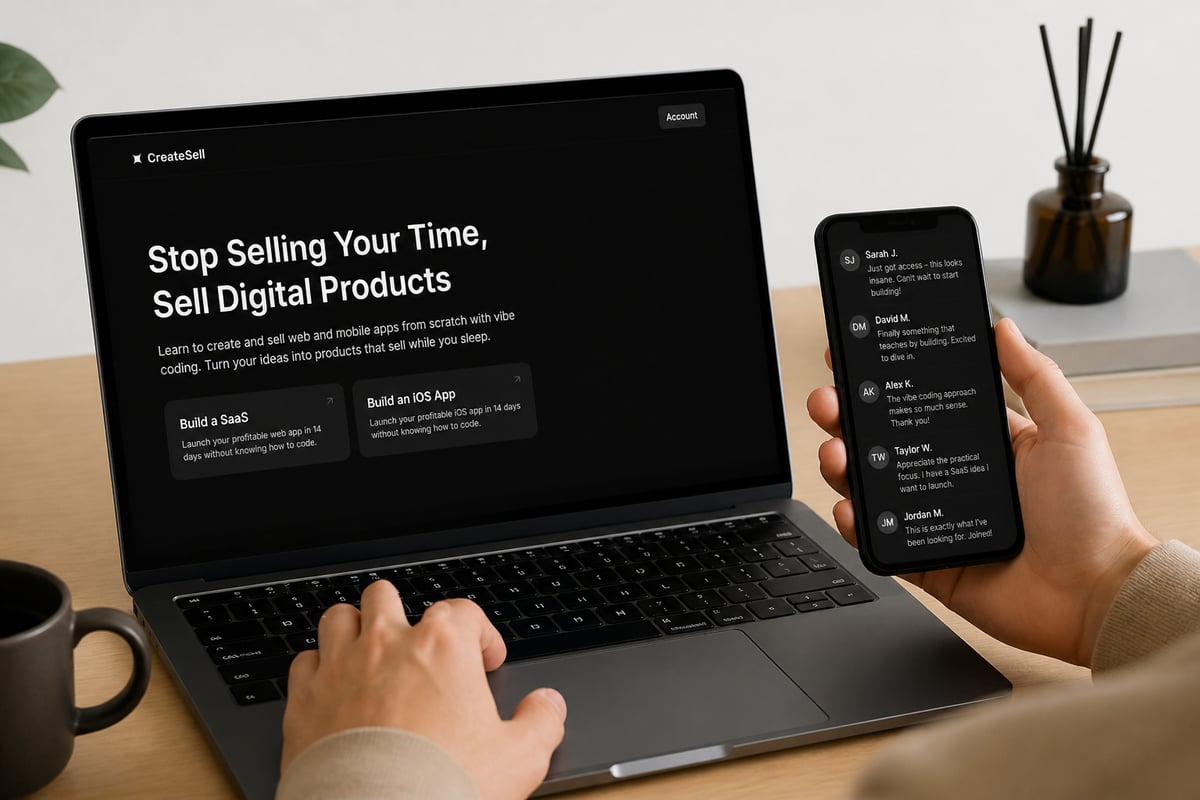
CreateSell is built around exactly this path. CreateSell walks you from finding an idea people will pay for through to selling the finished web or iOS app, with no coding experience needed. It teaches the marketing and selling side too, which is where most app projects stall. The system behind it has been used to scale several products to tens of thousands of dollars per month, and there's a community of builders sharing progress and first sales along the way. Results vary from person to person, so treat those numbers as what's been possible, not a promise.
Which Metrics Tell You Your List Is Ready to Earn?
Your list is ready to earn when engagement is steady and readers act on what you send, which you can see in open rates, click rates, and reply volume rather than raw subscriber count.
Benchmarks help you judge where you stand. MailerLite's analysis of more than 3.6 million campaigns found an average 2025 open rate of 43.46%, and the same report put average clicks at 2.09% with a 6.81% click-to-open rate. If you want a deeper look at conversions beyond opens and clicks, MoEngage's email benchmarks are worth a read.
Keep an eye on:
- Open rate. Are people showing up?
- Click rate. Are they interested enough to act?
- Replies. The strongest signal of trust, and the best source of product ideas.
- Unsubscribe rate. A spike after a sales email tells you the offer or timing was off.
Don't chase a magic subscriber number. A small, responsive list will out-earn a big, sleepy one.
What Is the 3/2/1 Newsletter Format?
The 3/2/1 newsletter is a simple layout that gives each issue a consistent structure, typically three short items, two deeper ideas, and one takeaway or call to action, so readers know what to expect and you know what to write.
There's no official rulebook, so you can adapt the numbers. What matters is the consistency. A predictable format makes writing faster, builds reading habits, and gives you one clean spot per issue to place an offer without it feeling jarring.
For monetization, that "one" slot is gold. Use it to point to a sponsor, a recommended tool, or your own app, and keep everything else focused on value.
FAQ
Can ChatGPT create a newsletter?
Yes, ChatGPT can draft newsletter issues, subject lines, and outlines, which can save you a lot of time. You'll still want to edit heavily and add your own stories and opinions, since readers subscribe for your voice, not generic text.
How much does a website make per 1,000 views?
It varies widely depending on niche, traffic source, and how you earn. Display ads pay very differently from affiliate links or product sales, so there's no single reliable figure. Selling your own product usually earns more per visitor than ads do, which is one reason owning something pays off.
How big does a list need to be before monetizing?
You don't need a big list to start earning. Affiliate links and a small product pre-sale can work with a few hundred engaged subscribers, while sponsorships usually need more. Focus on engagement first and size second.
Your next step is simple: send your list a one-question email asking what they're most stuck on, then read the replies for a product idea. Once you spot a problem worth solving, CreateSell can show you how to turn it into a web or iOS app you build without writing code, and Join Waitlist to be first in line when you're ready to start building.


