
Earned Media Guide: How to Get Press Without Paying

Modest Mitkus · November 22, 2026
Earned media is any publicity you get without paying for the placement: press coverage, reviews, social shares, mentions in newsletters and word of mouth. Someone else decides your product is worth talking about, and that's exactly why it carries so much weight. If you're building an app and don't have an ad budget, earned media is one of the best ways to get your first wave of users.
This guide walks through what earned media is, how it compares with paid and owned media, and how a first-time app builder can actually win it.
What counts as earned media?
Earned media is attention that other people give your product voluntarily, with no payment from you for the placement itself. Think of a blogger writing about your app, a journalist quoting you, a customer posting a screenshot, or a podcaster recommending your tool to listeners.
Here are the most common forms:
- Press coverage: articles, interviews and quotes in news sites, blogs and trade publications
- Reviews: App Store reviews, product roundups, and independent write-ups
- Social shares: posts, reposts, tags and screenshots from real users
- Word of mouth: recommendations in group chats, communities and forums
- Newsletter and podcast mentions: features you didn't buy a slot for
The key word is "earned." You can pitch, you can build relationships, and you can create something worth sharing. But the final call belongs to someone else, and no money changes hands for the mention.
How is earned media different from paid and owned media?
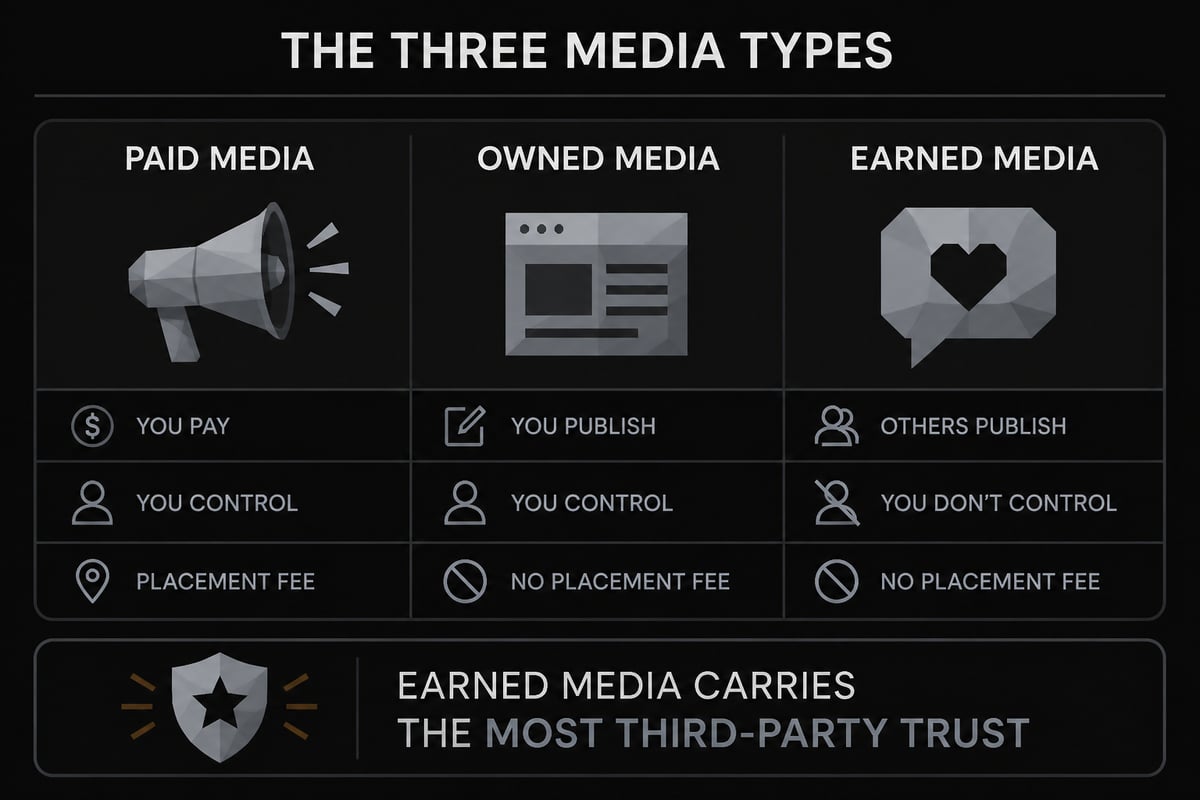
The difference comes down to who controls the message and who pays for the placement. Paid media is bought, owned media is yours, and earned media is given to you by others.
| Type | Who controls it | Cost | Examples |
|---|---|---|---|
| Paid media | You | Direct spend | Facebook ads, Google ads, sponsored posts, influencer fees |
| Owned media | You | Your time and tools | Your website, blog, email list, app store listing |
| Earned media | Other people | Your effort, not a placement fee | Press features, reviews, shares, word of mouth |
So what's the difference between earned and unearned media? Unearned media is basically the paid and owned side: you either bought the space or you published it on your own channel. Earned media is the stuff you didn't buy and don't control.
That lack of control cuts both ways. A glowing review can send you hundreds of signups. A critical one can do real damage, and you can't edit or remove it. It's also why people trust it more. When a stranger vouches for your app without being paid, it reads very differently from an ad.
For a more concrete picture of paid media, examples include a promoted post on Instagram, a Google search ad, a banner on a website, or a fee paid to an influencer to feature your product. If you paid for the spot, it's paid media.
Why earned media matters more in 2026
Earned media matters because trust is scarce, and people lean on third-party voices to decide what's real. A 2025 report from VaynerX, Muck Rack and Ipsos found that most surveyed consumers said their trust in news sources had declined over the previous five years. In the same report, many said they fact-check questionable stories on their own.
That tells you something useful. People are skeptical, and they go looking for proof. The report also found that most consumers saw a lack of clear evidence, data or sources as a major credibility red flag. You can read more about the research in this release on the VaynerX, Muck Rack and Ipsos findings.
For you as an app builder, the takeaway is practical. Vague claims like "the best budgeting app ever" won't earn you anything. Specific, checkable ones will: real numbers, real screenshots, a real story behind why you built it. Earned media rewards evidence.
Do you pay for earned media?
You don't pay for the placement, but earned media isn't free in the sense of costing nothing. You pay with time, effort and the quality of what you build.
Here's what that looks like in practice:
- Your time: researching who covers your niche, writing pitches, following up, replying to comments
- Your product: it has to be good or interesting enough that people want to talk about it
- Your assets: a clear landing page, screenshots, a short demo video, and a simple story
- Your relationships: the more you show up in communities and conversations, the more people know you
If someone asks for money in exchange for coverage, that's a sponsorship or an ad, which makes it paid media. Be careful with anyone who promises guaranteed press for a fee. Genuine editorial coverage can't be bought, and real outlets are expected to label sponsored content as such.
How do you get earned media for an app?
You get earned media by giving people a reason to talk about your app and making it easy for them to do so. For a builder without a PR team, that means starting small and being specific.
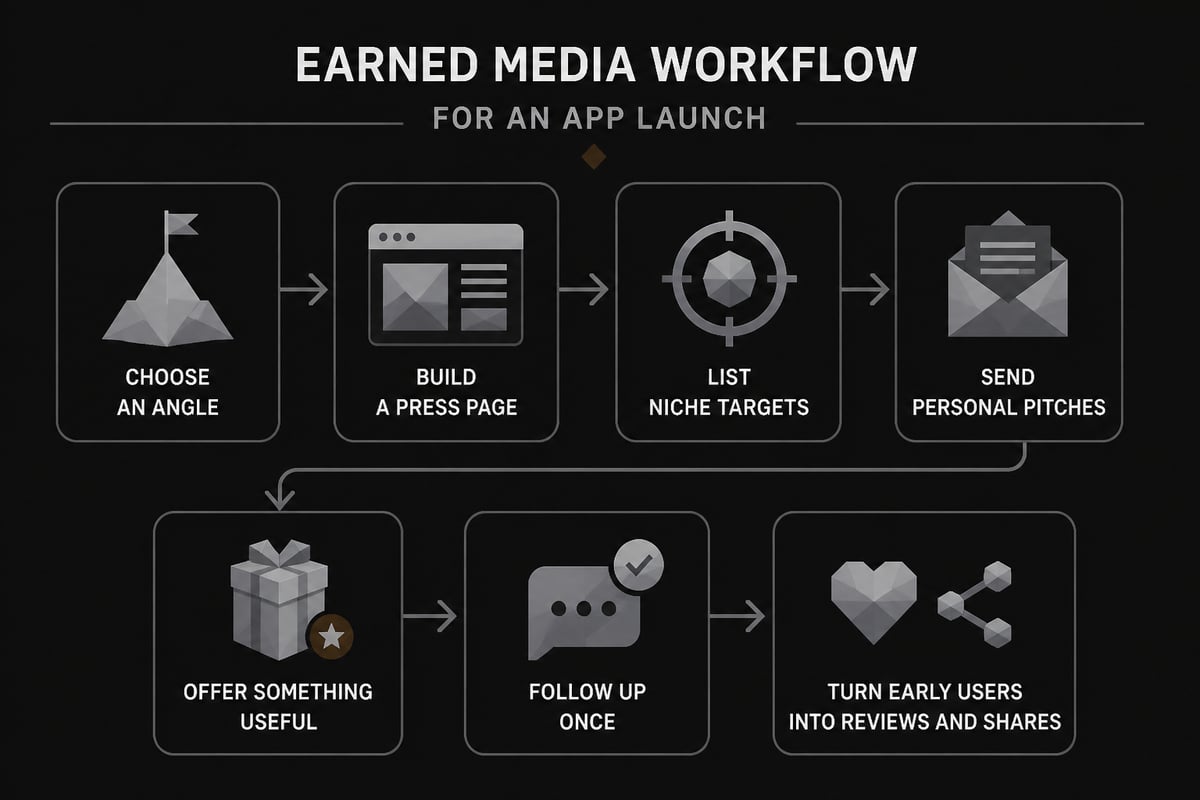
Follow these steps:
- Pick a clear angle. "A new habit tracker" is forgettable. "A habit tracker built by a nurse with no coding background in six weeks" is a story. Your angle is the reason someone would care.
- Build a simple press page. One page with a short description, a few screenshots, a demo link, and your contact details. Keep it clean so a busy writer can grab what they need in a minute.
- List the right targets. Look for niche newsletters, small blogs, podcasts, subreddits and indie maker communities that cover your kind of app. Smaller outlets reply far more often than big ones.
- Pitch with a personal note. Mention something specific you liked from their recent work, then give your angle in two or three sentences. Skip the copy-pasted blast.
- Offer something useful. Free access, a data point from your own users, or a short quote about a trend in your niche gives a writer something to work with.
- Follow up once. A polite nudge a few days later is fine. Pestering isn't.
Use your launch as a hook
A launch gives people a natural reason to cover you. Time your outreach around it, and give early users an easy way to share, such as a shareable result, a badge, or a short "built with" link inside the app. Every share is a small piece of earned media.
Turn users into your press
Reviews and shares from real people often do more than a single article. Ask happy users for a review at the right moment, right after they've had a win inside the app. Reply to everyone who mentions you, even briefly. People talk about products where they feel noticed.
Where can a solo app builder find earned media opportunities?
The best opportunities sit in the places where your future users already hang out, not in big national outlets. A solo builder wins by going narrow.
- Niche newsletters and blogs: a newsletter with 3,000 readers who all care about your topic beats a general site that nobody in your niche reads.
- Podcasts: hosts are always looking for guests with a fresh story, and "I built this without coding" fits many shows.
- Communities and forums: answer questions honestly, share what you're building, and let people ask about it. It's slow but it compounds. If you want a deeper look at this, our guide on how to build an audience covers the groundwork.
- Maker and indie builder circles: places where people share launches and first sales tend to be generous with feedback and reposts. Here's a closer look at the indie hackers crowd and how they support each other.
- Social platforms: consistent, useful posting makes it easy for others to quote or reshare you. A few social media marketing skills go a long way here.
One more thing the same report hints at: most brand leaders agreed a steady presence outside a crisis is necessary, yet only a minority strongly agreed their brand voice is consistently authentic. For a solo builder, that gap is an opening. Showing up regularly, in a real voice, makes you easy to remember and easy to cite.

What kinds of earned media should you aim for first?
Aim for the kinds that give you proof and traffic at the same time. Not all earned media is equal, and early on you want mentions that help the next mention happen.
Start with these:
- Honest reviews from early users. Even five good ones make your listing feel real.
- A feature in one small niche outlet. It gives you a "as seen in" line and a link to point future pitches at.
- A user sharing a result. A screenshot of someone's progress is more convincing than anything you could write yourself.
- A quote in someone else's article. Responding quickly to a writer's request for expert input builds a trail of credibility.
Each of these becomes ammunition. A review goes on your landing page. A small feature gets linked in your next pitch. Over time, one piece of earned media leads to another, which is how a quiet launch turns into momentum. If your landing page needs work to capture that attention, these tips on product landing pages are a good place to start.
How do you measure earned media?
You measure earned media by tracking mentions, the traffic they send, and the signups that follow. You don't need fancy tools to get started.
Keep an eye on:
- Mentions: a simple spreadsheet listing where you were mentioned, the date, and the link
- Referral traffic: which sites send visitors to your page (your analytics tool will show this)
- Signups and downloads after a mention: note the spike and match it to the source
- Sentiment: whether the coverage is positive, neutral or critical
- Reach of the outlet: a rough idea of the audience size
Add a short, trackable link or a "how did you hear about us?" question at signup. Over a few weeks you'll see which mentions drive real users and which just feel nice. Put your energy into the first kind.
Is influencer marketing earned or paid media?
It depends on whether you paid. If you sent a free product and the creator chose to post about it with no agreement, that's earned. If you paid a fee, signed a deal or required a post in exchange, it's paid media. Gifted products sit in a gray area, so be transparent and follow the disclosure rules of whatever platform you're on.
FAQ
What is the difference between earned and unearned media?
Earned media is publicity other people give you voluntarily, like press coverage, reviews and shares. Unearned media usually means the channels you pay for or publish on yourself, which are paid and owned media. The split comes down to who made the decision to talk about you.
Can you get earned media with no following or budget?
Yes. A small, specific story pitched to the right niche outlet can land coverage even if you have no audience yet. Start with communities and newsletters in your niche, lead with a clear angle, and offer something useful to the person you're pitching.
How long does it take to see results from earned media?
It varies a lot. A well-timed pitch can bring a mention within days, while building relationships and a steady presence usually takes months. Plan on it being a slow build that gets easier as each mention gives you more proof to point to.
Your next step is simple: write down your app's angle in two sentences and send it to three small newsletters or podcasts in your niche this week. If you want a clear path from picking an idea people will pay for through to selling your app, even without coding experience, CreateSell teaches the marketing and selling side where most app projects stall, so join the waitlist at CreateSell to be first in line.


