
Indie Hackers: Building Digital Products Solo in 2026

Modest Mitkus
March 8, 2026
The world of business has shifted dramatically over the past few years, and one of the most exciting movements to emerge is the rise of indie hackers. These solo entrepreneurs are building profitable digital products without venture capital, co-founders, or traditional business infrastructure. They're turning their skills, knowledge, and creativity into self-sustaining businesses that generate revenue while they sleep. If you've ever dreamed of breaking free from the 9-to-5 grind and building something that's entirely yours, understanding the indie hacker mindset might just change your life.
What Are Indie Hackers and Why They Matter
Indie hackers are entrepreneurs who build and launch digital products independently, typically as solo founders or with very small teams. They focus on creating profitable businesses rather than chasing massive valuations or venture capital funding.
These builders prioritize:
- Revenue from day one over growth-at-all-costs mentality
- Sustainable business models that don't require external funding
- Automation and systems that reduce manual work
- Learning through building and shipping products quickly
The beauty of being an indie hacker is the freedom it provides. You're not answerable to investors demanding 10x returns or board members questioning your vision. You build what you want, serve customers you choose, and keep 100% of the equity. This approach has become increasingly popular as tools and platforms have made it easier than ever to build and launch digital products without a technical team or massive budget.
What makes indie hackers different from traditional entrepreneurs is their approach to validation and growth. They test ideas quickly, launch minimum viable products, and iterate based on real customer feedback rather than spending months in stealth mode perfecting something nobody wants.
The Indie Hacker Mindset and Philosophy
Success as an indie hacker requires more than just technical skills. It demands a particular way of thinking about business, risk, and value creation.
Embracing the Builder's Mentality
Indie hackers see themselves as builders first and businesspeople second. They're comfortable getting their hands dirty with code, design, marketing, and customer support. This generalist approach means you'll wear every hat in your business, at least initially.
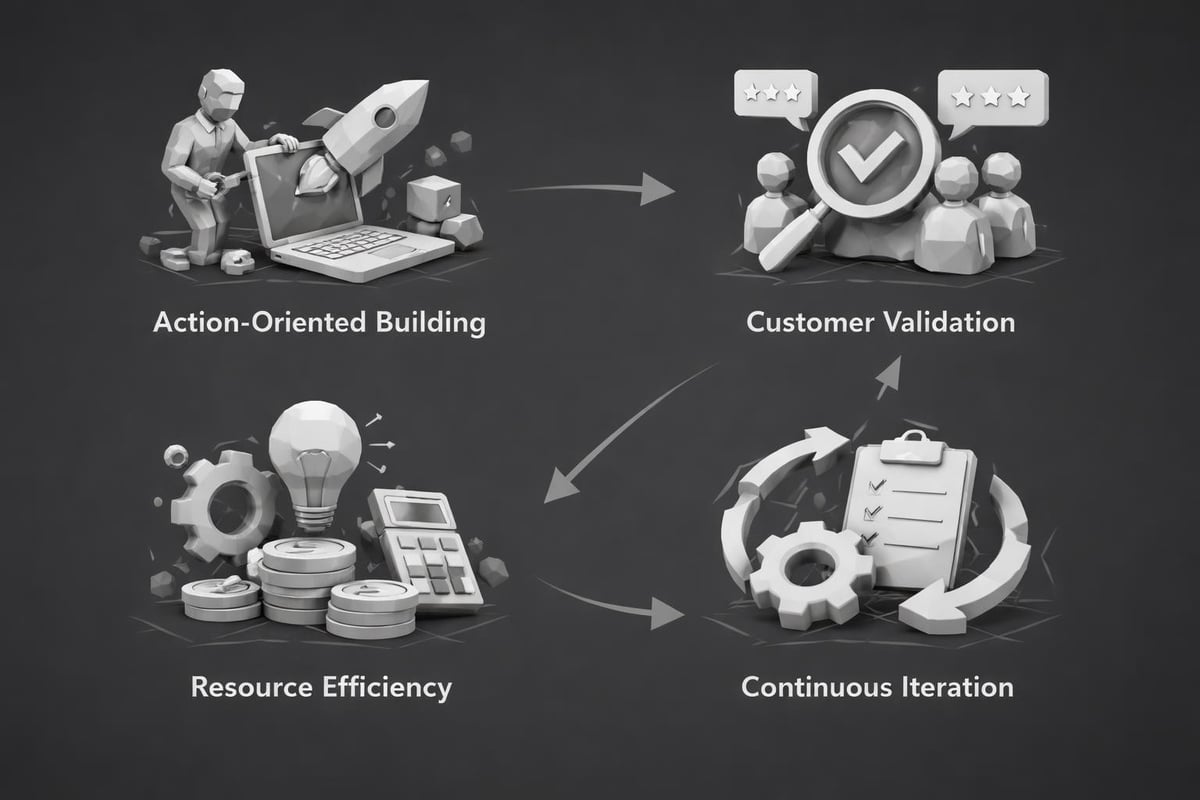
The entrepreneurship mindset that drives successful indie hackers includes:
- Bias toward action: Shipping imperfect products beats endless planning
- Customer obsession: Building what people actually need, not what you think is cool
- Resource efficiency: Making every dollar and hour count
- Continuous learning: Treating failures as data points, not defeats
Building in Public vs. Stealth Mode
Many indie hackers have adopted a "build in public" approach, sharing their journey, metrics, and lessons learned transparently. You'll find countless success stories on platforms like Indie Hackers, where founders document their path from zero to sustainable revenue.
This transparency serves multiple purposes. It builds an audience before you launch, creates accountability, and attracts early customers who feel invested in your journey. Plus, the feedback you receive helps you avoid costly mistakes and pivot faster when needed.
Essential Skills Every Indie Hacker Should Develop
You don't need to be an expert in everything, but indie hackers typically develop competence across several key areas. Think of yourself as a T-shaped professional with broad knowledge and deep expertise in one or two areas.
| Skill Category | Core Competencies | Why It Matters |
|---|---|---|
| Technical | Basic coding, no-code tools, API integration | Build your own products or understand what's possible |
| Marketing | SEO, content creation, social media | Attract customers without paid advertising budgets |
| Design | UI/UX basics, visual design principles | Create products people enjoy using |
| Sales | Copywriting, positioning, customer conversations | Convert interest into revenue |
| Operations | Automation, systems thinking, analytics | Scale without burning out |
The good news? You don't need to master everything before starting. Many successful indie hackers began with strength in just one area and learned the rest while building. The key is developing high-income skills that compound over time and apply across multiple projects.
Learning Through Projects
The fastest way to develop these skills is by building real projects that serve real customers. Each product you launch teaches you something new about validation, marketing, pricing, or customer service. Even failed projects contribute to your knowledge base and make your next attempt more likely to succeed.
Consider starting with smaller projects that you can complete in weeks rather than months. This gives you faster feedback loops and more opportunities to learn what works in your niche.
Tools and Resources for Getting Started
The indie hacker ecosystem has exploded in recent years, bringing with it an abundance of tools designed specifically for solo founders. You'll find everything from essential resources for product building to community platforms where you can connect with other builders.
Development and Building:
- No-code platforms like Bubble, Webflow, and Framer for non-technical founders
- Rapid prototyping tools that let you test ideas before committing months of work
- AI-assisted coding tools that amplify your technical capabilities
- Templates and boilerplates that give you a head start
Marketing and Growth:
- SEO tools for organic traffic generation
- Email marketing platforms for building relationships
- Social media schedulers to maintain consistent presence
- Analytics dashboards to track what actually drives results
The curated tool collections available today mean you can assemble a complete business technology stack for less than $100 per month. This democratization of tools has removed the traditional barriers to starting a digital product business.
From Idea to First Dollar
The journey from concept to first paying customer is where most aspiring indie hackers get stuck. They spend months building in isolation, only to discover there's no market for what they've created.
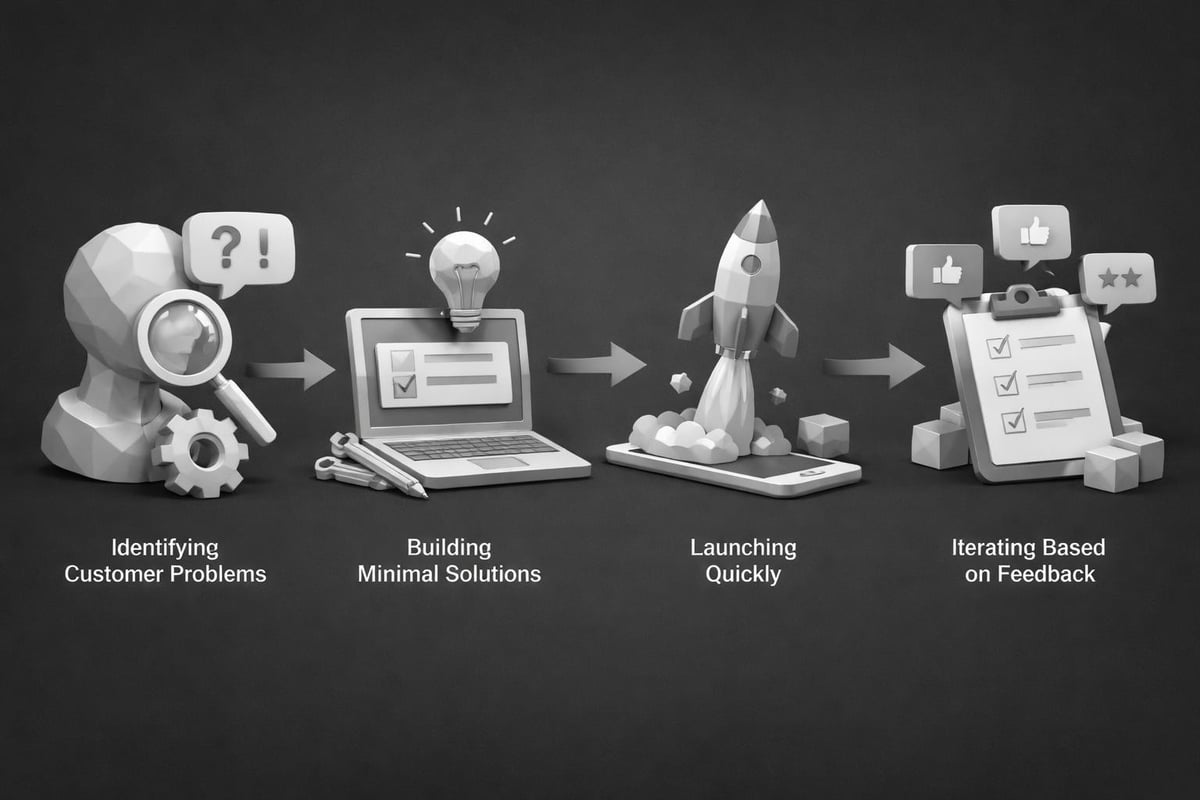
Step 1: Validate Before You Build
Talk to potential customers before writing a single line of code. Share your idea in communities, forums, and social media groups where your target audience hangs out. Ask specific questions about their current solutions, pain points, and willingness to pay.
Create a simple landing page describing your solution and collect email addresses from interested people. If you can't get 100 people to give you their email, you probably can't get them to give you their money.
Step 2: Build the Minimum Viable Product
Your first version should be embarrassingly simple. Include only the core feature that solves the primary pain point. Everything else is a distraction that delays your launch and learning.
Many successful indie hackers launched products that took just 2-4 weeks to build. The goal isn't perfection but validation. You need real users interacting with your product to understand what to build next.
Step 3: Get Your First Ten Customers Manually
Don't rely on passive marketing for your initial customers. Reach out directly to people who expressed interest, offer personalized onboarding, and be present in communities where your ideal customers gather.
These first customers are gold. They'll provide invaluable feedback, become case studies, and often turn into your best advocates. Treat them exceptionally well, even if it doesn't scale.
Building Sustainable Revenue Streams
The defining characteristic of successful indie hackers is their ability to generate consistent revenue without massive teams or advertising budgets. This requires thoughtful business model design from the start.
Pricing Models That Work
Consider these proven approaches for digital products:
- Subscription/SaaS: Monthly recurring revenue provides predictable income and higher lifetime value
- One-time purchase: Lower barrier to entry, easier to sell, but requires constant new customer acquisition
- Freemium: Free tier attracts users, premium features convert a percentage to paying customers
- Usage-based: Customers pay based on consumption, aligning your revenue with value delivered
The recurring revenue model has become particularly popular among indie hackers because it creates compounding growth. Each month you retain existing customers while adding new ones, building a foundation of predictable income.
Multiple Product Strategy
Many successful indie hackers don't rely on a single product. They build a portfolio of digital products that serve related audiences or solve complementary problems. This diversification provides stability and creates opportunities for cross-promotion.
Your portfolio might include:
- A flagship SaaS product generating monthly recurring revenue
- Digital courses or templates providing one-time purchase income
- Consulting or coaching services for higher-ticket sales
- Community membership offering ongoing value and connection
This approach mirrors what you'll find in communities like Indie Makers Hub, where builders showcase multiple projects at various stages of development and monetization.
Marketing Without a Marketing Budget
Traditional marketing requires significant capital for ads, PR agencies, and sponsored content. Indie hackers succeed by leveraging strategies that trade time and creativity for money.
Content marketing remains king for indie hackers. By sharing valuable insights, tutorials, and experiences, you attract organic traffic and build authority in your niche. The key is consistency and genuine helpfulness rather than thinly veiled sales pitches.
Building an audience through content takes time but compounds beautifully. Your early posts might reach dozens of people, but over months and years, you'll develop a distribution channel that costs nothing and reaches thousands. This is exactly why so many indie hackers focus on building an audience before launching products.
Community-Driven Growth
Engage authentically in communities where your target customers already gather. Answer questions, share insights, and provide value without expecting immediate returns. Over time, you become known as a helpful expert, and people naturally become curious about your products.
Platforms like Reddit, Discord servers, Slack groups, and niche forums offer direct access to your ideal customers. The key is contributing genuinely rather than spamming promotional links.
Common Pitfalls and How to Avoid Them
Even experienced indie hackers make mistakes. Learning to recognize and avoid common traps can save you months of wasted effort and frustration.
Building Without Validation
The number one mistake is spending months building something nobody wants. You fall in love with your solution and convince yourself that if you just add one more feature, customers will come.
Avoid this by:
- Talking to potential customers weekly during development
- Launching before you're ready and iterating based on feedback
- Being willing to pivot or abandon ideas that aren't gaining traction
- Setting clear validation milestones before committing more resources
Underpricing Your Work
Indie hackers often undervalue their products, especially when starting out. They price based on what they'd personally pay rather than the value they deliver to customers.
Remember that customers evaluate your product based on the problem it solves, not the hours you spent building it. A tool that saves someone five hours per week is worth significantly more than $10/month.
Trying to Do Everything Alone
While indie hackers work independently, successful ones build networks of fellow builders, advisors, and collaborators. They join communities, form accountability partnerships, and occasionally hire freelancers for tasks outside their expertise.
Resources like IndieSaaS Forge provide templates, playbooks, and community support specifically designed for indie developers looking to scale their products efficiently.
Scaling as a Solo Founder
Growth as an indie hacker looks different than traditional startup scaling. You're not trying to build a unicorn but rather a sustainable business that supports your lifestyle and goals.

Automation First
Every hour you spend on repetitive tasks is an hour you're not spending on growth, product improvement, or new projects. Successful indie hackers obsess over automation and systemization.
Key areas to automate:
- Customer onboarding and activation flows
- Payment processing and subscription management
- Customer support for common questions (knowledge bases, chatbots)
- Marketing and social media posting
- Analytics and reporting
The goal isn't to eliminate all manual work but to focus your personal attention on the 20% of activities that drive 80% of results. Everything else should be automated, delegated, or eliminated.
Knowing When to Stay Solo vs. Grow
Not every indie hacker wants to build a team or scale beyond a one-person operation. The lifestyle business approach prioritizes freedom and autonomy over maximum revenue.
Before scaling, ask yourself:
- Will adding team members increase my freedom or reduce it?
- Am I constrained by time/capacity or by market size?
- Do I enjoy being a manager or prefer being a builder?
- What's the minimum sustainable revenue I need?
Many indie hackers find their sweet spot at $10K-50K monthly revenue with zero employees, working 20-30 hours per week on their own schedule. That's not failure - it's success on your own terms.
The Future of Independent Building
The indie hacker movement continues growing as more people reject traditional employment in favor of autonomy and ownership. Several trends are shaping where this movement heads next.
Artificial intelligence is democratizing capabilities that previously required large teams. Solo founders can now build sophisticated products using AI for coding assistance, content creation, customer support, and data analysis. This amplification of individual capabilities means indie hackers can compete in markets that were previously inaccessible.
The concept of the digital product creator has evolved beyond software. Indie hackers now build and monetize newsletters, courses, templates, communities, and hybrid products that combine multiple formats. This diversity creates more opportunities to match your strengths with market needs.
Remote work normalization has created a global market for digital products and services. You can build for customers anywhere while living anywhere, optimizing for cost of living, lifestyle preferences, or proximity to communities you value. Geographic arbitrage combined with global distribution is a powerful combination.
Web Independence and Ownership
Movements like IndieWebCamp emphasize owning your platform and content rather than building entirely on rented land (social media, marketplaces). Indie hackers increasingly focus on owned channels like email lists, websites, and direct customer relationships rather than depending on algorithm-driven platforms.
This shift toward ownership aligns perfectly with the indie hacker philosophy of control and sustainability. When you own the relationship with your customers, you're not vulnerable to platform changes, algorithm updates, or account suspensions.
Learning From Those Who've Done It
The most valuable resource for aspiring indie hackers is the transparent sharing of real founders who've built profitable businesses. Their stories provide practical insights you won't find in traditional business books.
Study founders who've achieved revenue levels slightly ahead of where you are now. Someone doing $100K annually has more relevant lessons for you than someone running a $10M business. The tactics and strategies that work at different scales are often completely different.
Pay attention to patterns across successful indie hackers:
- Most build multiple products before finding product-market fit
- They ship quickly and iterate based on customer feedback
- Marketing starts before the product is finished
- They focus on solving specific, painful problems for defined audiences
- Consistency and persistence matter more than initial talent
The journey isn't always linear or easy, but the indie hacker path offers something increasingly rare in modern work - true ownership of your time, energy, and output.
Building profitable digital products as an indie hacker represents one of the most accessible paths to business ownership in 2026, requiring more creativity and persistence than capital or credentials. If you're ready to transform your knowledge and skills into products that generate revenue while you sleep, CreateSell provides the courses, resources, and community support you need to build your one-person digital product business from the ground up.