
SaaS Onboarding Best Practices to Keep Users Engaged

Modest Mitkus
June 11, 2026
Getting users to sign up for your SaaS product is just the beginning. The real challenge starts the moment they create their account. You've probably heard the stats - most SaaS products lose around 75% of their users within the first week. That's brutal, especially when you've poured your heart into building something valuable. The difference between products that retain users and those that don't often comes down to onboarding. When you nail those crucial first interactions, you're setting up users for long-term success. Let's dive into the saas onboarding best practices that'll help you turn trial users into loyal customers who actually stick around.
Understanding the Core Goal of SaaS Onboarding
Your onboarding isn't about showing off every feature you've built. It's about getting users to their "aha moment" as quickly as possible. That's the exact second when they realize your product solves their specific problem.
Think about it like this: someone signed up because they have a pain point. They're not looking for a product tour or a tutorial marathon. They want relief, and they want it now. The faster you deliver that first win, the more likely they'll become paying customers.
Define Your Activation Metric
Before you design a single onboarding screen, you need to know what success looks like. What specific action indicates a user "gets it"? For a project management tool, it might be creating their first task and marking it complete. For an email marketing platform, it could be sending their first campaign.
Key activation metrics to consider:
- Completing a core workflow end-to-end
- Inviting team members or collaborators
- Creating their first piece of content or data
- Integrating with another tool they already use
- Experiencing a measurable outcome from using your product
Track these metrics obsessively. Understanding user onboarding best practices starts with knowing exactly what activated users do differently than those who churn.

Minimize Time-to-Value Like Your Business Depends on It
Because it does. Every extra step between signup and value is a chance for users to bounce. We live in a world where attention spans are measured in seconds, not minutes. Your onboarding needs to respect that reality.
The best saas onboarding best practices focus ruthlessly on speed. Can you get users to value in under 5 minutes? What about 2 minutes? The companies winning at retention are the ones constantly asking themselves how to shave off seconds.
Remove Unnecessary Friction
You don't need their life story during signup. Start with the absolute minimum information required to create an account. Email and password? Great. You can collect the rest later, after they've experienced value.
- Use social login options - Let users sign up with Google, Microsoft, or GitHub
- Skip email verification initially - Verify later, after they've seen value
- Pre-populate sample data - Give them something to interact with immediately
- Offer templates or starter projects - Help them skip the blank canvas problem
- Allow guest or demo access - Let them explore before committing to signup
Consider how platforms like Notion or Airtable handle this. They drop you into a pre-built workspace with examples you can click around and explore. You're using the product within seconds, not staring at empty screens wondering what to do next.
Personalize the Journey Without Overcomplicating It
Not every user needs the same onboarding experience. A solo entrepreneur building their first digital product has different needs than a marketing team at a 50-person company. Smart personalization can dramatically improve your activation rates.
But here's the catch - you need to personalize without adding friction. The trick is asking one or two smart questions that let you tailor the experience.
| Personalization Approach | When to Use | Benefit |
|---|---|---|
| Role-based flows | Multi-use case products | Shows relevant features first |
| Goal-based onboarding | Products with distinct outcomes | Faster path to specific value |
| Experience level detection | Complex products | Adjusts pacing and explanation depth |
| Use case templates | Workflow-focused tools | Immediate practical examples |
A simple "What brings you here today?" with 3-4 options can completely transform the experience. You're not adding burden - you're showing you understand their specific needs. Strategies for activating users quickly often involve this kind of intelligent segmentation.
Progressive Disclosure is Your Friend
Don't dump every feature on users at once. Introduce functionality as it becomes relevant to what they're trying to accomplish. This prevents overwhelm and keeps people focused on reaching that first success.
Think of it like learning to drive. You don't start by learning how to parallel park on a hill in the rain. You start by going straight in an empty parking lot. Advanced features can wait until users have mastered the basics.
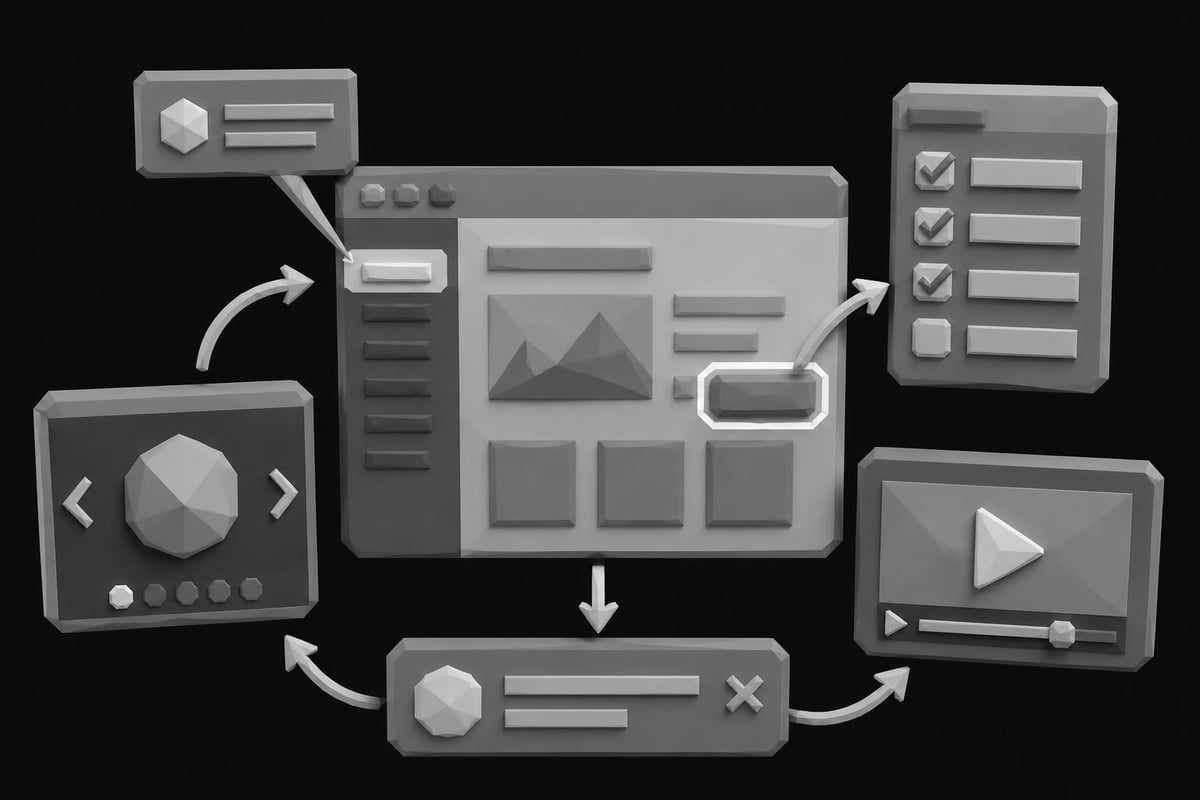
Design Interactive Walkthroughs That Actually Help
Nobody wants to read a manual. But interactive guidance that helps users accomplish real tasks? That's valuable. The difference is crucial - you're not teaching them about your product, you're helping them succeed with it.
Elements of effective interactive onboarding:
- Contextual tooltips that appear exactly when needed
- Task-based checklists that guide users through core workflows
- Embedded hints within the interface itself
- Optional video snippets for visual learners (under 60 seconds each)
- Dismissible help that doesn't block the interface
The key word here is "optional." Some users want to explore on their own. Others need more hand-holding. Your onboarding should accommodate both learning styles without forcing either path.
Leverage Email Sequences to Reinforce Learning
Your onboarding doesn't stop when users close their browser tab. Reducing early churn through effective onboarding requires continuing the conversation through well-timed emails.
But please, don't blast generic "Welcome!" messages. Your drip sequence should be triggered by actual user behavior (or lack thereof).
Behavior-Triggered Email Strategy
Here's a framework that works:
- Day 1 - Immediate welcome with one clear next step
- Day 2 - If they haven't activated, show a quick win they can achieve in 5 minutes
- Day 3 - Share a success story from a similar user
- Day 5 - Offer help or resources for common sticking points
- Day 7 - If still not activated, personal outreach from founder or success team
Notice these aren't calendar-based - they're behavior-based. Someone who activated on day 1 shouldn't get the "you haven't activated yet" email on day 2. That's lazy automation that damages trust.
For creators building SaaS products, understanding these onboarding fundamentals is essential. If you're looking to build your own application without extensive coding knowledge, Build and Launch Your SaaS App in 14 Days teaches you how to create profitable software products using modern no-code approaches. You'll learn the entire process from concept to launch, including how to implement these exact onboarding strategies in your own product.
Use Data to Identify and Fix Drop-Off Points
You can't improve what you don't measure. Set up analytics to track every step of your onboarding funnel. Where are users getting stuck? Which steps have the highest abandonment rates?
| Onboarding Stage | What to Track | Red Flag Threshold |
|---|---|---|
| Signup form | Completion rate | Below 60% |
| Initial setup | Time spent, completion | Over 10 minutes |
| First core action | Completion within 24 hours | Below 40% |
| Secondary features | Adoption rate | Below 25% after activation |
| Team invites | Percentage who invite others | Below 15% |
Comprehensive onboarding strategies emphasize constant iteration based on real user data. Run weekly reviews of your onboarding metrics. Small improvements compound quickly.
Common Drop-Off Points and Solutions
Problem: Users abandon during account creation
Solution: Reduce required fields, add social login, show trust signals
Problem: Users create accounts but never take first action
Solution: Start with pre-populated data or templates they can modify
Problem: Users complete one action then disappear
Solution: Create a clear "what's next" path with visible progress indicators
Problem: Users explore randomly without completing core workflows
Solution: Add gentle guidance through checklists or suggested next steps
Build In-App Support That's Actually Accessible
When users get stuck, they need help right now - not after submitting a ticket and waiting 24 hours. The best saas onboarding best practices include multiple layers of self-service support.
Implement a searchable help center that's accessible from within your app. Add a chat widget for immediate questions. Create a video library of common tasks. The easier you make it to find answers, the less likely users are to give up out of frustration.
For teams managing complex workflows, tools like filehub demonstrate how automation can reduce the learning curve by handling repetitive tasks in the background. While your users learn the core features, automated processes keep things moving smoothly behind the scenes.
The Human Touch Still Matters
Don't rely purely on automation. For your first 100 users, consider personally reaching out to each one during their trial period. Ask if they need help. Schedule quick onboarding calls. These conversations give you invaluable insights into where people struggle.
Even as you scale, high-value accounts or users who match your ideal customer profile deserve white-glove treatment. Current best practices for 2026 show that hybrid approaches - combining self-service with strategic human intervention - produce the best results.

Create Social Proof Throughout the Journey
New users are uncertain. They're wondering if they made the right choice signing up. Combat that doubt by showing them they're in good company.
Ways to incorporate social proof:
- Display customer testimonials at key decision points
- Show user counts ("Join 10,000+ creators building digital products")
- Highlight case studies relevant to their use case
- Share recent wins from the community
- Display trust badges and security certifications
- Show team members or company photos to humanize your brand
Just like martial arts software platforms like MatSync build trust by showcasing successful academies using their system, your SaaS should demonstrate real results from real users. Make it specific and relevant to where the user is in their journey.
Optimize for Mobile-First Experiences
More users than ever are signing up and exploring products on their phones. If your onboarding experience falls apart on mobile, you're losing a significant chunk of potential customers.
Test every onboarding step on actual mobile devices. Can users easily complete signup on a phone? Do interactive tours work on small screens? Are forms thumb-friendly?
The saas onboarding best practices that worked in 2020 won't cut it in 2026. Modern onboarding strategies prioritize responsive design and mobile-specific flows that adapt to how users actually interact with products today.
Implement Progress Indicators and Gamification
Humans love completion. We're wired to finish things we start. Use that psychology to your advantage with clear progress indicators.
Show users exactly how far they've come and what's left. A simple progress bar or checklist with items they can tick off creates momentum. Each completed step releases a little dopamine hit that encourages them to continue.
- Create an onboarding checklist with 5-7 key tasks
- Show percentage complete after each action
- Celebrate milestones with micro-animations or congratulations messages
- Unlock features progressively as users master basics
- Award badges or achievements for completing core workflows
Don't go overboard with gamification - this isn't a mobile game. But subtle encouragement and recognition of progress can significantly boost completion rates.
Test and Iterate Constantly
The onboarding flow you launch with won't be the one you have six months from now. User behavior changes. Your product evolves. Competitors raise the bar. You need to keep improving.
Run A/B tests on critical onboarding elements. Try different signup forms. Test various tutorial styles. Experiment with email timing and messaging. Small changes can have outsized impacts on activation rates.
High-impact elements to test:
- Signup form length and field order
- Welcome screen messaging and calls-to-action
- Tutorial style (video vs. interactive vs. text)
- Email send times and subject lines
- Onboarding checklist order and wording
- Amount of pre-populated sample data
Research on SaaS trial onboarding shows that companies who continuously optimize their onboarding see 30-40% higher activation rates than those who "set it and forget it." Make improvement a regular part of your product development cycle.
Focus on the First 10 Minutes
This timeframe is critical. Users are most engaged immediately after signup. Their attention is focused, and they're motivated to see if your product delivers on its promise.
What can someone accomplish in your product in 10 minutes or less? That's what your onboarding should deliver. Not a tour of features. Not a bunch of setup screens. An actual outcome that demonstrates value.
Map out the fastest path to that first win. Remove every unnecessary step. Question every piece of information you're asking for. Be ruthless about prioritizing speed to value.
The Setup Paradox
Here's a tricky balance - some products genuinely need configuration before they're useful. You can't send an email campaign without importing contacts. You can't track projects without creating a workspace.
The key is making setup feel like progress, not busywork. Frame each setup step as getting them closer to their goal. Show what they'll be able to do once complete. Consider doing setup in the background while they explore other features.
Build Community Connection Points
The most successful SaaS products don't just onboard users to software - they onboard them into a community. When people feel connected to other users, they're more likely to stick around.
Invite new users to join your Slack community, Discord server, or user forum. Highlight community-created resources. Feature user-generated content. Create opportunities for customers to help each other.
This serves double duty. It provides support at scale while building the social bonds that increase lifetime value. Users who are active in your community churn at dramatically lower rates than isolated users.
Implementing these saas onboarding best practices isn't a one-time project - it's an ongoing commitment to user success. The most successful digital product creators understand that first impressions determine long-term retention. If you're ready to build your own SaaS product with proven onboarding strategies built in from day one, CreateSell can help you learn the entire process from concept to launch, teaching you how to create products that sell while you sleep and scale without selling your time.