
SaaS Churn: How to Keep Your Customers Coming Back

Modest Mitkus
May 12, 2026
You've poured your heart into building a digital product. The signups are rolling in, and everything seems great. Then you check your dashboard and realize users are leaving almost as quickly as they arrived. Welcome to the world of saas churn, one of the most critical metrics that can make or break your digital product business. Whether you're running a subscription-based app or planning to launch one, understanding why customers leave and how to keep them engaged is absolutely essential for long-term success.
What Is SaaS Churn and Why It Matters
SaaS churn refers to the rate at which subscribers cancel or fail to renew their subscriptions to your digital product. Think of it as a leaky bucket - you're constantly pouring new users in through marketing and sales, but if they're dripping out the bottom just as fast, you'll never fill the bucket.
There are two main types of churn you need to track:
- Customer churn (also called logo churn): The percentage of customers who cancel their subscriptions during a specific period
- Revenue churn (MRR churn): The percentage of monthly recurring revenue lost from cancellations and downgrades
- Gross churn vs. net churn: Gross churn includes all losses, while net churn accounts for expansion revenue from upgrades
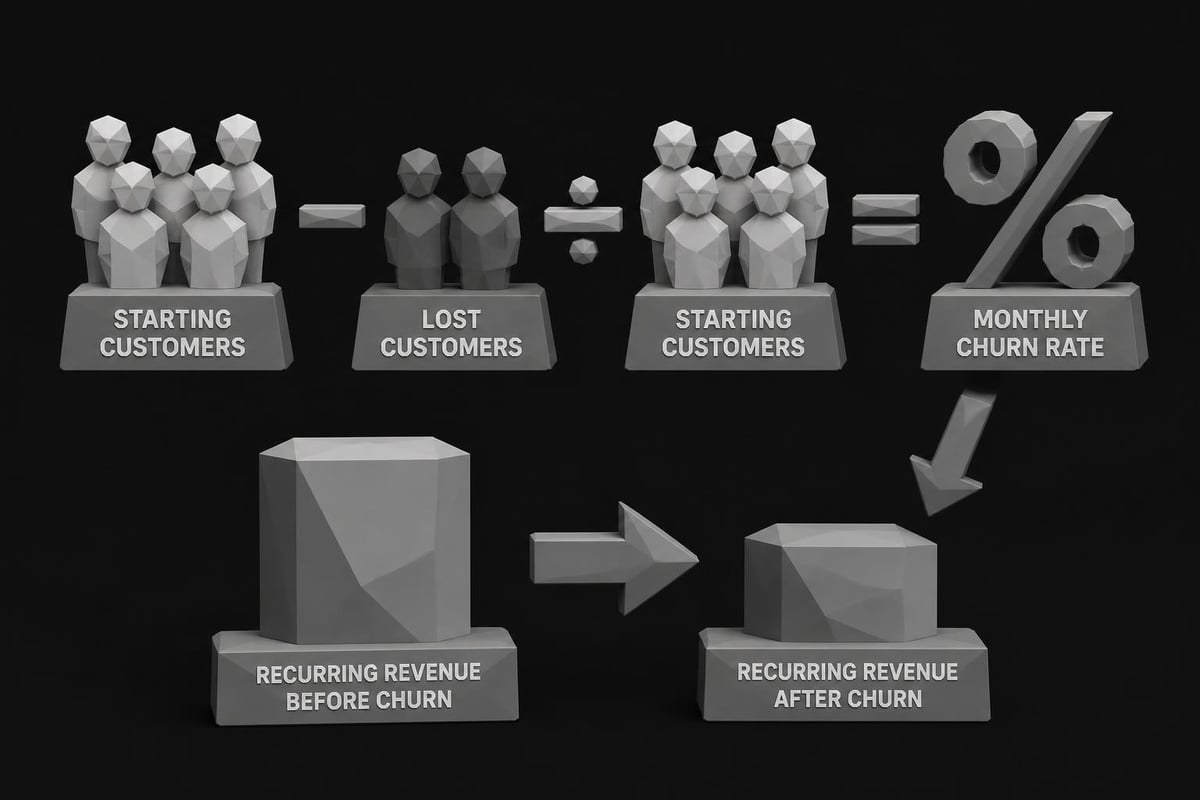
The math is pretty straightforward. If you start the month with 100 customers and lose 5, that's a 5% monthly customer churn rate. According to comprehensive SaaS churn benchmarks for 2026, the average monthly churn rate hovers around 3-8% depending on your market segment and pricing model.
The Real Cost of Losing Customers
Here's where it gets painful. Most entrepreneurs underestimate the true cost of saas churn because they only look at the immediate revenue loss. But when someone cancels, you're not just losing this month's subscription fee.
| Impact Area | True Cost |
|---|---|
| Customer Acquisition Cost (CAC) | Money spent acquiring that customer is now wasted |
| Lifetime Value | All future revenue from that customer vanishes |
| Word of Mouth | Churned customers rarely recommend your product |
| Development Investment | Product improvements made for them provide no ROI |
If you spent $100 to acquire a customer who pays $20/month and they churn after two months, you're down $60. That's money you'll never get back. When you're building a one-person digital product business, these losses compound quickly.
Understanding Why Customers Actually Leave
Before you can fix saas churn, you need to understand what's driving it. The reasons aren't always obvious, and sometimes customers themselves don't fully articulate why they're leaving.
The Onboarding Gap
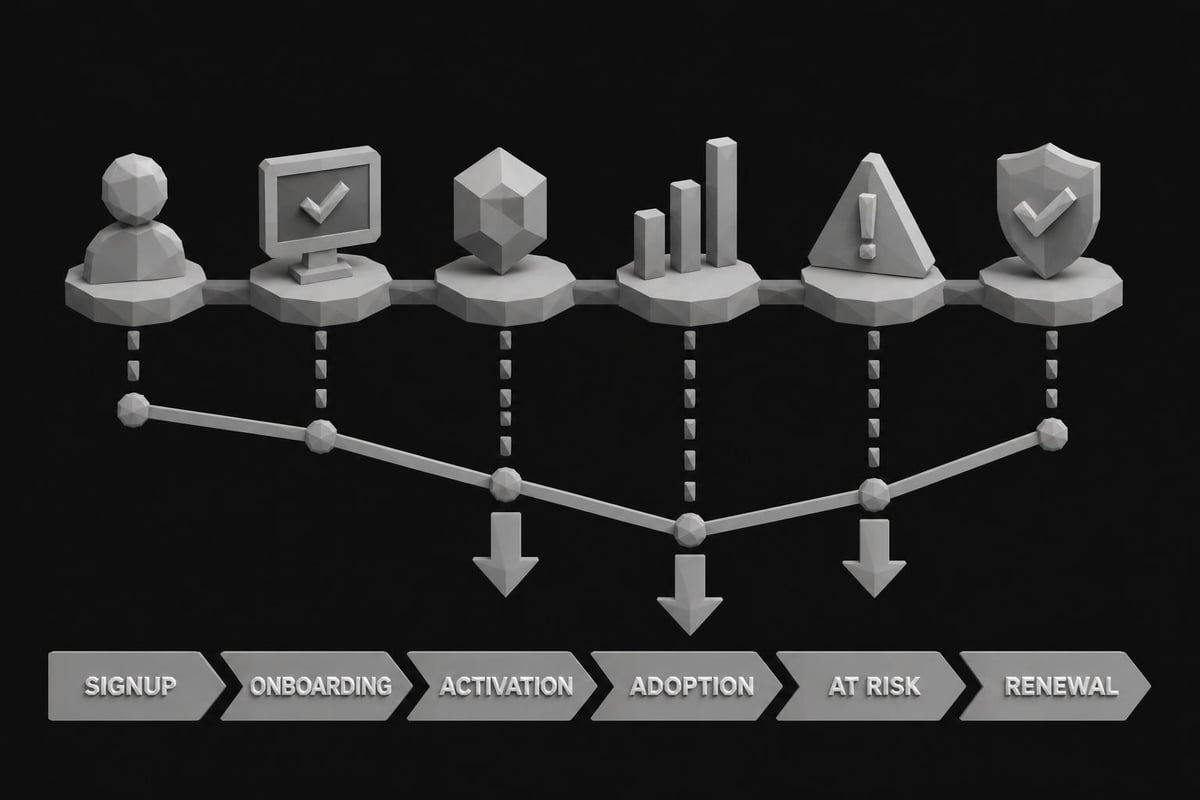
The most critical window for churn is the first 30-90 days. This is when users are deciding whether your product actually solves their problem or if it's just another subscription they don't need.
Common onboarding failures include:
- Overwhelming complexity: Users can't figure out how to get value quickly
- Unclear value proposition: They don't understand what makes your product special
- Missing activation moments: They never experience that "aha!" moment where everything clicks
- Poor initial setup: Technical issues or confusing setup processes create immediate friction
Research on technical causes of SaaS churn shows that performance issues, slow loading times, and buggy features during onboarding can permanently damage user perception. First impressions absolutely matter.
The Value Perception Problem
Sometimes people churn because they genuinely don't need your product anymore. But more often, they've stopped perceiving value - even if the value is still there. This happens when:
- Feature bloat obscures core benefits: You've added so many features that users can't find what they originally loved
- Competitors offer better perceived value: It's not about being objectively better, just looking better
- Usage patterns change: Their business evolves and your product doesn't adapt with them
- Price sensitivity increases: Economic conditions or business performance makes them scrutinize every expense
The fascinating thing about value perception is that it's not static. A product that seemed essential three months ago can feel dispensable today if you haven't continually reinforced its value.
Benchmarking Your Churn Rate
You can't improve what you don't measure, but you also need context to know if your numbers are actually problematic. SaaS churn rate benchmarks for 2026 reveal significant variation based on multiple factors.
What's Actually "Good" for Different Business Types
The answer to "what's a good churn rate?" depends entirely on your business model and target market. According to recent data on what constitutes good churn rates, here's what you should be aiming for:
| Business Segment | Good Monthly Churn | Excellent Monthly Churn |
|---|---|---|
| Enterprise SaaS | 0.5-1% | Under 0.5% |
| Mid-Market B2B | 2-3% | Under 2% |
| SMB B2B | 3-5% | Under 3% |
| B2C SaaS | 5-7% | Under 5% |
If you're selling to consumers or small businesses, you'll naturally see higher churn than enterprise products. That's not a failure - it's the nature of the market. The key is knowing where you stand relative to similar businesses.
Annual vs. Monthly Churn Reality
Here's something that trips people up: annual contracts dramatically reduce measured churn but don't eliminate the underlying problem. If customers are unhappy but locked into annual plans, they'll churn eventually. You've just delayed the inevitable.
Monthly churn of 5% might not sound terrible until you realize that compounds to about 46% annual churn. Nearly half your customer base turns over every year. That means you need to replace almost half your customers just to maintain revenue, before you can even think about growth.
Proven Strategies to Reduce SaaS Churn
Now let's get into the actionable stuff. These aren't theoretical ideas but proven strategies to reduce churn that actually move the needle when implemented correctly.
Build Better Onboarding Experiences
Your onboarding shouldn't just teach people how to use features. It should guide them to their first win as quickly as possible. Think about what success looks like for your typical user and create a path that gets them there in minutes, not days.
Effective onboarding tactics include:
- Interactive tutorials that walk users through core workflows
- Progress tracking that shows how close they are to being "fully set up"
- Personalized setup flows based on their use case or industry
- Early wins designed into the first session
- Proactive support during the critical first week
If you're building web or mobile apps as digital products, your onboarding is part of your product's core value. When you learn to create products that guide users to success from day one, you're building retention directly into the experience.
Create Engagement Loops That Matter
The most successful digital products don't just sit there waiting for users to remember them. They create reasons to come back regularly through smart engagement design.
Consider how different engagement patterns affect saas churn:
- Daily use products (project management, communication tools) have lower churn because they become habitual
- Weekly use products (analytics, reporting tools) need reminders and regular value delivery
- Monthly use products (invoicing, accounting) face higher churn risk because users can easily forget about them
Build features that encourage frequent interaction. Email digests, notifications about new value, collaborative features that bring teams back - these aren't gimmicks, they're retention architecture.
Monitor and Act on Early Warning Signs
You don't want to wait until someone cancels to know they're unhappy. Smart businesses track leading indicators of churn and intervene early. Set up alerts for:
- Declining login frequency: Someone who logged in daily but hasn't visited in two weeks
- Feature abandonment: Core features they used regularly that they've stopped using
- Support ticket patterns: Multiple frustration-based tickets in a short period
- Billing issues: Failed payments or downgrade requests
- Engagement score drops: Composite metrics that signal declining interest
When these signals fire, reach out personally. A simple "Hey, noticed you haven't logged in lately - everything okay?" can save customers who were drifting away passively.
The Economics of Retention vs. Acquisition
Here's a truth that many digital product creators struggle to accept: reducing saas churn is almost always more profitable than acquiring new customers. The numbers don't lie.
Why Retention Wins the ROI Battle
Research shows it costs 5-25 times more to acquire a new customer than to retain an existing one. For digital product businesses, where margins are typically high but competition is fierce, this multiplier can make or break profitability.
The retention advantage:
- Zero acquisition cost: You've already paid to get them
- Higher conversion rates: Selling upgrades to happy customers is easier than selling to strangers
- Increasing lifetime value: The longer they stay, the more profitable they become
- Referral generation: Long-term customers become advocates who bring others
- Product development efficiency: Retained customers provide better feedback for improvements
A framework for optimizing subscription pricing through churn analysis demonstrates that even small improvements in retention rates compound dramatically over time. Reducing monthly churn from 5% to 4% might not sound significant, but over a year, it means retaining 12% more revenue.
Calculating Your Retention Investment Sweet Spot
How much should you invest in reducing churn? The math is actually pretty straightforward. Calculate your average customer lifetime value (LTV), then determine what percentage of that you can justify spending on retention efforts.
| Metric | Calculation | Example |
|---|---|---|
| Average Revenue Per User | Monthly subscription × avg. months retained | $50 × 18 = $900 |
| Gross Margin | Revenue minus direct costs | 85% |
| Customer LTV | ARPU × Gross Margin | $765 |
| Retention Budget | 10-20% of LTV | $76-$153 per customer |
If you can spend $100 to prevent a $765 customer from churning, that's a no-brainer investment. Yet many digital product creators spend everything on acquisition and nothing on retention.
Segmentation and Targeted Retention
Not all churn is created equal, and not all customers deserve the same retention effort. That sounds harsh, but it's the reality of running a sustainable business.
Identifying High-Value Retention Targets
The predict-and-optimize method for churn prevention emphasizes targeting high-value customers for retention campaigns. These are users who:
- Pay more than average (higher-tier plans, add-ons, or annual contracts)
- Use the product extensively (high engagement scores)
- Have been customers for a meaningful period (past the break-even point on CAC)
- Refer other customers (network effects)
- Provide valuable feedback (help improve the product)
When someone fitting this profile shows churn signals, intervene aggressively. Offer personalized onboarding refreshers, dedicated support, feature requests, or pricing accommodations. The ROI justifies the effort.
When to Let Customers Go
Conversely, some customers should churn. Users who constantly demand support for basic questions, never upgrade, complain publicly, or aren't a fit for your product drain resources better spent elsewhere.
This is especially relevant for solo entrepreneurs and small teams. Your time is finite. Spending hours trying to save a $10/month customer who's never happy while ignoring signals from a $200/month power user is backwards.
Building Churn Reduction Into Your Product Development
The best defense against saas churn is building sticky products from the start. This means making retention a core design principle, not something you bolt on later.
Features That Increase Switching Costs
I'm not talking about dark patterns or lock-in tactics. I mean creating genuine value that would be painful to recreate elsewhere:
- Data accumulation: The longer someone uses your product, the more valuable their data becomes
- Customization: Personalized workflows, templates, and settings that took time to configure
- Integrations: Connections to other tools that would break if they switched
- Collaboration: Team members or clients who are also using the product
- Historical insights: Trend analysis and reporting that requires long-term data
For ecommerce entrepreneurs building on platforms like Shopify, communities like Talk Shop provide valuable insights into creating sticky products through integrations and custom features that merchants rely on daily. When your product becomes integral to someone's workflow, churn drops dramatically.
The Platform Play for Digital Products
If you're creating digital products to sell while you sleep, consider how you can evolve from a single product to a platform. Each additional product or feature a customer uses decreases their likelihood of churning exponentially.
Someone using just your core app might churn at 5% monthly. Add a mobile companion app they use daily, and it drops to 3%. Integrate their team communication, and it falls to 2%. Layer in data they've accumulated over time, and you're approaching enterprise-level retention.
Technical Architecture Decisions That Impact Churn
This gets overlooked, but how you build your product fundamentally affects saas churn. Performance, reliability, and user experience aren't just nice-to-haves - they're retention mechanisms.
Speed and Performance as Retention Drivers
Every second of load time costs you customers. Studies consistently show that users abandon slow applications, and the technical architecture decisions that reduce churn often come down to basic performance optimization.
Critical technical factors:
- Initial load time: First impressions happen in milliseconds
- Time to interactive: How quickly can users actually do something
- API response times: Perceived sluggishness kills engagement
- Mobile performance: Most users access products on multiple devices
- Offline functionality: Can they work when connectivity is poor
If you're learning to build web and mobile apps through approaches like vibe coding, prioritize performance from day one. A fast, reliable product with fewer features beats a feature-rich product that frustrates users.
Monitoring Systems That Predict Churn
Smart digital products track user behavior patterns that predict churn before it happens. Setting up proper analytics and monitoring isn't about surveillance - it's about understanding when something's wrong so you can fix it.
Track events like feature adoption rates, session frequency, error occurrences, and workflow completion. When patterns deviate from baseline behavior, investigate. Often you'll discover bugs, UX issues, or missing features that are pushing people toward the exit.
Pricing Strategy and Churn Correlation
How you price your digital product directly impacts who churns and when. Get this wrong, and you'll bleed customers no matter how great your product is.
The Annual Plan Advantage
Annual billing reduces measured churn but comes with trade-offs. You get cash flow stability and lower administrative costs, but you also lose the feedback signal of monthly churn. According to detailed churn breakdowns by pricing model, annual plans typically show 40-60% lower churn rates than monthly plans.
Annual pricing considerations:
- Discount sweet spot: 15-20% off monthly pricing motivates without devaluing
- Refund policies: Be generous early in the contract, stricter later
- Mid-term upgrades: Make it easy to expand, hard to downgrade
- Renewal reminders: Start the conversation 60 days before renewal
- Auto-renewal with notice: Default to continuing, but give warning
The key is making annual plans attractive enough that your best customers choose them, but not so discounted that you're leaving money on the table.
Freemium and Trial Strategy Impact
Free tiers and trials create their own churn dynamics. Users who never pay don't technically churn, but the conversion rate from free to paid and the retention of newly converted customers tell you everything about product-market fit.
Watch for the pattern where free users barely engage, then churn immediately when asked to pay. That's a signal that your free tier provides too much value or your paid tiers don't provide enough differentiation. The free tier should create dependency on features that require upgrading.
Customer Success and Support as Churn Prevention
The relationship between customer support quality and saas churn is direct and measurable. Every support interaction is either a retention opportunity or a churn accelerator.
Proactive Support That Moves the Needle
Don't wait for customers to have problems. Reach out at critical moments with helpful resources, check-ins, and success tips. This is especially effective during:
- Day 3-7 after signup: When initial excitement wears off but habits haven't formed
- Day 30: Monthly subscription decision point
- After 3 months: Quarterly check-in to ensure ongoing value
- Usage milestones: Celebrate when they hit meaningful achievements
- Inactivity triggers: Gentle nudges when engagement drops
Personal outreach from a founder or team member carries enormous weight for digital product businesses. You're not a faceless corporation - you're a real person who cares about their success.
Building Community to Reduce Isolation Churn
Lonely users churn. When someone feels like they're using a product in isolation, they're much more likely to cancel than when they're part of a community. This is why forums, user groups, social channels, and even simple user directories can significantly impact retention.
You don't need to build a massive community infrastructure. Start simple:
- Create a dedicated Slack or Discord channel for users
- Host monthly group calls or webinars
- Share user success stories and case studies
- Enable users to share templates, workflows, or configurations
- Facilitate introductions between users with similar use cases
The investment in community building pays retention dividends that compound over time.
Reducing saas churn isn't about implementing one magic tactic - it's about building a product people genuinely need and continually demonstrating that value. Every interaction, feature, and email should reinforce why your digital product is essential to their success. If you're ready to move beyond trading time for money and build digital products that generate recurring revenue, CreateSell provides the framework and guidance to create sustainable, profitable products that customers stick with for the long haul. Learn to build apps that solve real problems, and you'll naturally build businesses with retention baked in.