
Product Led Growth: Build Digital Products That Sell

Modest Mitkus
June 7, 2026
If you've been selling your time for money, you know the ceiling hits fast. There's only so many hours in a day, only so many clients you can serve. That's where product led growth comes in-a strategy that flips the traditional sales model on its head by letting your product do the heavy lifting. Instead of pitching prospects through endless sales calls, you're building something so valuable and intuitive that users sign themselves up, experience the value firsthand, and convert into paying customers without anyone picking up the phone. For digital product creators, this approach isn't just efficient-it's transformative.
What Product Led Growth Actually Means
Product led growth is a go-to-market strategy where your product itself becomes the primary driver of customer acquisition, conversion, and expansion. Think about how you discovered Slack, Notion, or Calendly. You probably didn't sit through a sales demo or fill out a form for someone to call you back. You just started using it.
That's the essence of PLG. Your product is free or low-cost to start, incredibly easy to onboard, and delivers value so quickly that users want to stick around and eventually upgrade.
The Shift from Sales-Led to Product-Led
Traditional B2B software relied heavily on sales teams to educate prospects, demonstrate value, and close deals. This model works, but it's expensive and doesn't scale well for smaller teams or solo entrepreneurs building digital products.

According to Forrester's research on product-led growth, the key difference lies in how customers experience value before making a purchase decision. With product led growth, that experience comes first, and the buying decision follows naturally.
Key characteristics of product led growth include:
- Free trials or freemium models that remove barriers to entry
- Self-service onboarding that requires minimal human intervention
- Built-in virality or network effects that encourage sharing
- Data-driven optimization focused on user activation and retention
- Upgrade paths that emerge from actual product usage
The beauty of this approach for digital product creators is that you're not competing on sales team size-you're competing on product quality and user experience.
Why Product Led Growth Works for Digital Products
Digital products are uniquely suited for product led growth because there's virtually no cost to adding new users. When someone signs up for your SaaS app or downloads your mobile app, you're not shipping physical inventory or booking consultants.
This economic reality changes everything. You can afford to let people try before they buy. You can give away substantial value for free because each free user costs you pennies while potentially becoming a paying customer or referring others.
The Economics Make Sense
Traditional software companies spend massive amounts on sales and marketing-often 40-50% of revenue. With product led growth, those costs shift toward product development and user experience. You're investing in making your product so good that it markets itself.
| Traditional Sales-Led | Product Led Growth |
|---|---|
| High CAC (Customer Acquisition Cost) | Low CAC through organic growth |
| Long sales cycles (weeks to months) | Short time-to-value (minutes to days) |
| Sales team scales linearly with revenue | Product scales exponentially |
| Feature decisions by sales feedback | Feature decisions by usage data |
For solo entrepreneurs or small teams, this model is liberating. You're not hiring sales reps or running expensive ad campaigns. You're building something people love and letting them spread the word.
Building Your Product for Growth
The core principle of product led growth is simple: your product needs to deliver meaningful value before asking for payment. But executing on that principle requires intentional design decisions from day one.
Designing for Instant Value
Users today have the attention span of a goldfish in a TikTok video. If they don't experience value within the first few minutes, they're gone. Your onboarding flow needs to be ruthlessly optimized to get users to that "aha moment" as fast as possible.
Steps to optimize for instant value:
- Identify your core value proposition - What's the one thing users came to accomplish?
- Remove every unnecessary step - Every form field, every configuration screen is friction
- Show, don't tell - Use empty states with sample data instead of blank screens
- Celebrate small wins - Acknowledge when users complete meaningful actions
- Provide escape hatches - Let power users skip ahead; guide beginners carefully
Think about how Canva drops you straight into a design template instead of making you watch tutorials. That's product led growth in action.
The Freemium Model That Actually Works
Not all freemium models are created equal. The trick is giving away enough value that users genuinely benefit while holding back features that power users or businesses will gladly pay for.
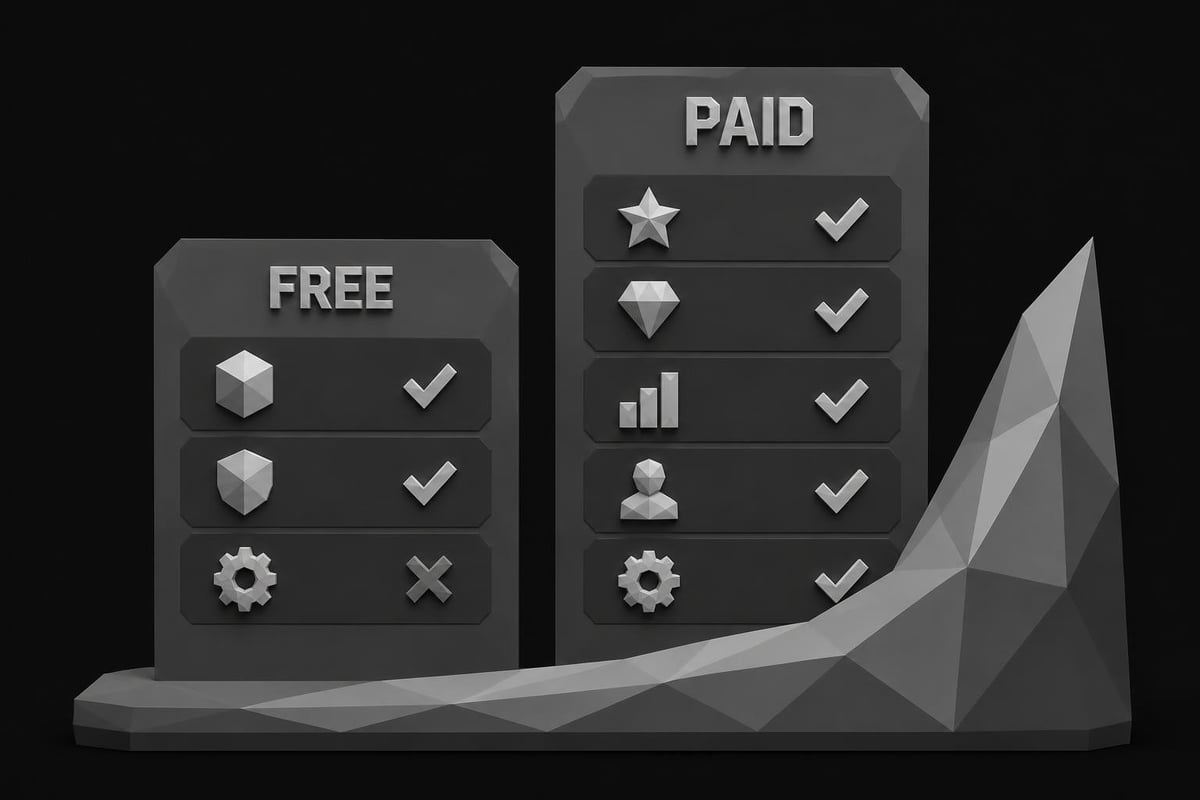
Stanford's research on freemium strategies shows that successful companies carefully balance free value with premium features. Your free tier should solve a real problem completely for casual users while creating natural upgrade moments for heavier usage.
Common freemium upgrade triggers:
- Usage limits (number of projects, team members, monthly actions)
- Advanced features (integrations, analytics, automation)
- Support and service levels (priority support, dedicated account manager)
- Removing branding or unlocking white-label options
The key is making sure free users get genuine value. If your free tier feels crippled or like a demo, you're doing it wrong. Those free users are your marketing team-they'll share your product if it actually helps them.
Acquisition Through User Experience
When you embrace product led growth, your marketing strategy transforms completely. You're not interrupting people with ads-you're creating experiences worth talking about.
Building in Virality
The best PLG products have virality baked into the core experience. Figma becomes more valuable when you share designs with teammates. Loom videos naturally include a call-to-action to try the tool. Calendly exposes your scheduling link to everyone you meet with.
Think about how your digital product can create these natural sharing moments. Can users invite collaborators? Does using your product create artifacts that others see? Can users showcase their work created with your tool?
Content as Product Education
Forbes highlights how modern buyers prefer self-education over sales pitches. This shift means your content strategy should focus on helping users succeed with your product, not convincing them to buy it.
Create tutorials, templates, use cases, and examples that show your product in action. Build a resource library that answers every question a new user might have. Make learning your product easier than learning your competitors'.
If you're looking to build digital products designed for growth, Build and Launch Your SaaS App in 14 Days teaches you how to create self-sustaining products without coding knowledge. You'll learn the principles of product led growth while building something real.
Activation and Retention Metrics That Matter
Product led growth lives or dies by your metrics. Unlike traditional sales where you track pipeline and close rates, PLG focuses on user behavior and product engagement.
The Pirate Metrics Framework
The AARRR framework (Acquisition, Activation, Retention, Revenue, Referral) perfectly maps to product led growth strategies:
- Acquisition - How users discover your product (organic search, word-of-mouth, content)
- Activation - First meaningful interaction or "aha moment" in your product
- Retention - Users returning and forming habits around your product
- Revenue - Natural upgrade moments when free users hit limits or need more
- Referral - Built-in sharing mechanisms that drive new acquisition
Each stage requires different optimizations. You might have great acquisition but terrible activation, meaning people sign up but never experience value. Or strong activation but weak retention because the novelty wears off quickly.
Tracking Time to Value
The most critical metric in product led growth is time to value (TTV). How long does it take from signup to first meaningful outcome? For a project management app, maybe it's creating your first project and adding a task. For a design tool, completing your first design.
| Product Type | Example TTV Goal | Activation Metric |
|---|---|---|
| SaaS App | Under 5 minutes | First project created |
| Mobile App | Under 2 minutes | First action completed |
| Development Tool | Under 10 minutes | First deployment successful |
| Analytics Platform | Under 3 minutes | First dashboard viewed |
Measure this obsessively and work to reduce it. Every minute you shave off increases your activation rate.
The Role of Data in Product Decisions
Unlike sales-led companies that make decisions based on what big customers request, product led growth companies use behavioral data to understand what actually drives value.

Research on leveraging mixed methods for PLG demonstrates how combining quantitative usage data with qualitative user research creates powerful insights. You're not just seeing what users do-you understand why they do it.
Building Feedback Loops
Implement in-app analytics to track every meaningful action. Which features do power users rely on? Where do new users get stuck? What's the common path from free to paid?
Essential data points to track:
- Feature adoption rates across user segments
- Drop-off points in onboarding flow
- Time spent in different product areas
- Upgrade triggers and conversion paths
- Churn indicators and at-risk behaviors
This data becomes your product roadmap. You're not guessing what to build next-you're responding to actual user behavior patterns.
Scaling Without Scaling Headcount
The magic of product led growth is that revenue can grow exponentially while costs grow linearly or even stay flat. Your product serves users automatically, meaning you don't need to hire proportionally as you grow.
Automating the Customer Journey
Think through every touchpoint in your customer lifecycle and ask: "Can this be automated?" Onboarding emails, feature announcements, upgrade prompts, usage tips-all of these can run on autopilot once you set them up.
Use trigger-based messaging to reach users at the right moment. When someone hits their usage limit, that's the perfect time to highlight paid plans. When someone invites their first team member, showcase collaboration features.
Self-Service Support Systems
Traditional software companies staff large support teams. Product led growth companies build comprehensive help centers, interactive tutorials, and AI-powered chatbots.
Your goal is for 90% of user questions to be answerable without human intervention. This doesn't mean you ignore support-it means you systematically identify common questions and build solutions directly into your product or documentation.
Heap's comprehensive guide to product-led growth emphasizes how self-service extends beyond the initial purchase into the entire customer lifecycle, including support and success.
Common PLG Mistakes to Avoid
Product led growth sounds simple but execution is tricky. Here are the pitfalls that trip up most digital product creators.
Giving Away Too Much (or Too Little)
The freemium balance is delicate. Give away too much and nobody upgrades. Give away too little and nobody sticks around long enough to see value.
The solution? Look at your usage data. What do your most engaged free users do? What causes people to upgrade? Adjust your tier boundaries based on real behavior, not arbitrary limits you thought sounded good.
Neglecting the Enterprise
Just because you're product led doesn't mean you abandon enterprise customers entirely. Many successful PLG companies layer on sales teams for large deals while keeping the self-service motion for smaller customers.
The product gets people in the door and proves value. Sales helps with implementation, security reviews, and contract negotiations for big companies.
Optimizing for Vanity Metrics
Signups don't pay the bills. Focus on activation and retention, not just acquisition. A product with 100 highly engaged users is more valuable than one with 10,000 people who signed up and never came back.
Creating Sustainable Growth Loops
The ultimate goal of product led growth isn't just acquiring customers-it's creating systems where growth feeds growth. These are called growth loops.
A classic example: A user creates content in your tool → They share it publicly → New users discover your tool through that content → New users sign up and create their own content → The loop continues.
Types of growth loops for digital products:
- Viral loops - Sharing creates new user acquisition
- Content loops - User-generated content drives SEO and discovery
- Network effects - Product gets better as more people use it
- Integration loops - Connections to other tools expose your product to new audiences
Identify which loop makes most sense for your product and build features that strengthen it. Product-Led Growth Collective's resources offer detailed frameworks for identifying and optimizing these loops.
Building Community as Competitive Moat
Your users are your best marketers, support team, and product advisors. Cultivate a community around your product where users help each other, share tips, and showcase what they've built.
This community becomes incredibly valuable as you scale. New users get support from existing users. Power users become advocates. You gather feedback and feature requests organically.
From Product Led to Product Obsessed
The mindset shift to product led growth goes deeper than just offering a free trial. It's about obsessing over user experience at every touchpoint and using your product as the primary vehicle for business growth.
Bain's insights on developing PLG capabilities emphasize that successful implementation requires organizational commitment beyond just the product team. Everyone from marketing to customer success needs to think product-first.
For digital product creators, this alignment is natural. You're probably a small team or solo founder-you ARE the product team, marketing team, and support team. Use that to your advantage. You can move fast, talk directly to users, and iterate based on immediate feedback.
Testing and Iteration Culture
Product led growth requires constant experimentation. Test different onboarding flows. Try new upgrade prompts. Adjust your pricing tiers. Measure everything and double down on what works.
The companies that win with PLG are those that treat their go-to-market strategy as iteratively as their product development. Nothing is set in stone-everything is a hypothesis to be tested.
Product led growth isn't just a strategy-it's a fundamental shift in how you think about building and scaling digital products. By letting your product demonstrate value before asking for payment, you create sustainable growth that doesn't depend on your personal time or a massive sales team. If you're ready to stop trading hours for dollars and start building products that generate revenue while you sleep, CreateSell can guide you through the process. With comprehensive courses on building web and mobile apps from scratch using vibe coding, you'll learn to create self-sustaining digital products designed for growth. Transform your expertise into automated income streams and build the one-person business you've been dreaming about.