
The Essential Guide to Paid Search Strategy in 2026

Modest Mitkus
May 7, 2026
Paid search is transforming at an unprecedented pace. In 2026, businesses face a digital landscape shaped by rapid advances in automation, AI, and evolving user expectations. Adapting your paid search strategy is no longer optional—it is essential for growth and survival.
With new tools and smarter features rewriting the rules, staying ahead means understanding how to harness these innovations. This guide offers you a clear, actionable roadmap to build a winning paid search strategy for 2026.
Explore the latest trends, step-by-step strategy development, campaign optimization techniques, advanced tactics, and future-focused best practices. Ready to future-proof your campaigns and outperform the competition? Dive in and unlock your path to paid search success.
The Evolution of Paid Search: What’s New in 2026?
The world of paid search strategy has transformed dramatically since 2023. Automation, stricter privacy regulations, and the widespread adoption of AI-powered bidding have redefined how marketers approach digital advertising. For anyone seeking results in 2026, keeping pace with these rapid changes is not just recommended, it is essential.

One of the most significant shifts is the rise of first-party data. As third-party cookies fade away, businesses are building robust paid search strategy frameworks centered on their own customer data. This approach enables more precise targeting and personalization, helping brands reach the right users with the right message at the right time. The growing emphasis on privacy also means marketers must be transparent and proactive in their data collection and usage practices.
Ad formats have seen a major evolution as well. Visual search, voice search, and interactive ads have moved to the forefront, offering new ways to engage audiences. For example, visual search allows users to find products with a simple image, while voice-activated queries demand a different approach to keywords and messaging. These innovations have made audience segmentation more important than ever, shifting the focus of paid search strategy from pure keyword targeting to a nuanced understanding of user intent.
Industry data underscores the power of these changes. As of 2026, over 60 percent of Google Ads campaigns utilize AI-driven bidding and audience targeting, a leap driven by advancements in machine learning and automation. Google has introduced new campaign types that harness AI to optimize placements, bids, and creative elements in real time, leading to better performance and more efficient spend. For deeper analysis of these trends, the PPC Trends 2026 Report provides expert insights into the technologies and best practices shaping the future.
User behavior has also evolved. Mobile usage dominates search activity, and zero-click searches are increasingly common as platforms answer queries directly within results. Marketers must adapt their paid search strategy to capture intent-rich micro-moments, meeting users wherever and however they search. This means mapping campaigns to the full customer journey, from discovery to conversion, across a fragmented landscape.
Finally, competition in paid search is fiercer than ever. Higher cost-per-click rates and more sophisticated rivals mean that a thoughtful, data-driven approach to paid search strategy is crucial. Advertisers who invest in strategic planning, continuous learning, and advanced tools will be best positioned to thrive as the industry continues to evolve.
Step-by-Step Paid Search Strategy for 2026
Mapping out a winning paid search strategy in 2026 requires a structured, data-driven approach. The landscape is more competitive and technologically advanced than ever, making it essential to follow a proven process. Below is a step-by-step guide designed to help you build, optimize, and future-proof your paid search strategy in the year ahead.

1. Conducting Deep Keyword & Audience Research
Effective paid search strategy starts with robust keyword and audience research. In 2026, AI-powered tools like SEMrush, Google Keyword Planner, and Answer the Public are indispensable for discovering high-value opportunities. With 15% of daily Google queries being brand new, ongoing research is not just recommended, it is essential.
Focus on long-tail, intent-driven keywords. These capture more qualified leads and align your paid search strategy with modern searcher behavior. AI and machine learning tools can now predict keyword trends before they peak, giving you an edge over competitors.
Audience research is equally critical. Leverage first-party data from your CRM and analytics platforms to build detailed customer personas. Map keywords to each stage of the buyer journey to maximize ad relevance and conversion rates.
For a comprehensive overview of foundational tools, consult the Best digital marketing tools to ensure your paid search strategy uses cutting-edge solutions.
Best practices:
- Combine keyword and audience targeting for maximum precision
- Refresh your research monthly to track shifting trends
- Use negative keyword lists to filter out irrelevant traffic
2. Understanding and Leveraging Keyword Match Types
In 2026, keyword match types have evolved, becoming more flexible and AI-driven. Exact, phrase, and broad match types remain, but automation now interprets broader intent and context.
Phrase match, for example, now captures a wider range of intent-based queries than in previous years. This means your paid search strategy can reach more potential customers, but it also increases the need for vigilance in monitoring search terms.
Broad match keywords offer expanded reach, yet they require careful management. Without ongoing refinement, you risk wasting budget on irrelevant clicks. Always add negative keywords to maintain relevance.
Key insights for your paid search strategy:
- Use phrase match for mid-funnel intent, but monitor results closely
- Relying solely on broad match is risky, so diversify your approach
- Adjust match types as campaigns mature and performance data accumulates
Data snapshot:
| Match Type | Reach | Control Needed | Best Use Case |
|---|---|---|---|
| Exact | Low | Low | High-intent, bottom-funnel |
| Phrase | Medium | Medium | Intent-rich, mid-funnel |
| Broad | High | High | Top-funnel, discovery |
3. Building a Logical Campaign & Ad Group Structure
A clear, logical campaign structure is the backbone of any paid search strategy. Segmentation by product, service, geography, or audience is key for both optimization and reporting.
The Hagakure Method, which organizes campaigns by theme, enhances machine learning efficiency. For example, segmenting campaigns for shoes versus shirts, or by region, allows for more personalized targeting and better ad performance.
Simplicity enables scalability. Accounts with logical structures see up to 25% higher Quality Scores, which can lower costs and improve ad visibility.
Consider this comparison:
| Structure Type | Optimization Ease | Quality Score Impact | Scalability |
|---|---|---|---|
| Logical/Thematic | High | +25% | High |
| Random/Complex | Low | - | Low |
Best practices for your paid search strategy:
- Group ad groups by tightly themed keywords
- Use naming conventions for clarity
- Regularly review and adjust your structure as new products or markets emerge
4. Setting Budgets and Choosing the Right Bidding Strategy
Budgeting and bidding are at the heart of a successful paid search strategy. In 2026, automated bidding options like Maximize Conversions and Target CPA or ROAS dominate, with over 70% of advertisers using automation for efficiency.
Manual bidding still has its place, especially for testing or when greater control is needed. However, most campaigns benefit from AI-driven strategies that adjust bids in real time based on performance signals.
Balance your budget between brand and non-brand campaigns. Allocate funds for experimentation, and use performance data to scale what works. For example, a SaaS company shifting to Target ROAS can improve efficiency and achieve better cost-per-lead metrics.
Best practices:
- Start with automated bidding, then layer in manual adjustments as you gather data
- Set daily and monthly caps to avoid overspending
- Regularly audit your spend and reallocate to top-performing campaigns
5. Conversion Tracking and Attribution in 2026
Accurate conversion tracking and attribution are pillars of a modern paid search strategy. In 2026, end-to-end tracking across devices and platforms is standard, powered by tools like Google Analytics 4.
AI now plays a major role in multi-touch attribution, helping you understand the full customer journey and optimize campaigns in real time. Businesses with robust attribution models achieve 20% higher ROI.
Set up conversion actions for every key event, from form submissions to purchases. Audit your tracking regularly to ensure accuracy and adapt to privacy-first changes.
Best practices:
- Use multi-touch attribution to inform budget allocation
- Track both micro and macro conversions for holistic insights
- Stay current with analytics platform updates
By following this step-by-step approach, your paid search strategy will be ready to excel in the evolving 2026 landscape.
Campaign Optimization: Maximizing Performance for 2026
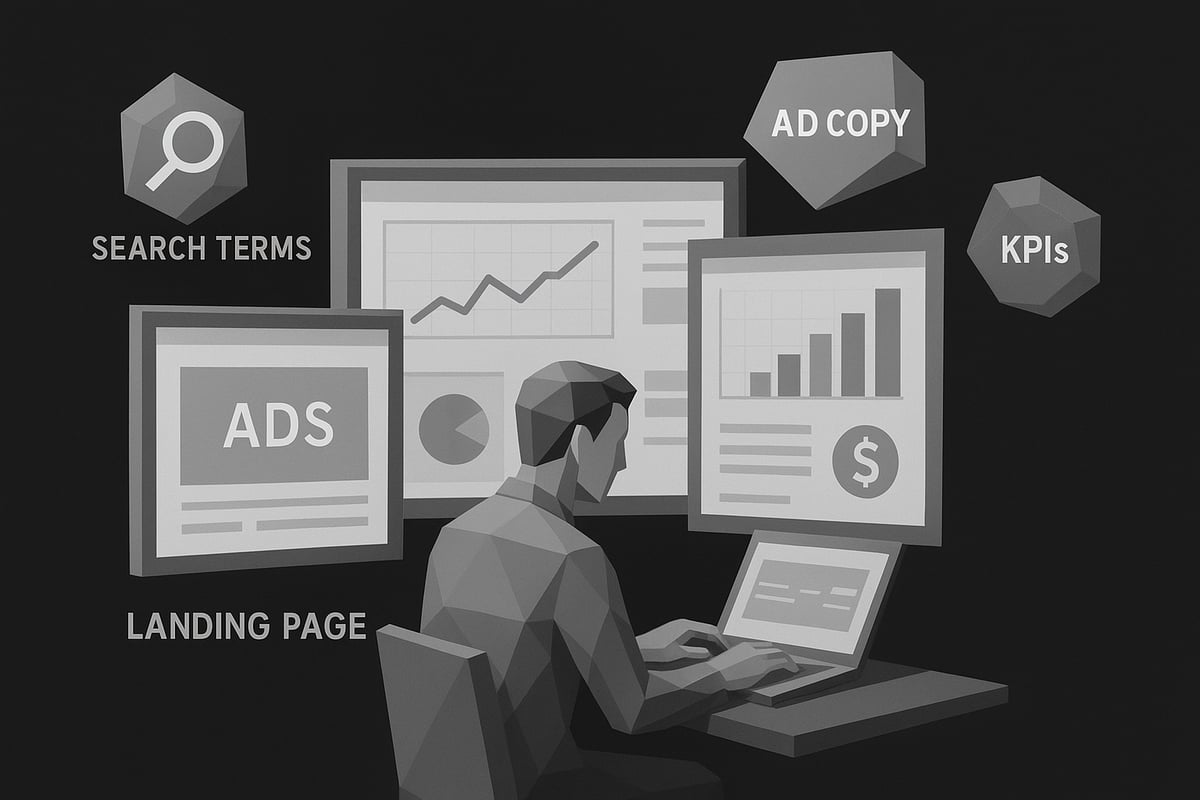
Optimizing your paid search strategy in 2026 requires a disciplined, data-driven approach. As competition intensifies and costs rise, campaign optimization becomes the linchpin for sustainable growth and ROI. Let us explore the four pillars of campaign performance that will keep your paid search strategy sharp and future-ready.
Regular Review of Search Terms and Negative Keywords
The foundation of any effective paid search strategy is continuous search term analysis. Search patterns evolve rapidly, and so do the ways users express intent. By regularly reviewing search terms, you can identify irrelevant queries that drain your budget and refine your campaign focus.
Start by examining search term reports weekly. Look for non-converting queries and add them as negative keywords at the campaign, ad group, or account level. This process helps eliminate wasted spend and ensures your paid search strategy targets only high-value prospects.
- Audit search terms at least once per week
- Categorize negative keywords by theme or intent
- Use shared negative keyword lists for efficiency
Data shows that regular negative keyword updates can cut wasted ad spend by up to 15%. By staying vigilant, your paid search strategy remains lean and effective, adapting quickly to market shifts.
Ad Copywriting and Creative Best Practices
Ad copy is the first touchpoint between your brand and potential customers. In 2026, winning ad copy is all about relevance, clarity, and personalization. Your paid search strategy should prioritize messaging that matches user intent and delivers value quickly.
Leverage AI-generated suggestions and dynamic keyword insertion to keep ads fresh and tailored. Incorporate ad extensions—sitelinks, callouts, price, and location—since they boost visibility and engagement.
Here are best practices to elevate your ad copy:
| Best Practice | Impact |
|---|---|
| Use dynamic keyword insertion | Increases ad relevance |
| Test multiple headlines | Improves click-through rate (CTR) |
| Align ad copy with landing page | Raises Quality Score & conversions |
A/B test headlines and descriptions regularly. Ads with relevant extensions can see a 10-15% increase in CTR. As part of your paid search strategy, creative testing should be continuous, not a one-time task.
Landing Page Optimization for Paid Search
Landing pages are the critical bridge between ad click and conversion. An optimized landing page ensures your paid search strategy delivers on its promise and drives measurable results.
Focus on these essentials:
- Fast load times, especially on mobile devices
- Clear, persuasive calls to action (CTAs)
- Messaging that matches the ad and user intent
- Minimal friction in forms and navigation
Mobile-optimized landing pages can convert up to 30% better than non-optimized ones. For a deep dive into practical tactics, review this product landing page optimization guide, which offers actionable tips for boosting conversion rates.
Regularly test variations of your landing pages. Use analytics to pinpoint drop-off points and iterate. In 2026, landing page optimization is not optional—it is integral to a successful paid search strategy.
Monitoring and Adjusting Key Performance Indicators (KPIs)
Tracking the right KPIs is vital to maximizing your paid search strategy. The landscape is dynamic, and real-time performance monitoring enables faster, smarter decisions.
Focus on these key metrics:
- Click-through rate (CTR)
- Cost per click (CPC)
- Cost per acquisition (CPA)
- Return on ad spend (ROAS)
- Quality Score
- Impression share
Utilize dashboards and automated reporting tools for instant insights. Set up alerts for sudden changes in performance. Regular KPI reviews lead to 18% faster campaign optimizations.
Here is a simple table summarizing essential KPIs:
| KPI | Why It Matters |
|---|---|
| CTR | Measures ad relevance |
| ROAS | Assesses profitability |
| Quality Score | Influences ad rank and cost |
| CPA | Tracks cost efficiency |
A disciplined approach to monitoring KPIs allows you to allocate budget where it matters most. This keeps your paid search strategy agile, resilient, and positioned for long-term success.
Advanced Paid Search Tactics & Automation in 2026
Staying ahead in paid search strategy for 2026 requires embracing cutting-edge technology, seamless channel integration, and a privacy-first mindset. The landscape is shifting rapidly, and those who adapt with advanced tactics will see measurable gains in performance and efficiency.

Harnessing AI and Machine Learning for Smarter Campaigns
Artificial intelligence has fundamentally transformed paid search strategy in 2026. AI-powered features like responsive search ads, smart campaigns, and automated bidding have become standard. These tools analyze real-time signals to dynamically adjust bids, optimize ad placements, and personalize messaging for each user.
For example, AI can detect shifts in user intent and instantly reallocate budgets to the highest-converting keywords. This level of automation enables marketers to react to market trends faster than ever. However, it is crucial to monitor campaigns closely, as automation is not infallible and manual intervention is still needed for strategic oversight.
According to Exclusive Data: 4 Trends in Paid Search Advertising, AI-driven campaigns now deliver 22% higher conversion rates on average compared to traditional methods. The adoption of these technologies is essential for any paid search strategy aiming for sustainable growth in 2026.
Integrating Paid Search with Other Digital Channels
A holistic paid search strategy in 2026 goes beyond search engines, leveraging the synergy between paid search, social ads, display networks, and email marketing. Integrating these channels amplifies reach, enhances targeting, and improves the overall customer journey.
Consider using retargeting tactics, such as displaying personalized social ads to users who previously clicked on your search ads. This approach reinforces brand awareness and increases conversion likelihood. Omnichannel attribution has become vital, allowing marketers to track and optimize every touchpoint that influences conversions.
Here’s a quick comparison of channel integration benefits:
| Channel | Key Benefit | Example Use Case |
|---|---|---|
| Search + Social | Higher engagement | Retargeting site visitors |
| Search + Display | Brand awareness | Visual reminders post-search visit |
| Search + Email | Nurture leads | Personalized follow-ups |
Maintaining consistent messaging and creative across platforms is a best practice for maximizing brand recall. A successful paid search strategy incorporates these integrations to drive measurable results.
Navigating Privacy Changes and First-Party Data Strategies
Privacy regulations and the decline of third-party cookies have reshaped paid search strategy in 2026. Marketers must adapt by prioritizing first-party data collection and deploying privacy-compliant targeting methods. This involves capturing user data through website interactions, subscriptions, and CRM systems.
Building custom audiences from first-party data empowers advertisers to target high-value segments with precision. For example, creating audience lists based on past purchases or on-site behavior allows for tailored ad experiences without violating privacy standards.
Companies that actively invest in first-party data strategies are seeing significant benefits. Data shows that these organizations experience up to 25% lower customer acquisition costs, making this approach a cornerstone of any modern paid search strategy. Staying compliant, agile, and innovative in your data practices will ensure long-term campaign success.
Future-Proofing Your Paid Search Strategy: Trends & Best Practices for 2026
Adapting your paid search strategy for 2026 means looking beyond today's tactics and anticipating tomorrow's shifts. The landscape is evolving rapidly, with new technologies and user behaviors rewriting established rules. To stay competitive, you must proactively prepare for emerging opportunities and challenges. This section explores the trends and best practices that will define future-ready paid search campaigns.
Preparing for the Next Wave: Visual, Voice, and Conversational Search
Search is no longer just about typing keywords; visual, voice, and conversational interfaces are transforming how users find information. By 2026, over 40% of Gen Z users prefer searching via images or voice, making it essential to adapt your paid search strategy accordingly. Optimizing for voice search involves targeting natural language queries and focusing on conversational ad copy.
Visual search is gaining traction as more shoppers use tools like Google Lens to discover products. For retailers, this means ensuring product images are high quality and metadata is optimized for search platforms. Conversational search, powered by AI chatbots and assistants, demands that your paid search strategy delivers clear, concise answers to intent-rich queries.
For a deeper look at how user behaviors and ad formats are shifting globally, the Digital 2026: Global Overview Report provides valuable insights into where search is heading next. Integrating these trends into your paid search strategy will help you capture emerging audiences and maintain visibility as search continues to evolve.
Embracing Continuous Learning and Experimentation
A successful paid search strategy in 2026 hinges on a culture of ongoing learning and experimentation. Regular A/B testing of ads, landing pages, and bidding strategies is non-negotiable. As platforms introduce new ad formats and targeting options, early adopters often gain a competitive edge. Allocate a portion of your budget specifically for testing innovative approaches and monitoring results.
Staying informed about the latest platform changes is crucial. Subscribe to trusted industry blogs and participate in webinars to keep your skills sharp. For marketers focused on lead generation, integrating insights from resources like the Lead generation strategy guide can help refine your paid search strategy and improve results.
Remember, experimentation is not just about trying new ideas; it's about measuring, learning, and iterating. The best paid search strategy is one that evolves through continuous feedback and adjustment, ensuring you remain ahead of shifting trends.
Building Agility and Resilience into Your Paid Search Approach
The digital advertising landscape can change overnight, whether due to market shifts, algorithm updates, or new privacy regulations. Building agility and resilience into your paid search strategy is critical for long-term success. Establish processes for rapid response, such as real-time performance monitoring and automated alerts for significant changes in key metrics.
Leverage automation for routine optimization tasks but maintain strategic oversight to pivot quickly when required. For example, if CPCs spike unexpectedly, have protocols in place to adjust bids or reallocate budget between campaigns. Agile advertisers consistently outperform those with rigid structures, adapting campaigns in real time for maximum impact.
Document lessons learned from both successes and setbacks. This practice builds institutional knowledge, making your paid search strategy stronger and more adaptable with every campaign cycle.
Staying Ahead: Resources and Communities for Paid Search Professionals
Continuous improvement means tapping into the collective expertise of the paid search community. There are numerous resources and forums available to help you stay updated and troubleshoot challenges. Participating in communities like the Google Ads Community or following reputable blogs can provide actionable insights and peer support.
Consider the following resources for ongoing learning:
| Resource Type | Examples | Benefits |
|---|---|---|
| Blogs | Search Engine Journal, WordStream | Latest trends, how-tos |
| Forums | Google Ads Community | Peer support, Q&A |
| Certification | Google Ads, Microsoft Advertising | Structured learning |
| Reports | Digital 2026 Global Overview | Data-driven decision making |
Dedicate time monthly to skill-building and trend analysis. Networking with industry peers and attending events can spark new ideas and keep your paid search strategy fresh. By investing in your professional development, you ensure your approach remains resilient and ready for the opportunities of 2026.
As you’ve seen, navigating paid search in 2026 is about more than just keeping pace—it’s about anticipating what’s next and positioning yourself for real growth. If you’re ready to move beyond trading time for money and want to build a digital product business that thrives on automation and strategic marketing, you’re in the right place. Let Modest Mitkus and the CreateSell team guide you step by step, from audience building to campaign optimization, so you can future proof your revenue stream. Take the first step and Get Started today.