
Mobile App Monetization Strategies That Actually Work

Modest Mitkus
May 17, 2026
Building an app is just the first step. The real challenge? Figuring out how to turn those downloads into actual revenue. Whether you're launching your first mobile app or looking to optimize an existing one, understanding mobile app monetization strategies can make the difference between a side project and a sustainable business. In 2026, the app economy is more competitive than ever, but the good news is that developers have more proven monetization models to choose from than at any point in history. Let's dive into the strategies that are actually generating revenue for indie developers and small teams right now.
The Subscription Model: Recurring Revenue That Builds Wealth
Subscriptions have become the dominant force in mobile app monetization strategies, and for good reason. When you sell a subscription, you're not just making a one-time sale - you're creating a predictable stream of income that compounds over time.
The beauty of subscriptions is that they align your success with your users' success. You're incentivized to keep improving your app, adding features, and providing value month after month. According to recent industry data, consumer spending on subscription apps continues to grow year over year, with users becoming increasingly comfortable paying for apps that deliver ongoing value.
Setting Up Your Subscription Tiers
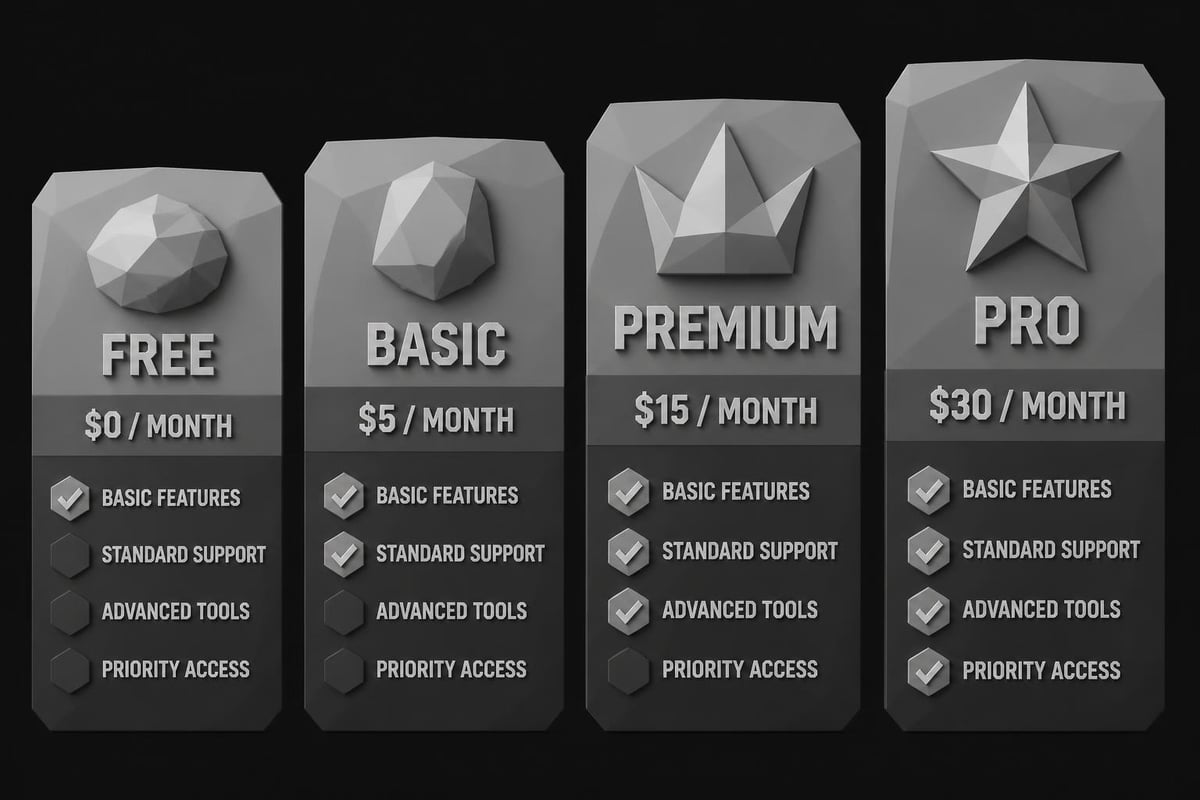
Most successful subscription apps offer multiple tiers to capture different customer segments. Here's what tends to work:
- Free tier: Limited features to hook users and demonstrate value
- Basic tier: Core functionality at an accessible price point ($2.99-$9.99/month)
- Premium tier: Full feature set with advanced capabilities ($9.99-$29.99/month)
- Pro/Business tier: Enterprise features or team functionality ($29.99+/month)
The key is making sure each tier feels justified. Your users should clearly understand what they're getting at each level, and the value should exceed the price they're paying.
Pricing Psychology for Subscriptions
Don't just guess at your pricing. Start with annual billing options that offer a discount compared to monthly billing - this improves retention and gives you more cash upfront. Many successful apps use prices like $4.99 or $9.99 instead of round numbers. It might seem small, but these psychological triggers matter.
Test different price points with small audiences before committing. You can always adjust, but it's easier to start higher and offer promotions than to raise prices later.
Freemium: The Gateway Drug to Paid Conversions
The freemium model is one of the most popular mobile app monetization strategies because it removes the biggest barrier to entry: asking for money upfront. Users can download and use your app for free, experiencing real value before deciding to upgrade.
The challenge with freemium is finding the right balance. Give away too much, and nobody upgrades. Give away too little, and nobody downloads in the first place. Research on freemium approaches shows that the sweet spot typically involves offering genuine utility in the free version while keeping premium features that solve specific pain points behind the paywall.
| Freemium Component | Best Practice | Common Mistake |
|---|---|---|
| Free features | Core functionality that delivers value | Crippled version that frustrates users |
| Paywall timing | After user experiences value (3-7 days) | Immediate paywall on first open |
| Upgrade prompts | Contextual, when user needs premium feature | Aggressive popups that interrupt flow |
| Trial period | 7-14 days for full access | No trial, or trial too short to experience value |
Converting Free Users to Paying Customers
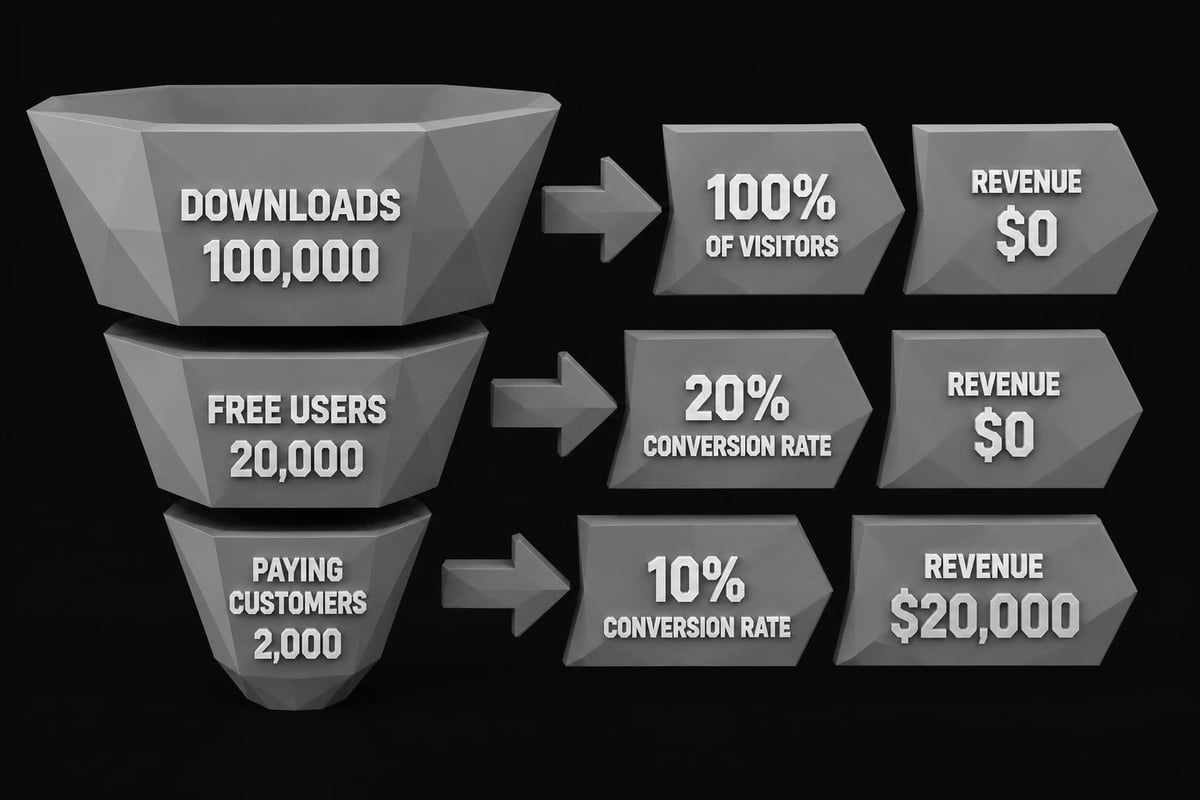
Your conversion rate from free to paid users will likely land somewhere between 2-5% for most apps. That might sound low, but it's actually healthy when you're acquiring users at scale. Focus on these conversion tactics:
Contextual upgrade prompts: Don't just show a generic "upgrade now" button. Trigger upgrade prompts when users try to access premium features or hit limits. This is when they're most motivated to pay.
Demonstrate value first: Let users accomplish something meaningful with the free version. Once they've invested time and gotten results, they're more likely to pay to unlock more.
Clear value proposition: Your upgrade screen should make it crystal clear what users get for their money. Use specific examples, not vague benefits like "unlock premium features."
In-App Purchases: Micro-Transactions That Add Up
In-app purchases (IAP) work differently than subscriptions. Instead of recurring payments, users buy one-time items, features, or content within your app. This model dominates in gaming but works for many other app categories too.
The advantage of IAP is that you can monetize the same user multiple times without requiring an ongoing commitment. Users who might balk at a monthly subscription will happily make small purchases when they need something specific.
Types of In-App Purchases That Work
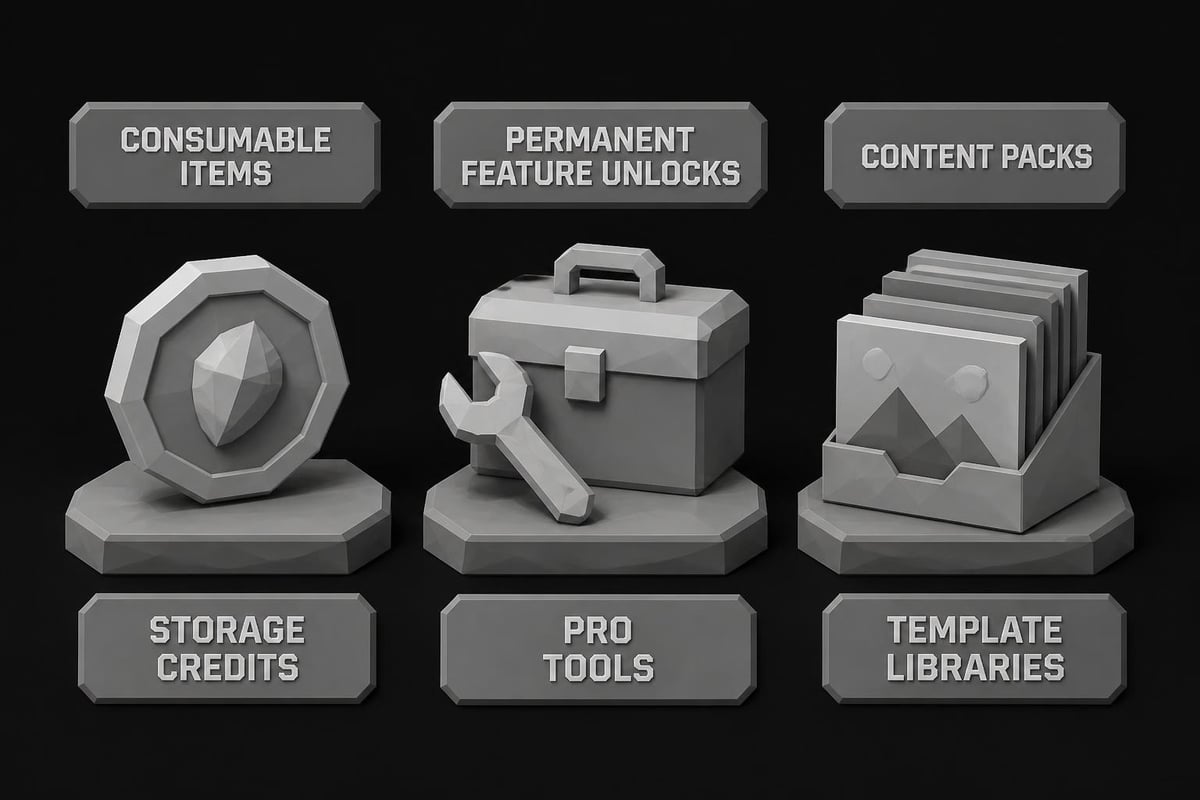
Consumables: These are items users spend and need to buy again, like extra storage, credits, or virtual currency. They create repeat purchase opportunities.
Non-consumables: One-time purchases that permanently unlock features or content. These work well for productivity apps that offer specialized tools or templates.
Content packs: Selling additional content, themes, filters, or templates lets you monetize creative apps without forcing subscriptions.
The key to successful IAP is making purchases feel valuable, not exploitative. Your users should feel like they're getting a fair deal, not being nickel-and-dimed for basic functionality.
Advertising: Monetizing Without Asking Users to Pay
For apps with large user bases, advertising can generate substantial revenue without requiring users to open their wallets. The trade-off is that ads can hurt user experience if implemented poorly.
Modern in-app advertising strategies have evolved beyond annoying banner ads. Today's most effective ad formats balance revenue with user experience:
- Rewarded video ads: Users choose to watch ads in exchange for in-app currency, extra lives, or premium content
- Native ads: Ads that match your app's look and feel, blending into the interface
- Interstitial ads: Full-screen ads shown at natural transition points
- Banner ads: Traditional but less intrusive when placed thoughtfully
Making Advertising Work for Your App
The biggest mistake developers make with ads is implementing them too aggressively. A few poorly placed ads can tank your retention rates and ruin the user experience you worked so hard to create.
Start with rewarded video ads. These are the least offensive because users opt in, and they actually appreciate the exchange. You give them something valuable, and they give you their attention for 30 seconds. Everyone wins.
For apps targeting users who want an ad-free experience, consider offering a one-time purchase or subscription to remove ads. This hybrid approach lets you monetize both users who'll tolerate ads and those who'll pay to avoid them.
Hybrid Monetization: Mix and Match for Maximum Revenue
Here's the thing: you don't have to pick just one of these mobile app monetization strategies. The most successful apps often combine multiple approaches to maximize revenue across different user segments.
A typical hybrid model might look like this:
- Free tier with banner ads and limited features
- Freemium upgrade that removes ads and unlocks some features
- In-app purchases for premium content or consumables
- Subscription tier for power users who want everything
This approach lets you monetize users at different willingness-to-pay levels. Some users will never pay but will watch ads. Others will make a small one-time purchase. Your most engaged users will subscribe for full access.
Choosing the Right Combination
The best mix depends on your app category, target audience, and competition. Productivity apps typically lean heavily on subscriptions. Games do well with IAP and rewarded ads. Utilities might combine one-time purchases with optional subscriptions.
Look at successful apps in your category. What monetization strategies are they using? You don't need to copy them exactly, but you can learn from what's proven to work with your target audience.
Getting Started: Your First Monetization Strategy
If you're building your first app, start simple. Don't try to implement every monetization method at once. Pick one primary strategy and execute it well.
For most indie developers and small teams, starting with a freemium model backed by subscriptions makes sense. This gives you the best of both worlds: easy user acquisition through a free offering and recurring revenue from users who love what you've built.
If you're ready to turn your app idea into reality, Build and Launch Your Mobile App in 14 Days provides everything you need to create your first profitable iOS app without coding experience. The course covers not just building your app, but also implementing the monetization strategies that actually generate revenue.
Testing and Iterating Your Monetization
Whatever strategy you choose, plan to test and adjust. Your first pricing might be wrong. Your initial paywall placement might hurt conversions. That's okay - every successful app has gone through multiple iterations.
Track these key metrics from day one:
| Metric | What It Tells You | Target Range |
|---|---|---|
| Conversion rate | % of users who pay | 2-5% for freemium |
| ARPU (Average Revenue Per User) | Total revenue divided by total users | Varies by app type |
| LTV (Lifetime Value) | Total revenue from average user over time | Should exceed CAC by 3x |
| Churn rate | % of subscribers who cancel | Under 5% monthly for healthy apps |
| CAC (Customer Acquisition Cost) | Cost to acquire one paying user | Should be under 33% of LTV |
These numbers tell you whether your monetization is working or needs adjustment. If your conversion rate is low, your paywall might be too aggressive or your free features might be too generous. If churn is high, you're not delivering enough ongoing value to justify the subscription price.
Avoiding Common Monetization Mistakes
Even experienced developers make mistakes when implementing mobile app monetization strategies. Here are the biggest ones to avoid:
Waiting too long to monetize: Some developers think they need millions of users before adding monetization. Wrong. Start monetizing early, even if it's just validating that people will pay. You can always adjust your model, but you can't get back the revenue you missed while waiting.
Underpricing your app: Beginning developers often charge too little, thinking low prices will attract more customers. Usually, it just devalues your product. People associate higher prices with higher quality. Don't be afraid to charge what your app is worth.
Ignoring platform fees: Apple and Google take 15-30% of your revenue (15% for first $1M in annual revenue, then 30%). Factor this into your pricing and projections. Your $9.99 subscription nets you $8.49 or $6.99 depending on your revenue level.
Breaking user trust: Nothing kills an app faster than bait-and-switch tactics. If you promise features in the free version, deliver them. If you charge for premium features, make sure they're genuinely valuable. Your reputation matters more than short-term revenue.
Optimizing for Long-Term Success
The best mobile app monetization strategies focus on lifetime value, not quick wins. Every decision should ask: does this make users more likely to stick around and keep paying?
That means investing in retention. Add new features regularly. Fix bugs quickly. Listen to user feedback. The longer users stick around, the more revenue they generate, whether through subscriptions, in-app purchases, or ad impressions.
Industry analysis shows that the most successful apps treat monetization as an ongoing optimization process, not a set-it-and-forget-it decision. They test new pricing, experiment with different ad placements, and constantly refine their conversion funnels.
Building Sustainable Revenue Streams
Think beyond the first purchase. A user who subscribes for one month is nice. A user who subscribes for 24 months is transformative for your business. Structure your monetization to encourage long-term relationships.
Annual subscriptions with discounts improve retention and give you cash upfront. Loyalty programs that reward long-time users create stickiness. Regular content updates give users reasons to keep paying month after month.
Making Your Monetization Decision
You've now got a solid understanding of the main mobile app monetization strategies available in 2026. The question is: which one is right for your app?
Consider your app type first. Productivity and utility apps typically work best with subscriptions or one-time purchases. Content apps (news, education, entertainment) do well with freemium and subscriptions. Games can leverage in-app purchases and rewarded ads effectively.
Think about your target audience. Are they consumers or business users? Business users generally have higher willingness to pay and prefer subscriptions they can expense. Consumer apps often need freemium tiers to drive adoption.
Consider your competition. If every competitor offers a free tier, launching as paid-only will make acquisition harder. If everyone charges $9.99/month, you need to either justify a higher price with better features or undercut them with a $4.99 tier.
Finally, be honest about your resources. Subscription apps require ongoing development to justify the recurring charge. If you can't commit to regular updates, a one-time purchase model might be more sustainable for you as a solo developer.
The right monetization strategy is the one that fits your app, serves your users fairly, and creates sustainable revenue for your business. Start with one approach, measure the results, and don't be afraid to evolve as you learn what works for your specific situation.
Mobile app monetization doesn't have to be complicated, but it does require thoughtful planning and ongoing optimization. Whether you choose subscriptions, freemium, in-app purchases, advertising, or a hybrid approach, the key is delivering genuine value that users happily pay for. If you're ready to transform your app idea into a revenue-generating digital product, CreateSell provides the courses and resources you need to build, launch, and monetize your mobile app - even if you've never coded before. Stop trading hours for dollars and start building products that generate income while you sleep.