
How to Get App Reviews: A Guide for App Creators

Modest Mitkus
May 28, 2026
Getting reviews for your app can feel like pulling teeth sometimes. You've built something awesome, launched it into the wild, and now you're sitting there wondering why nobody's leaving feedback. Here's the thing: app reviews aren't just nice-to-haves anymore. They're the social proof that can make or break your digital product in today's crowded app marketplace. Whether you're launching your first mobile app or your tenth, understanding how to get app reviews consistently is crucial for visibility, credibility, and ultimately, downloads.
Why App Reviews Actually Matter in 2026
Let's cut straight to it. App store algorithms love reviews. Both Apple's App Store and Google Play use review volume and ratings as major ranking factors. More reviews mean better visibility in search results and category rankings.
But there's more to it than just SEO juice. Real people read these things before they download. A study shows that apps with higher review counts convert better, even if the rating isn't perfect. An app with 1,000 reviews at 4.2 stars will often outperform one with 50 reviews at 4.8 stars.
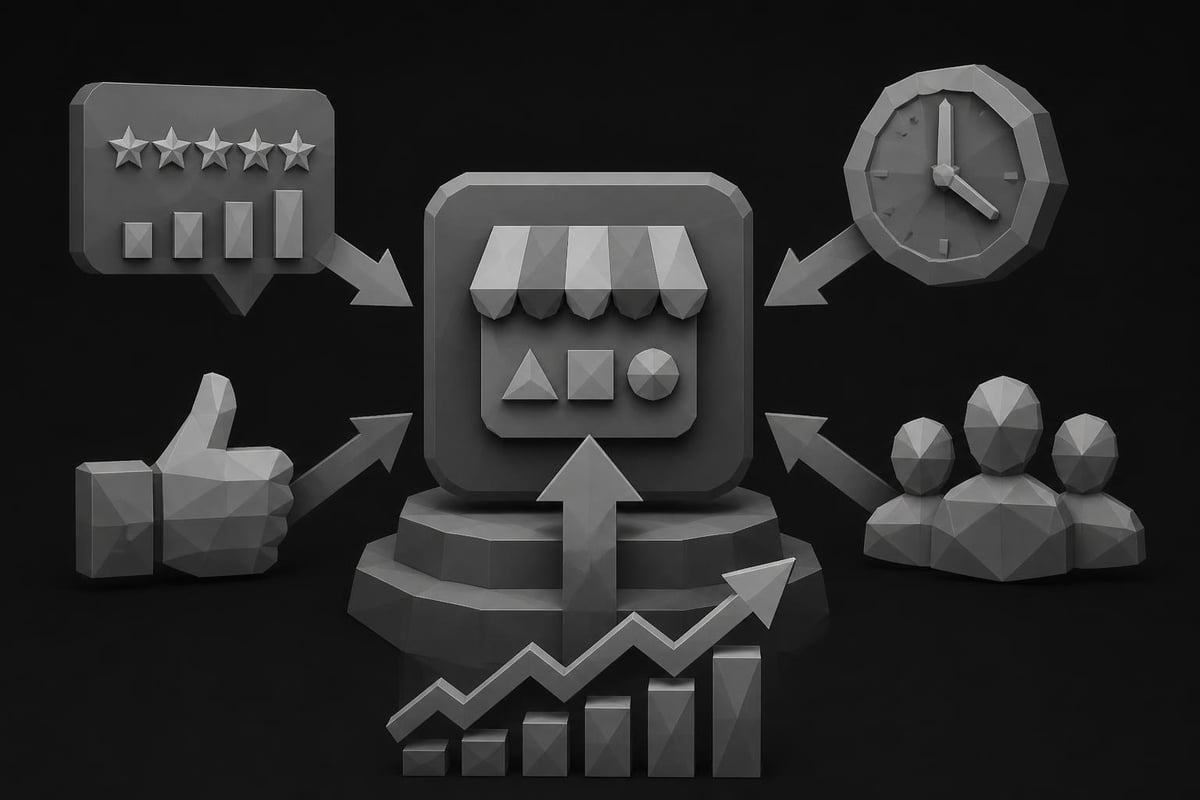
Here's what reviews do for your app:
- Build instant credibility with potential users who've never heard of you
- Provide valuable feedback about bugs, features, and user experience
- Boost conversion rates on your app store listing
- Improve algorithmic rankings in both stores
- Create social proof that reduces download hesitation
Think of reviews as the digital equivalent of word-of-mouth marketing. They're your users telling other potential users, "Yeah, this is worth your time."
Timing Is Everything: When to Ask for Reviews
You know what's annoying? Apps that ask for a review 30 seconds after you've installed them. You haven't even figured out what the app does yet, and here comes the review prompt. Don't be that app.
Understanding the psychology of review timing can dramatically improve your success rate. The secret is catching users at their "aha moment," that point where your app just delivered real value.
Finding Your App's Magic Moments
Every app has different success points. For a fitness app, it might be after completing their first workout. For a productivity tool, it could be after they've checked off five tasks. For a photo editing app, it's probably right after they've saved an edited photo they're proud of.
Here's a framework for identifying your moments:
- Map the user journey from installation to regular usage
- Identify value milestones where users achieve a goal
- Look at engagement data to see when satisfaction peaks
- Test different trigger points and measure response rates
- Avoid negative moments like errors, crashes, or failed actions
The data backs this up. According to strategies that work in 2026, apps that wait for a positive user action before prompting see 3-5x higher review conversion rates.
| Timing Strategy | Success Rate | Best For |
|---|---|---|
| After specific achievement | High (8-12%) | Gaming, fitness, learning apps |
| After multiple sessions (3-5) | Medium (5-8%) | Utility, productivity apps |
| After premium upgrade | Medium-High (7-10%) | Freemium models |
| Random prompts | Low (1-3%) | Not recommended |
Using In-App Review APIs the Right Way
Both iOS and Android have built-in review systems that let users rate your app without leaving it. These are absolute game-changers for how to get app reviews efficiently.
Apple's StoreKit and Google's In-App Review API make the process seamless. Users see a native prompt, can leave a rating in seconds, and stay in your app. No context switching, no friction.
Implementing Review Prompts Effectively
The Apple Developer Documentation provides clear guidelines. You can only prompt users three times per year, so make those opportunities count.
Here's what works:
- Use conditional logic to show prompts only to engaged users
- Respect the frequency limits (don't try to hack around them)
- Don't incentivize reviews with rewards or payments (it's against both stores' policies)
- Make it genuinely optional with easy dismissal
For Android, you've got more flexibility but the same principles apply. The best implementations track user behavior and only trigger prompts when conditions are met: minimum app opens, positive actions completed, no recent crashes.
Getting Those First Critical Reviews
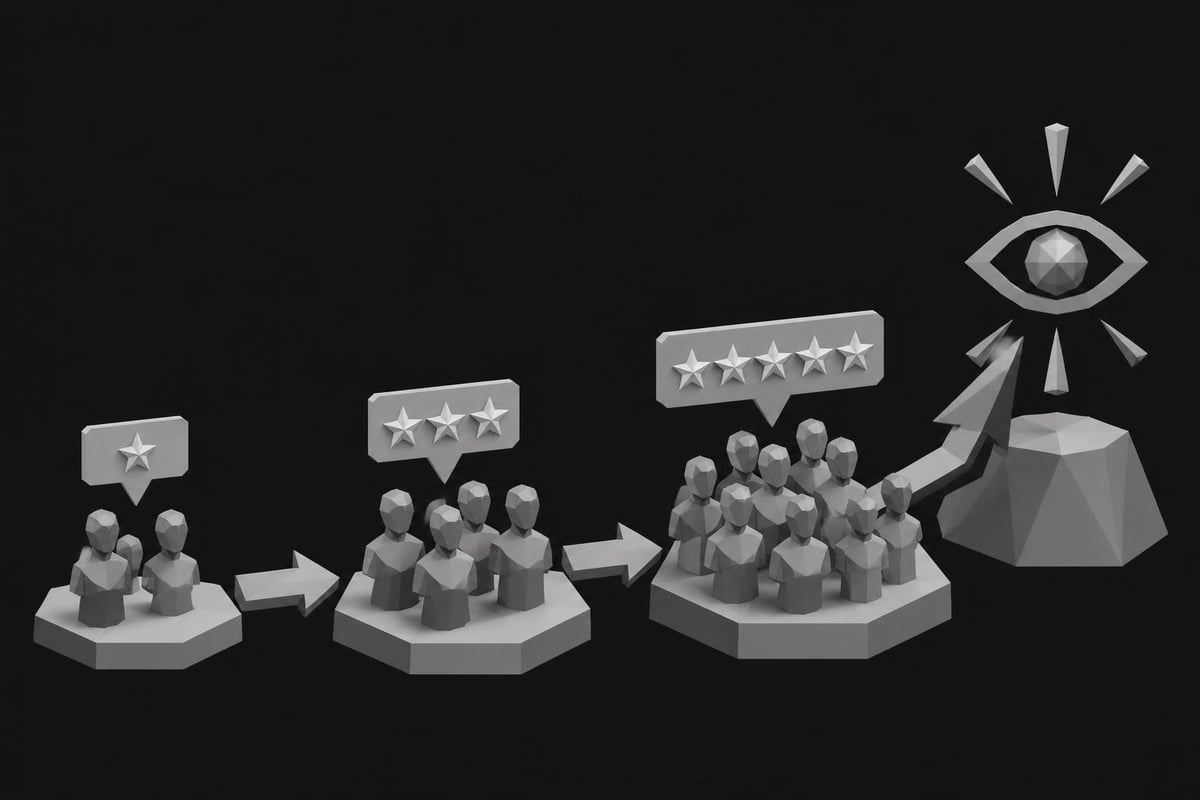
When you're just starting out, getting your first reviews feels impossible. Nobody wants to be first, and you're stuck in a catch-22: you need reviews to get downloads, but you need downloads to get reviews.
Getting your first review requires a more proactive approach. Here's the playbook that actually works:
Personal Network Outreach: Start with people who know and trust you. Friends, family, beta testers, and colleagues can provide those crucial first reviews. Be transparent and ask for honest feedback, not just five stars.
Beta Testing Programs: Both TestFlight (iOS) and Google Play's closed testing let you gather users before launch. Engage with these testers, fix their reported issues, and when you launch publicly, they're often happy to leave reviews.
Early Adopter Communities: Share your app in relevant communities where your target users hang out. Reddit, Facebook groups, Discord servers, and niche forums can be goldmines for early adopters willing to try new apps.
The Launch Week Push
Your first week is critical. Plan a coordinated effort:
- Announce to your email list (if you have one)
- Post on social media with a clear ask
- Reach out to beta testers directly
- Engage in communities where your audience lives
- Consider a small influencer outreach in your niche
The goal isn't to game the system-it's to get genuine feedback from real users who've actually used your app. Quality matters more than quantity, especially early on.
Creating a Review-Friendly User Experience
Here's something most developers miss: the best way to get reviews is to build an app worth reviewing. That sounds obvious, but it goes deeper than just "make a good app."
Your entire user experience should subtly encourage and facilitate feedback. This means:
- Minimize friction points that frustrate users before they hit review moments
- Deliver quick wins so users experience value fast
- Build delight moments that exceed expectations
- Make feedback channels obvious beyond just app store reviews
Think about apps you've voluntarily reviewed. You probably did it because the app either solved a problem beautifully or delighted you in an unexpected way. That's what you're aiming for.
Handling Bugs and Performance Issues
Nothing kills reviews faster than crashes and bugs. Before you focus on how to get app reviews, make sure your app is stable. Monitor crash reports religiously, fix critical bugs immediately, and test thoroughly across devices.
If you're building apps without extensive coding knowledge, tools and frameworks that help you create and sell web and mobile apps from scratch can accelerate your development process while maintaining quality standards. The key is launching with a solid foundation that won't immediately generate negative reviews.
Email and Push Notification Strategies
Once you've got users' contact information (with permission), you've got a direct line for review requests. But here's the critical part: don't abuse it.
Email Campaigns That Work: Send a thoughtfully timed email after users have had enough experience with your app. Personalize it, explain why reviews matter, and make it a one-click process if possible.
The email should:
- Acknowledge their usage and thank them
- Briefly explain how reviews help (but don't guilt trip)
- Include a direct link to the review page
- Offer an alternative feedback channel for those with concerns
Push Notifications: These are trickier because they can feel intrusive. Use them sparingly, and only after users have demonstrated engagement. The notification should be contextual, not random.
| Channel | Best Timing | Frequency | Conversion Rate |
|---|---|---|---|
| 7-14 days after install | Once per user | 3-6% | |
| Push notification | After achievement moment | Max 2x per user | 5-8% |
| In-app prompt | During positive interaction | Up to 3x per year | 8-12% |
| SMS (if applicable) | After support interaction | Once only | 4-7% |
Responding to Reviews Builds More Reviews
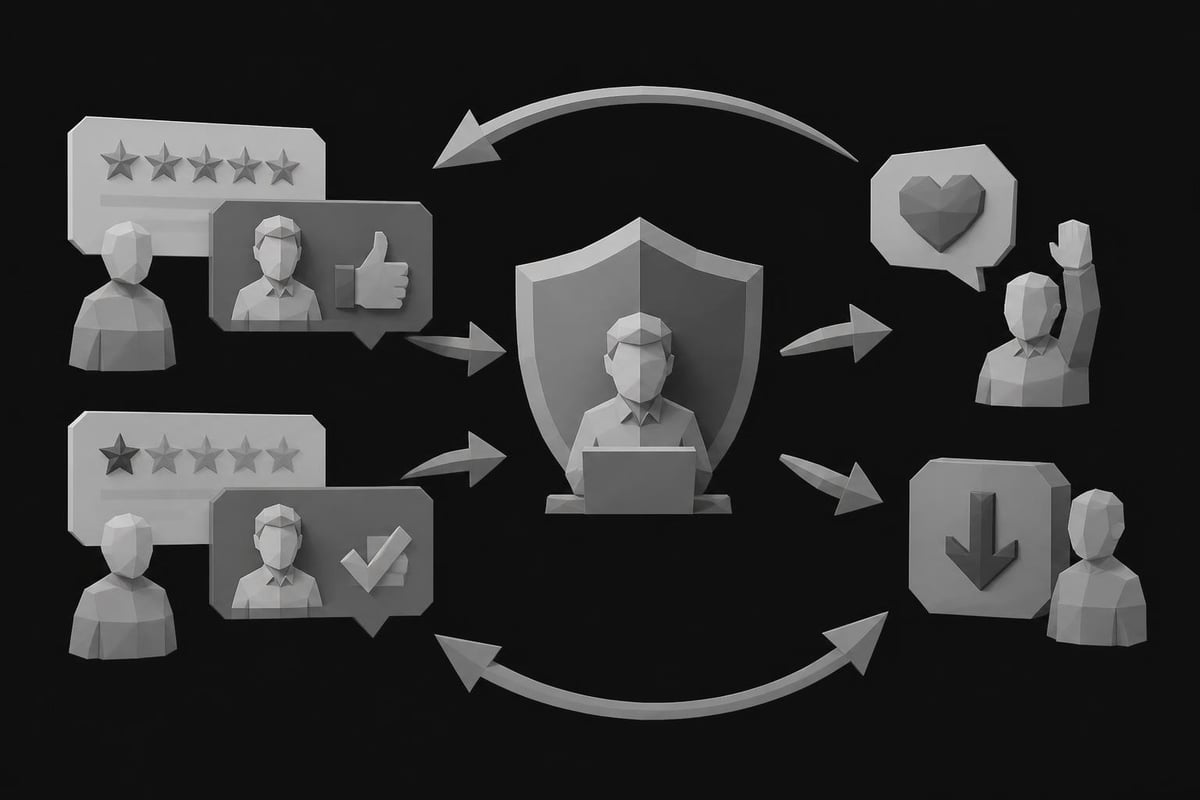
Here's a strategy that creates a virtuous cycle: respond to reviews, especially negative ones. When potential users see developers actively engaging with feedback, they're more likely to download and more likely to review.
Research shows that responding to app reviews can improve your overall rating by up to 0.3 stars over time. That's huge in app store terms.
How to Handle Negative Reviews
Bad reviews sting, but they're opportunities. Here's the approach:
- Respond quickly (within 24-48 hours ideally)
- Stay professional no matter how harsh the review
- Acknowledge the issue specifically
- Explain what you're doing to fix it
- Take detailed conversations offline with contact information
For positive reviews, a simple thank you goes a long way. Personalize when possible, referencing specific features they mentioned.
Leveraging Social Proof Beyond App Stores
Your app store reviews are just one piece of the puzzle. Building a broader reputation for your app creates momentum that feeds back into review generation.
Content Marketing: Write about your app's development journey, feature updates, and user success stories. When people feel connected to your product's story, they're more invested in supporting it.
Social Media Engagement: Share user testimonials, feature highlights, and behind-the-scenes content. Create a community where users feel heard and valued.
User-Generated Content: Encourage users to share their experiences with your app on social platforms. This creates visibility and credibility that extends beyond the app stores.
The strategies for improving App Store Optimization emphasize that reviews are part of a larger ecosystem of signals. Your website, social presence, and content all contribute to your app's perceived value.
Monitoring and Measuring Your Review Strategy
You can't improve what you don't measure. Set up systems to track your review acquisition efforts and understand what's working.
Key metrics to monitor:
- Review velocity (reviews per day/week)
- Rating distribution (breakdown of 1-5 star reviews)
- Review sentiment (positive vs. negative themes)
- Conversion impact (how reviews affect download rates)
- Prompt response rates (how many users respond to in-app requests)
Tools like AppFollow, Sensor Tower, and App Annie help you track these metrics across both iOS and Android. Set up alerts for new reviews so you can respond quickly.
A/B Testing Your Review Requests
Don't just set up a review prompt and forget about it. Test different approaches:
- Messaging variations: "Enjoying the app?" vs. "Help us improve" vs. "Rate us!"
- Timing differences: Session 3 vs. session 5 vs. after specific actions
- Visual designs: Different prompt styles and button placements
- Incentive tests: Educational content about why reviews matter
Track which variations generate the highest response rates and best quality reviews. Small optimizations can lead to significant improvements over time.
Building a Long-Term Review Generation System
Understanding how to get app reviews isn't about a one-time campaign. It's about building systematic processes that consistently generate feedback as your app grows.
Create a review generation checklist:
- In-app review prompts at optimal moments
- Email sequence for engaged users
- Social media mentions and community engagement
- Regular feature updates that give users reasons to re-review
- Response protocol for all reviews within 48 hours
- Monthly analysis of review trends and sentiment
- Quarterly strategy review and optimization
The apps that win at reviews treat them as a core metric, not an afterthought. They build review generation into their product roadmap, user communication strategy, and growth planning.
According to proven frameworks for getting more app store reviews, successful apps dedicate specific resources to review management and see it as an investment in long-term growth.
Common Mistakes to Avoid
Let's talk about what doesn't work, because I see developers make these mistakes all the time:
Begging for 5-star reviews: Never tell users what rating to give. It's against app store policies and feels desperate. Ask for honest feedback instead.
Timing prompts poorly: Asking right after a crash, error, or failed payment is review suicide. Context matters enormously.
Ignoring negative reviews: Every ignored negative review is a missed opportunity to show you care and potentially turn a critic into an advocate.
Buying fake reviews: Don't even think about it. App stores are incredibly sophisticated at detecting fake reviews, and the consequences (removal from stores) aren't worth it.
Over-prompting users: Bombarding users with review requests destroys goodwill. Respect frequency limits and user preferences.
Adapting Your Strategy as You Scale
What works for getting your first 100 reviews is different from getting your next 1,000. As your app grows, your review strategy needs to evolve.
Early stage (0-500 reviews): Focus on personal outreach, beta testers, and high-touch engagement with every user. Quality and response time are everything.
Growth stage (500-5,000 reviews): Systematize with automated prompts, email sequences, and community building. Start A/B testing different approaches.
Scale stage (5,000+ reviews): Optimize conversion rates, use advanced analytics, build dedicated community channels, and consider review management tools.
The fundamentals of how to get app reviews stay the same-deliver value, ask at the right time, respond to feedback-but your execution becomes more sophisticated.
Getting consistent app reviews is one of those things that compounds over time. Start with the fundamentals: build something worth reviewing, ask at the right moments, respond to all feedback, and make it easy for users to share their experience. If you're building your first app or looking to create digital products that generate income while you focus on growth, CreateSell can help you learn to build and launch web and mobile apps from scratch, turning your ideas into products that sell themselves. The reviews will follow when you've built something people genuinely find valuable.