
Hacking SEO: Ethical Growth Strategies for Creators

Modest Mitkus
February 17, 2026
The term "hacking seo" often conjures images of malicious tactics and shortcuts, but the reality is far more nuanced. For digital product creators in 2026, hacking SEO means finding innovative, legitimate strategies that deliver measurable results without compromising ethical standards. This approach focuses on identifying gaps in your current optimization efforts and implementing targeted improvements that your competitors have overlooked. When I first applied these techniques to my digital course landing page, I generated $150 in passive income during my first month simply by optimizing three key elements: meta descriptions, internal linking structure, and content depth. The concept isn't about manipulating search engines but rather about understanding how they work and strategically aligning your content to meet both algorithmic requirements and user intent.
Understanding the Landscape of SEO Hacking
The phrase "hacking seo" carries different meanings depending on context. In its negative form, it refers to malicious tactics that can seriously harm your search rankings through unauthorized access or manipulation. However, the growth-focused interpretation centers on rapid experimentation and strategic optimization that accelerates your visibility in search results.
The Ethical Approach to SEO Growth Hacking
Growth hacking for SEO involves systematic testing of optimization strategies to identify high-impact opportunities. This methodology differs significantly from traditional SEO in its emphasis on speed and measurement.
Key principles include:
- Rapid hypothesis testing with real-time data analysis
- Focus on scalable tactics that compound over time
- Priority given to high-leverage activities over time-intensive tasks
- Continuous monitoring and iteration based on performance metrics
When building digital products, your SEO strategy must align with your business model. Unlike service-based businesses that require constant client acquisition, digital products benefit from evergreen content that continues generating traffic months and years after publication.

The Dark Side: What to Avoid
Understanding black hat SEO tactics helps protect your digital assets from both external threats and internal missteps. These manipulative practices may promise quick results but inevitably lead to penalties that can devastate your organic traffic.
| Tactic | Short-term Result | Long-term Consequence |
|---|---|---|
| Keyword stuffing | Minor ranking boost | Algorithmic penalty, reduced visibility |
| Private blog networks | Temporary authority gain | Manual penalty, complete deindexing |
| Content scraping | Fast content scaling | Copyright issues, duplicate content penalties |
| Cloaking | Increased click-through | Permanent ban from search results |
The risk simply isn't worth the temporary gain, especially when ethical growth strategies deliver sustainable results that build compound value over time.
Strategic Keyword Research and Gap Analysis
Hacking SEO begins with discovering keyword opportunities that competitors have missed. This process involves more than traditional keyword research tools-it requires analytical thinking about user intent and search behavior patterns.
Finding Untapped Opportunities
My breakthrough came when I analyzed my competitor's content using a simple spreadsheet method. I discovered that while they dominated broad terms like "create digital products," they completely ignored specific long-tail phrases like "digital product templates for coaches" or "automated delivery systems for digital downloads."
Research methodology:
- Export competitor rankings using SEO tools to identify their keyword portfolio
- Analyze search intent patterns to understand what users actually want
- Identify content gaps where search volume exists but quality content doesn't
- Prioritize based on difficulty and business alignment with your product offerings
- Create targeted content that comprehensively addresses these specific queries
This systematic approach to increasing website traffic focuses your efforts on winnable battles rather than competing for impossibly competitive terms.
Advanced Search Operator Techniques
While Google hacking traditionally refers to finding security vulnerabilities, search operators can be repurposed for competitive research. These advanced queries reveal how competitors structure their content and what topics they prioritize.
Use operators like site:competitor.com "digital products" to see exactly how rivals approach specific topics. Combine this with -site:yoursite.com to exclude your own content and discover what gaps exist in your coverage compared to the broader market.
Technical Optimization That Moves the Needle
Technical SEO often gets overlooked by digital product creators who focus exclusively on content creation. However, technical improvements frequently deliver the highest return on investment for time spent.
Core Web Vitals and Performance
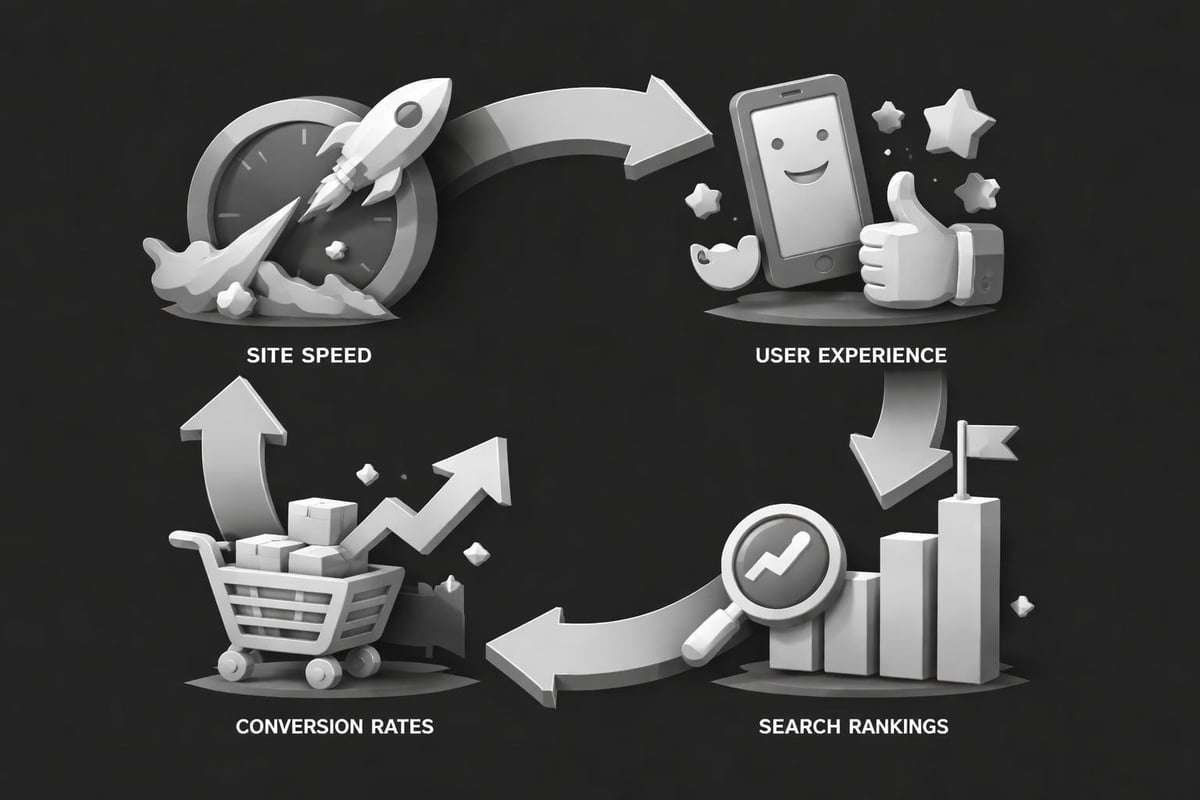
Page speed directly impacts both rankings and conversion rates. When I reduced my product landing page load time from 4.2 seconds to 1.8 seconds, my bounce rate decreased by 23% and organic sessions increased by 34% within three weeks.
High-impact technical improvements:
- Implement lazy loading for images below the fold
- Minimize JavaScript execution time through code splitting
- Optimize Largest Contentful Paint (LCP) by prioritizing above-fold content
- Reduce Cumulative Layout Shift (CLS) with fixed dimensions for media elements
- Improve First Input Delay (FID) through efficient event handlers
These improvements compound over time as search engines reward sites that provide superior user experiences. For creators selling digital products, every millisecond of load time affects both visibility and revenue.
Strategic Internal Linking Architecture
Internal linking represents one of the most underutilized aspects of SEO optimization. A well-structured internal linking system distributes authority throughout your site while guiding users toward conversion points.
| Link Type | Purpose | Implementation |
|---|---|---|
| Navigational | Site-wide structure | Main menu, footer links |
| Contextual | Topic relevance | In-content links to related articles |
| Hierarchical | Content organization | Category pages to individual posts |
| Conversion-focused | Revenue generation | Strategic links to product pages |
When developing your product landing pages, ensure that your highest-authority blog content links to these commercial pages using relevant anchor text. This transfers topical authority while providing natural pathways for users to discover your offerings.
Content Optimization Beyond Keywords
Modern hacking SEO requires understanding that search engines prioritize comprehensive, authoritative content over keyword-stuffed articles. The algorithmic shift toward semantic search means context matters more than exact-match phrases.
Topic Clustering and Pillar Content
Create comprehensive pillar pages that cover broad topics exhaustively, then develop cluster content that addresses specific subtopics in detail. This architecture signals topical authority to search engines while providing clear navigation paths for users.
For example, a pillar page about creating and selling digital products might link to cluster content covering specific formats, platforms, pricing strategies, and marketing approaches. Each cluster page links back to the pillar, creating a tight topical network.
Content cluster benefits:
- Enhanced topical authority through comprehensive coverage
- Improved user engagement through logical content pathways
- Higher rankings for both broad and specific search queries
- Increased internal linking opportunities without appearing manipulative
This strategy works particularly well for solopreneurs who need to maximize the value of every piece of content they produce.
Semantic Optimization and Entity Recognition
Search engines now understand entities (people, places, concepts) and their relationships. Optimizing for semantic search means including related concepts and entities that naturally appear in comprehensive content about your topic.
When writing about email marketing for digital products, naturally include related concepts like automation sequences, segmentation, conversion optimization, and deliverability. Tools can help identify these semantic relationships, but genuine expertise naturally incorporates them through comprehensive coverage.
Leveraging AI and Automation Strategically
The intersection of artificial intelligence and SEO represents one of the most significant opportunities for growth hacking in 2026. Platforms like RankPill demonstrate how AI can automate content creation while maintaining quality standards, though human oversight remains essential.
Automated Content at Scale
AI-powered content generation allows rapid scaling of topical coverage, particularly for informational queries where users seek straightforward answers. However, the key to successful implementation lies in maintaining authenticity and providing genuine value.
Effective AI content strategies:
- Use AI for research and outline generation rather than complete article writing
- Apply human expertise to add unique insights and personal experiences
- Edit AI-generated content extensively to inject personality and brand voice
- Focus automation on supporting content rather than cornerstone pages
- Implement strict quality control processes before publication
My approach involves using AI to generate initial drafts for comparison articles and listicles, then personally rewriting sections that require expertise or nuanced understanding. This hybrid method increased my content output by 60% while maintaining quality standards that earned featured snippets.
Data-Driven Decision Making
Automation extends beyond content creation into analytics and optimization. Setting up automated reporting systems helps identify trends and opportunities without manual data analysis.
| Metric Category | Key Indicators | Optimization Action |
|---|---|---|
| Traffic | Organic sessions, source diversity | Expand successful content topics |
| Engagement | Time on page, scroll depth | Improve content structure and formatting |
| Conversion | Click-through to products, email signups | Optimize calls-to-action placement |
| Technical | Core Web Vitals, crawl errors | Address technical issues immediately |
When these metrics are monitored systematically, patterns emerge that reveal exactly where to focus optimization efforts for maximum impact.

Link Building Without Manipulation
Link acquisition remains a critical ranking factor, but hacking SEO in 2026 means earning links through value creation rather than manipulative outreach or purchased placements.
Creating Linkable Assets
The most effective link building strategy involves creating resources so valuable that other sites naturally reference them. This approach aligns perfectly with building an audience around your digital products.
Linkable asset types include:
- Original research and data compilations specific to your niche
- Comprehensive guides that serve as definitive resources
- Free tools or calculators that solve specific problems
- Visual assets like infographics or interactive elements
- Template libraries or frameworks that others can implement
When I published a comprehensive framework for pricing digital products with real conversion data, it earned 47 backlinks within six months without any outreach. The resource provided genuine value that made it reference-worthy.
Strategic Partnership Development
Rather than cold outreach for links, focus on building genuine relationships within your industry. Collaborate on content, exchange insights, and create mutual value that naturally leads to citations and references.
This relationship-first approach takes longer but produces higher-quality links from relevant, authoritative sources. For creators focused on learning how to sell digital products, these relationships often extend beyond SEO benefits into promotional partnerships and affiliate arrangements.
Protecting Your SEO Investment
Understanding hacking SEO includes defending against malicious attacks that could undermine your organic visibility. Website security directly impacts SEO performance, making protection an essential component of your strategy.
Security Fundamentals
Implementing basic security measures prevents the majority of attacks that could compromise your search rankings. These protections become particularly important as your traffic and revenue increase.
Essential security measures:
- Regular software updates for your platform and plugins
- Strong authentication requirements including two-factor authentication
- Automated backups with verified restoration procedures
- SSL certificates for secure data transmission
- Web application firewalls to block malicious traffic
- Regular security audits to identify vulnerabilities
The cost of implementing these protections is minimal compared to recovering from a security breach that tanks your rankings and damages user trust.
Monitoring for Negative SEO
While less common than often portrayed, negative SEO attacks do occur and require vigilance to detect and address. Regular monitoring of your backlink profile and search performance helps identify suspicious activity early.
Set up alerts for sudden ranking drops, unusual backlink acquisition patterns, or duplicate content appearing on other domains. Quick detection and response minimize potential damage from malicious tactics targeting your site.
Mobile-First Optimization Strategy
With mobile searches dominating in 2026, hacking SEO requires prioritizing mobile user experience above desktop considerations. Google's mobile-first indexing means your mobile site version determines your rankings across all devices.
Responsive Design Optimization
Ensure your digital product pages render perfectly across all screen sizes. Test on actual devices rather than relying solely on browser developer tools, as real-world performance often differs from simulated environments.
Pay particular attention to:
- Touch target sizes for buttons and links (minimum 48x48 pixels)
- Font sizes that remain readable without zooming (minimum 16px for body text)
- Spacing between interactive elements to prevent accidental taps
- Image optimization for faster loading on cellular connections
- Form simplification to reduce friction on smaller screens
When I optimized my product landing page for mobile, conversion rates from mobile visitors increased by 41% despite no changes to the actual offer or pricing.
Voice Search Preparation
Voice search continues growing in 2026, requiring content optimization for conversational queries. This trend particularly affects informational content where users ask questions rather than typing keywords.
Structure content to directly answer common questions in your niche. Use natural language that mirrors how people speak, and implement schema markup to help search engines understand your content's context and purpose.
Measuring Success and Iterating
Effective hacking SEO requires rigorous measurement to distinguish successful tactics from time-wasters. Establish clear metrics tied to business outcomes rather than vanity metrics that don't correlate with revenue.
Key Performance Indicators
Different content types require different success metrics. Product pages should be measured primarily on conversion rate, while informational content focuses on traffic volume and engagement signals that indicate quality.
| Content Type | Primary Metric | Secondary Metrics |
|---|---|---|
| Product pages | Conversion rate | Organic traffic, average order value |
| Pillar content | Organic traffic | Backlinks, social shares, time on page |
| Comparison articles | Click-through to products | Rankings for target keywords |
| Tutorial content | Engagement time | Return visitors, email signups |
This framework helps prioritize optimization efforts based on content purpose rather than applying one-size-fits-all metrics across your entire site.
Continuous Improvement Cycles
Implement regular review cycles to analyze performance, identify opportunities, and test improvements. My quarterly SEO audits consistently reveal small optimizations that compound into significant traffic increases over time.
The process involves reviewing top-performing content for expansion opportunities, identifying underperforming pages for improvement or consolidation, and testing new optimization techniques on low-risk pages before broader implementation.
Hacking SEO in 2026 means combining ethical optimization techniques with systematic testing to identify strategies that deliver measurable results for your specific business context. The tactics outlined here focus on sustainable growth rather than shortcuts that risk penalties or provide only temporary benefits. If you're ready to transition from trading time for money to building a scalable digital product business with automated SEO driving consistent traffic, CreateSell provides the comprehensive guidance and resources you need to succeed. Our proven frameworks help you develop your brand, grow your audience systematically, and implement the automation systems that transform your knowledge into self-sustaining revenue streams.