
9 Innovative Growth Hacking SaaS Strategies to Try in 2026

Modest Mitkus
May 7, 2026
The SaaS world in 2026 is moving fast, leaving old-school marketing behind. Companies now rely on growth hacking saas to unlock next-level user acquisition and retention, using bold, data-driven tactics that set them apart. In this article, discover nine innovative strategies—from viral product loops to AI-powered personalization—that top SaaS brands are using to fuel rapid, sustainable growth. Get ready to explore actionable playbooks and proven hacks designed for the hyper-competitive SaaS landscape. Dive in to future-proof your success and turn growth hacking saas into your secret weapon.
The Evolution of SaaS Growth Hacking in 2026
The landscape of growth hacking saas is undergoing a dramatic transformation in 2026. Traditional marketing tactics are giving way to experimental, data-powered strategies that prioritize speed, personalization, and measurable value. As competition intensifies, SaaS companies are forced to rethink how they acquire, engage, and retain users in a crowded marketplace.

The Shift to Experimental Growth Approaches
In 2026, growth hacking saas strategies are defined by rapid experimentation and a willingness to challenge convention. Instead of relying solely on outbound campaigns or static funnels, leading SaaS companies are building agile teams focused on continuous testing. These teams deploy short, iterative experiments, measuring impact in real time to uncover what drives exponential growth.
This approach empowers organizations to adapt quickly, pivoting away from underperforming tactics and doubling down on proven growth hacks. The result is a culture of innovation that keeps companies ahead of the curve.
Evolving SaaS Buyer Behavior
SaaS buyers in 2026 demand more than just features—they expect instant value, hyper-personalization, and seamless experiences. Research shows that 84% of customers now expect tailored communication and solutions that reflect their unique needs. This shift has pushed growth hacking saas strategies to become more user-centric, integrating behavioral data and feedback at every touchpoint.
Buyers are also more informed and discerning, seeking transparency and authenticity. Companies that deliver personalized onboarding, relevant messaging, and rapid time-to-value consistently outperform competitors.
AI, Automation, and Data Analytics Take Center Stage
Artificial intelligence and automation are now at the core of growth hacking saas innovation. AI-powered personalization engines, chatbots, and predictive analytics enable SaaS businesses to engage users with unprecedented precision. Automated workflows streamline onboarding, retention, and referral processes, scaling growth without sacrificing the human touch.
Data analytics and real-time feedback loops allow teams to monitor key metrics, optimize campaigns, and quickly identify friction points. This data-driven mindset is essential for crafting growth hacks that resonate with modern SaaS users. For a closer look at actionable strategies, see these Top B2B SaaS Growth Strategies 2026.
Viral Loops and Integration Case Studies
Historical examples like Dropbox’s legendary referral program, which fueled 3,900% growth, highlight the power of viral loops. In 2026, SaaS companies elevate this concept by baking sharing and collaboration features directly into their products.
Modern solutions such as Slack’s viral onboarding and LinkedIn integrations demonstrate how seamless product experiences can trigger organic user acquisition. These strategies leverage network effects, social proof, and integration with popular platforms to drive scalable growth.
Navigating 2026: New Challenges and Opportunities
While growth hacking saas offers immense potential, 2026 presents unique challenges. The market faces saturation, user fatigue, and increasingly strict privacy regulations. To stand out, companies must prioritize transparency, ethical data use, and value-driven innovation.
At the same time, opportunities abound for those willing to experiment, adapt, and listen to customer feedback.
The Role of Teams and Experimentation
Cross-functional teams—combining marketing, product, and engineering—are central to successful growth hacking saas in 2026. By fostering collaboration and rapid iteration, these teams turn insights into action, ensuring that SaaS companies not only survive but thrive in a fast-evolving digital landscape.
9 Innovative Growth Hacking SaaS Strategies to Try in 2026
Staying ahead in the SaaS industry demands constant innovation and a willingness to challenge conventions. In 2026, growth hacking SaaS is no longer about quick fixes, but about creating sustainable, scalable engines for user acquisition and retention. Below, explore nine actionable strategies proven to accelerate growth, each tailored for the hyper-competitive landscape of modern SaaS.
1. Engineer Viral Product Loops
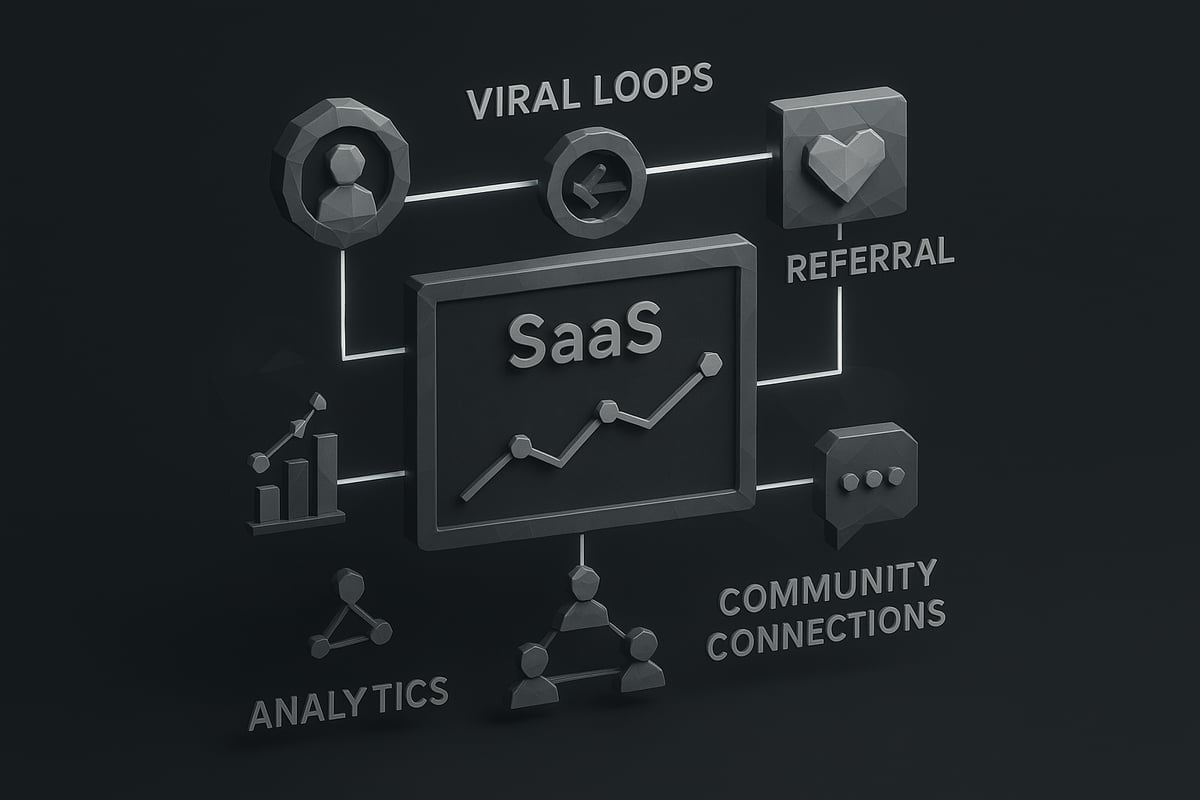
Viral product loops are foundational to growth hacking SaaS in 2026. The core idea is to design features where every new user naturally invites others, fueling a self-sustaining growth engine. Think of Slack’s onboarding or Notion’s collaborative invites. Each action, like sharing a project or inviting a teammate, drives organic expansion.
Consider Dropbox’s historical 3,900% growth via referral. Today, advanced viral loops leverage AI and social integrations for even lower friction. For example, streamlined invite flows, customizable templates, and built-in automation make sharing seamless and rewarding.
| Metric | Dropbox (Old) | Modern SaaS (2026) |
|---|---|---|
| Growth via Referral | 3,900% | 5,000%+ |
| Average Invite Rate | 2/user | 3.5/user |
To maximize virality:
- Offer rewards meaningful to both inviters and invitees.
- Automate sharing with pre-filled messages and easy social buttons.
- Regularly analyze invite conversion data for optimization.
Avoid spammy tactics or misaligned incentives, as these can erode trust and stall your growth hacking SaaS efforts. For more actionable tactics, see the comprehensive list at SaaS Growth Hacking Strategies 2026.
2. Hyper-Personalized Onboarding & In-App Messaging
Personalization is a defining trend in growth hacking SaaS for 2026. AI and behavioral analytics enable onboarding flows that adapt to user segments in real time. Dynamic in-app messages, triggered by milestones or user actions, deepen engagement from day one.
For example, Brainshark’s tailored trial messages increased registrations by 15%. Tools like Intercom, MailChimp, and custom AI solutions empower SaaS businesses to serve the right content at the perfect moment.
Best practices include:
- Segment users by industry, role, or use case.
- Trigger onboarding tips based on completed actions or time spent.
- Test message timing and content to boost activation rates.
Personalized onboarding reduces friction, lowers churn, and increases upsell opportunities. In growth hacking SaaS, relevance is king.
3. Integration-First Growth: APIs & App Marketplaces
In 2026, integration-first growth is a powerful lever for growth hacking SaaS. By connecting with popular platforms, you tap into new user bases and cross-promotional opportunities. Leadfeeder’s LinkedIn integration, for instance, unlocked new B2B lead generation channels.
Successful strategies include:
- Launching in major app marketplaces to boost visibility.
- Prioritizing high-impact partners based on shared audiences.
- Maintaining robust documentation and API reliability for seamless adoption.
Benefits extend beyond reach: integrations enable shared data, joint marketing, and new feature innovation. Identify partners whose users overlap with your ideal customer, and support integrations with ongoing updates.
4. Freemium and Free Trial Optimization
The freemium model, when optimized, is central to growth hacking SaaS. The challenge is balancing real value with a clear path to paid upgrades. Time-limited trials drive urgency, while feature-limited free plans let users experience your core offering.
Modern SaaS platforms use personalized prompts and usage-based triggers to nudge upgrades. For example, offering advanced analytics or automation only on paid tiers. Effective onboarding further increases conversion rates.
Key techniques:
- Highlight upgrade benefits at relevant moments.
- Use data to identify when users hit value thresholds.
- Avoid the “forever free” trap by making premium features irresistible.
Freemium, paired with smart onboarding, turns free users into loyal, paying customers, fueling sustainable growth hacking SaaS.
5. Referral Programs with Double-Sided Incentives
Referral systems are evolving in growth hacking SaaS, with double-sided incentives proving most effective. Both inviter and invitee receive tangible rewards, increasing motivation and participation.
Dropbox’s cloud storage rewards set the standard, but today, SaaS companies use gamified dashboards, progress bars, and social proof to drive referrals. Templates make setup easy, and analytics enable ongoing optimization.
- Gamify the process with clear milestones.
- Show real-time progress to encourage more shares.
- Offer rewards that align with product value.
Referral programs now outperform paid ads for B2B SaaS, with measurable, cost-effective results. Always consider legal and privacy regulations when designing your program.
6. Content Virality: Shareable, Story-Driven Content
Content virality is a pillar of growth hacking SaaS in 2026. Shareable content, such as how-to guides, expert interviews, infographics, and videos, expands reach and builds brand authority.
Storytelling connects with audiences emotionally, increasing the likelihood of shares. B2B SaaS brands excel with LinkedIn carousels and viral explainers. Capitalize on trending topics and pain points for maximum traction.
Tips for content virality:
- Use built-in share buttons and pre-written snippets.
- Create visual content, as videos are twice as likely to be shared (SproutSocial, 2026).
- Track shares and engagement to refine future content.
Well-crafted content not only attracts new users but also reinforces your brand as an industry innovator in growth hacking SaaS.
7. Community-Led Growth & Online Networking
Community-led growth is reshaping growth hacking SaaS. Building branded communities on forums, Slack, LinkedIn, or Discord fosters organic advocacy and peer-to-peer support.
HubSpot’s Inbound.org and SaaS-specific Discord servers are prime examples. These spaces drive product feedback, user-generated content, and higher retention.
Effective strategies:
- Host AMAs, webinars, and exclusive events.
- Encourage members to share tips and experiences.
- Measure engagement with analytics to demonstrate impact.
Active communities increase organic referrals and deepen customer loyalty, making them essential for growth hacking SaaS.
8. Retargeting and Multi-Touch Nurture Campaigns
Retargeting is crucial in growth hacking SaaS, especially for users who abandon sign-up or trial flows. Multi-channel nurture campaigns—email, in-app, SMS, and social ads—bring users back and move them down the funnel.
Personalized retargeting, based on user behavior and lifecycle stage, increases conversions by up to 70% (Leadfeeder, 2026). LinkedIn retargeting is particularly effective for B2B SaaS.
Best practices:
- Segment audiences by intent and activity.
- Use privacy-first approaches to comply with 2026 regulations.
- Test creative and timing for optimal results.
Multi-touch nurture ensures no opportunity is wasted, maximizing the impact of growth hacking SaaS.
9. Product-Led Customization & User Empowerment
Customization is a key differentiator in growth hacking SaaS. Allowing users to tailor workflows, dashboards, and features enhances stickiness and reduces churn.
ClickUp’s customizable project management and user-created templates are standout examples. SaaS companies now offer marketplaces for user-generated add-ons and public template libraries.
Strategies to empower users:
- Enable sharing of custom setups to drive viral growth.
- Balance flexibility with simplicity for broad appeal.
- Encourage community contributions to expand feature sets.
User empowerment turns customers into advocates, amplifying the reach and effectiveness of growth hacking SaaS strategies.
Measuring & Iterating Your Growth Hacking Experiments
Mastering growth hacking saas requires a relentless focus on measurement and continuous improvement. In 2026, the most successful SaaS teams treat every growth tactic as an experiment, using real-time analytics and structured feedback loops to optimize performance. Let us explore how to measure, test, and iterate your way to sustainable SaaS growth.

Analytics & Metrics: Tracking What Matters
Effective growth hacking saas strategies start with tracking the right metrics. Activation, retention, referral, and revenue are the four pillars every SaaS company should monitor closely. Use advanced analytics platforms to visualize user journeys, identify bottlenecks, and uncover growth opportunities.
Key SaaS metrics to track include:
| Metric | What It Measures | Why It Matters |
|---|---|---|
| CAC | Cost to acquire a customer | Controls spend efficiency |
| LTV | Lifetime value per user | Guides monetization strategy |
| NPS | User satisfaction | Predicts advocacy and churn |
| Churn Rate | User loss over time | Indicates product-market fit |
| Viral Coefficient | User-driven growth | Reveals referral success |
Aligning your analytics with growth hacking saas goals ensures every experiment is data-driven.
Rapid Experimentation: Test, Learn, Repeat
The essence of growth hacking saas is rapid experimentation. Build a hypothesis for each tactic, whether it is a new onboarding flow, referral structure, or content format. Launch A/B tests using tools like Optimizely or Google Optimize to compare variations.
A successful cycle looks like this:
- Formulate a clear hypothesis.
- Design and run a controlled experiment.
- Gather actionable data from real users.
- Analyze results, looking for statistical significance.
For inspiration, review proven SaaS Growth Hacking Tactics 2026 that emphasize iterative testing and optimization. The faster you move through these cycles, the quicker you discover what truly drives growth.
Data-Driven Iteration: Pivot or Double Down
Once experiments yield results, use your data to inform the next step. If a growth hacking saas tactic increases activation or referral rates, scale it across your user base. If not, pivot quickly to a new approach.
Continuous learning is essential. Monitor trends in metrics like churn and NPS to catch early warning signs. Encourage cross-functional collaboration so marketing, product, and data teams can share insights and iterate together.
Remember, the SaaS landscape evolves rapidly. The teams that thrive in 2026 are those who treat every result as a lesson, adapting their growth hacking saas playbook with agility and precision.
Future Trends: What’s Next for SaaS Growth Hacking?
The future of growth hacking saas is being shaped by rapid advancements in technology, changing user behaviors, and evolving industry standards. As we look toward 2026, SaaS leaders are reimagining how to drive sustainable, scalable growth in a complex, competitive landscape.

AI-Generated Content and Automation
Artificial intelligence is revolutionizing growth hacking saas by enabling teams to automate content creation, optimize campaigns, and personalize experiences at scale. AI-driven copywriting, image generation, and chatbot integrations let SaaS brands reach users with unprecedented speed and relevance.
Automation is also streamlining repetitive tasks such as onboarding, lead scoring, and customer segmentation. This frees up resources for more strategic growth hacking saas experiments, accelerating the cycle of innovation.
Predictive Analytics for User Behavior
Predictive analytics is taking center stage in growth hacking saas strategies. By analyzing vast datasets in real time, SaaS companies can anticipate user needs, spot churn risks, and deliver timely interventions. Machine learning models forecast which features will boost retention or which users are likely to upgrade.
This data-driven approach not only improves user satisfaction but also fuels continuous growth hacking saas optimization. Teams can iterate faster, test new hypotheses, and pivot with confidence based on predictive insights.
The Convergence of Product-Led and Community-Led Growth
In 2026, growth hacking saas is increasingly driven by the fusion of product-led and community-led strategies. SaaS platforms are embedding collaborative features, empowering users to share templates, and cultivating vibrant online communities. This synergy turns customers into advocates and accelerates organic adoption.
Hosting webinars, AMAs, and exclusive events builds loyalty and keeps users engaged. Peer-to-peer support and user-generated content become powerful engines for sustainable growth.
Privacy, Data Ownership, and Ethical Growth
With stricter privacy regulations on the horizon, growth hacking saas must balance personalization with transparency and consent. Companies are investing in privacy-first analytics, giving users more control over their data, and adopting ethical frameworks for experimentation.
Building trust is now a core part of any growth hacking saas strategy. Ethical data practices not only reduce risk but also differentiate SaaS brands in a crowded market.
Rise of Micro-SaaS and Emerging Markets
The micro-SaaS movement is gaining momentum, as solo founders and small teams launch niche solutions tailored to specific audiences. These agile ventures can rapidly test, iterate, and scale using modern growth hacking saas principles. For those exploring this space, Micro-SaaS trends and ideas offers actionable insights into emerging opportunities.
Additionally, expanding into underserved markets presents significant growth potential. Localization, lightweight integrations, and flexible pricing help SaaS companies break into new regions and industries.
Preparing for New Channels: Voice, AR/VR, and Beyond
To stay ahead, growth hacking saas strategies are embracing next-gen channels like voice assistants, augmented and virtual reality, and wearable tech. These platforms unlock creative ways to engage users, gather feedback, and deliver value outside traditional web and mobile interfaces.
Adapting early to these technologies will position SaaS brands at the forefront of user experience innovation, setting the stage for the next decade of growth.
After exploring these nine forward-thinking SaaS growth hacking strategies, you now have a roadmap for building a digital product business that truly stands out in 2026. If you’re ready to move beyond theory and start putting these ideas into action, I encourage you to take the next step. At CreateSell, you’ll find practical guidance and expert insights to help you develop your brand, grow your audience, and automate your sales—so you can turn your knowledge into a thriving, self-sustaining business. Let’s turn your growth ambitions into reality together.
Get Started