
Growth Hacking and Marketing for Digital Products

Modest Mitkus
March 9, 2026
You're building digital products, but getting eyeballs on them feels like shouting into the void. Traditional marketing costs too much and takes forever. That's where growth hacking and marketing come together to create something magical for solo creators and small teams. This approach combines creativity, analytics, and scrappy experimentation to get massive results without massive budgets. Whether you're selling courses, templates, or mobile apps, understanding these strategies will help you acquire customers faster and cheaper than your competition.
What Makes Growth Hacking Different from Traditional Marketing
Growth hacking and marketing aren't exactly the same thing, but they work beautifully together when you understand the distinction. Traditional marketing focuses on brand building, long-term relationships, and established channels that require significant investment. Growth hacking throws that playbook out the window.
Growth hacking emerged from startup culture where resources were tight but ambitions were sky-high. It's all about rapid experimentation across marketing channels and product development to identify the most effective ways to grow a business. The emphasis is on speed, data, and scalability.
The Core Mindset Shift
Here's what separates growth hackers from traditional marketers:
- Product is the primary marketing channel - Your digital product itself should drive acquisition
- Data trumps intuition - Every decision needs measurable results
- Speed over perfection - Launch quickly, test constantly, iterate relentlessly
- Viral mechanics - Build sharing directly into the user experience
- Automation first - Manual processes don't scale when you're a one-person business
For digital product creators, this mindset shift is crucial. You're not just building something people will buy once. You're creating systems that attract customers automatically. When you're building digital products, every feature should answer the question: "How does this help us grow?"
The AARRR Framework for Digital Product Growth
The pirate metrics framework (AARRR) gives you a clear roadmap for growth hacking and marketing. Each stage represents a critical point where you can optimize for better results.
| Stage | Focus | Key Metrics | Digital Product Examples |
|---|---|---|---|
| Acquisition | Getting visitors | Traffic sources, cost per click, organic reach | Blog posts, SEO, social media, YouTube tutorials |
| Activation | First positive experience | Sign-ups, downloads, first use | Free templates, trial periods, sample chapters |
| Retention | Coming back | Daily/weekly active users, email opens | Update notifications, new content releases, community access |
| Referral | Spreading the word | Viral coefficient, shares, affiliate conversions | Built-in sharing, referral bonuses, affiliate programs |
| Revenue | Making money | LTV, conversion rate, average order value | Upsells, bundles, premium tiers |
Each stage needs its own experiments and optimization strategies. You can't fix revenue problems with acquisition tactics, and you can't scale if your retention sucks.
Acquisition Tactics That Actually Work
Most digital product creators waste time on acquisition channels that don't match their audience. Instead of being everywhere, focus on one or two channels where your ideal customers actually hang out.
Content marketing remains one of the most powerful growth levers for digital products. When you teach people valuable skills related to your product, you build trust and demonstrate expertise simultaneously. A well-crafted lead generation strategy can turn blog readers into paying customers over time.
SEO deserves special attention here. Semrush's growth hacking guide emphasizes how organic search continues to deliver the highest ROI for bootstrapped businesses. You're competing on content quality and relevance, not ad budget.
Building Viral Loops into Your Digital Products
The most effective growth hacking and marketing strategy doesn't feel like marketing at all. Viral loops turn your existing users into your acquisition channel. Every person who uses your product becomes a potential evangelist who brings in more users.
Dropbox famously grew from 100,000 to 4 million users in 15 months using a simple referral program. Users got extra storage for inviting friends. Both parties benefited, creating a win-win loop that cost almost nothing to operate.
For digital product creators, viral mechanics might look like:
- Template sharing - Users share their creations, which showcase your product
- Collaboration features - Multi-user access requires inviting team members
- Attribution - Your product's watermark or credit line appears on user output
- Social proof - Public galleries or showcases of what people build
- Referral rewards - Discounts or bonuses for bringing new customers
The key is making sharing genuinely valuable to users, not just a marketing obligation. When you're designing digital products, think about how user success naturally involves others.
Data-Driven Experimentation for Solo Creators
You don't need a data science team to run effective growth experiments. You just need a systematic approach and basic analytics tools. Growth hacking and marketing succeed or fail based on your ability to measure what matters.
Setting Up Your Experiment Framework
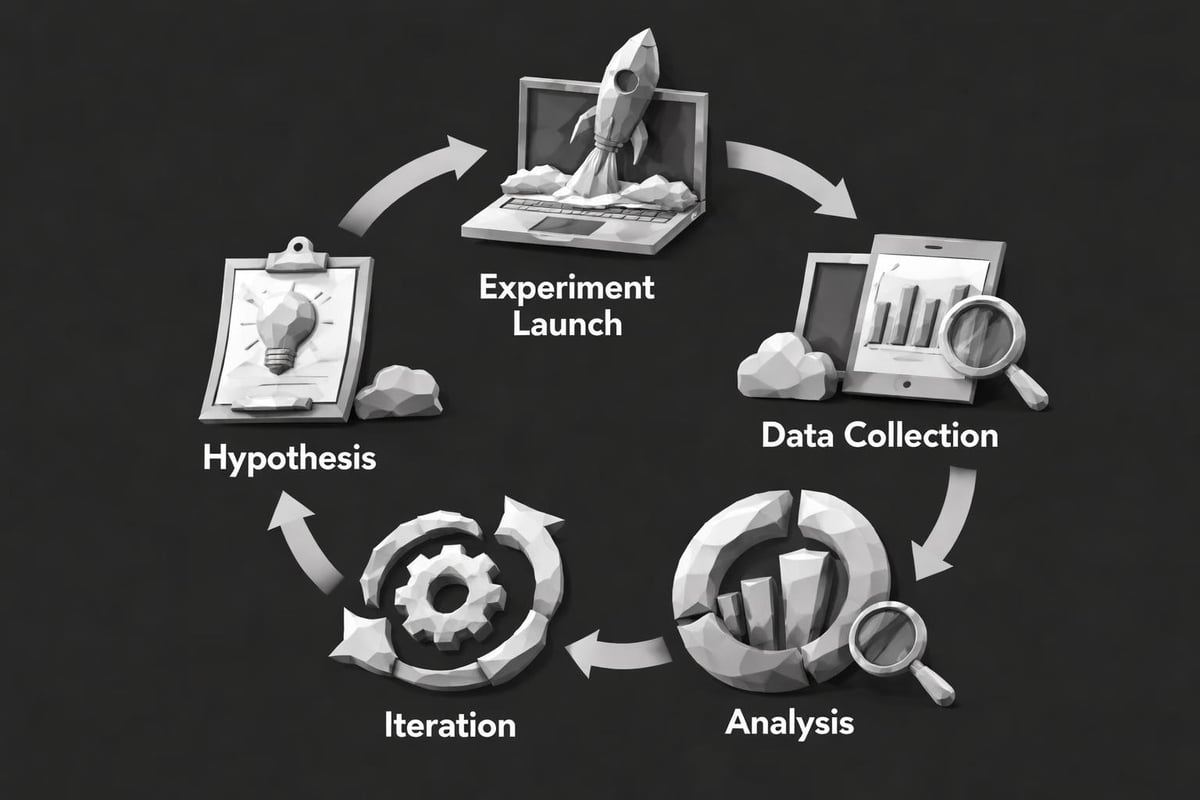
Start with the scientific method, adapted for business:
- Identify your bottleneck - Where are you losing the most potential customers?
- Form a hypothesis - What specific change might improve this metric?
- Design the test - How will you measure success?
- Run the experiment - Implement the change for a defined period
- Analyze results - Did it work? Why or why not?
- Scale or kill - Double down on winners, abandon losers quickly
This process works whether you're testing product landing pages, email subject lines, or pricing strategies. The trick is running enough experiments to find your growth multipliers.
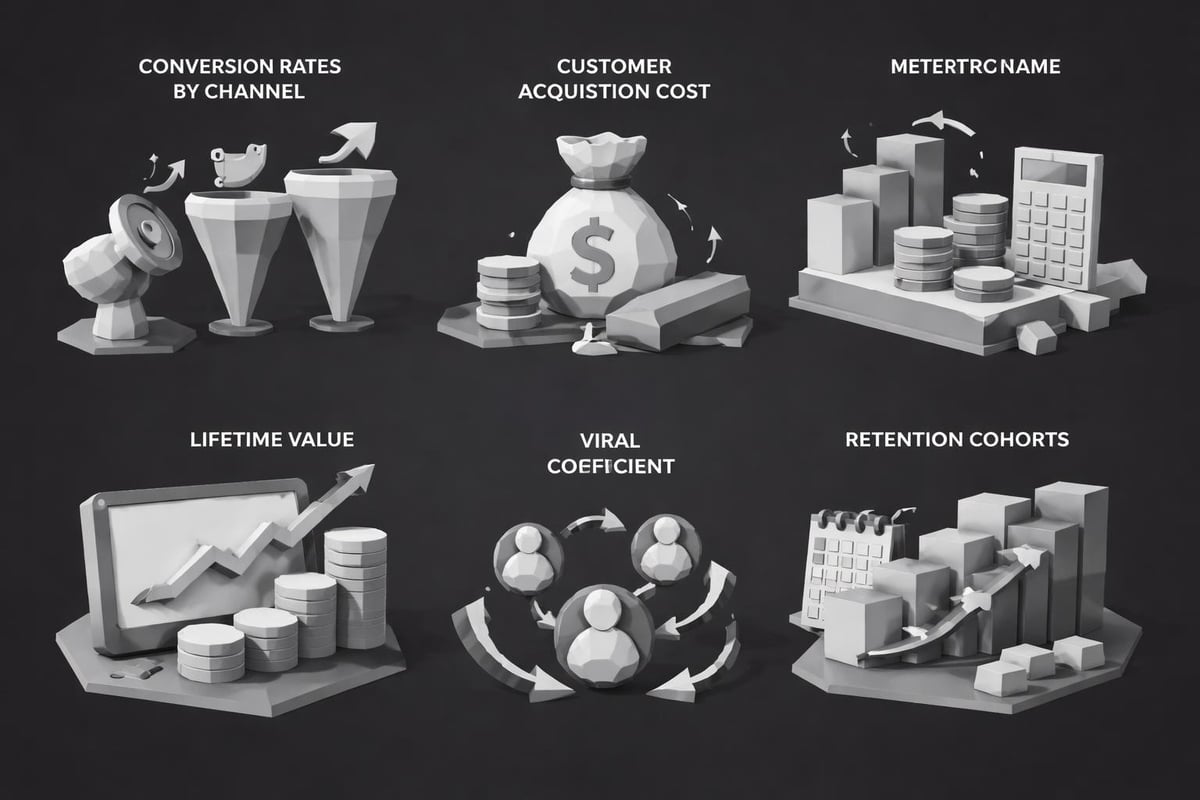
Most solo creators run experiments too slowly or without clear success criteria. You need to complete multiple experiments each month to find what works. Following insights from top growth marketing hackers shows that velocity matters as much as quality in early-stage testing.
Content Marketing as a Growth Hacking Tool
Content isn't just for SEO anymore. When done right, it becomes a complete growth hacking and marketing system that attracts, educates, converts, and retains customers automatically.
The secret is creating content that serves multiple purposes simultaneously:
- Attracts organic search traffic - Answers questions your ideal customers are asking
- Demonstrates expertise - Proves you understand their problems deeply
- Provides immediate value - Solves a real problem right now
- Leads naturally to your product - Shows how your product solves bigger related problems
- Builds email lists - Captures contact info for ongoing nurturing
Creating comprehensive guides that help people learn how to sell digital products positions you as an authority while attracting your exact target audience. This content works 24/7, bringing in customers while you sleep.
Leveraging the Best Digital Marketing Tools
Your tool stack determines how fast you can experiment and how much you can automate. Growth hacking and marketing require the right technology to scale beyond what you can do manually.
Here's what every digital product creator needs:
| Tool Category | Purpose | Why It Matters |
|---|---|---|
| Analytics | Understanding user behavior | You can't optimize what you don't measure |
| Email Marketing | Automated nurturing | Turn visitors into customers over time |
| A/B Testing | Comparing variations | Find what actually converts better |
| SEO Tools | Keyword research and tracking | Organic traffic compounds forever |
| Social Scheduling | Consistent presence | Stay visible without constant manual posting |
The best digital marketing tools aren't necessarily the most expensive. They're the ones you'll actually use consistently. Start with free tiers and upgrade only when you hit limits.
Automation is especially critical when you're running a one-person business. Every manual task you eliminate frees up time for higher-leverage activities like product development or relationship building.
Creating Irresistible Lead Magnets
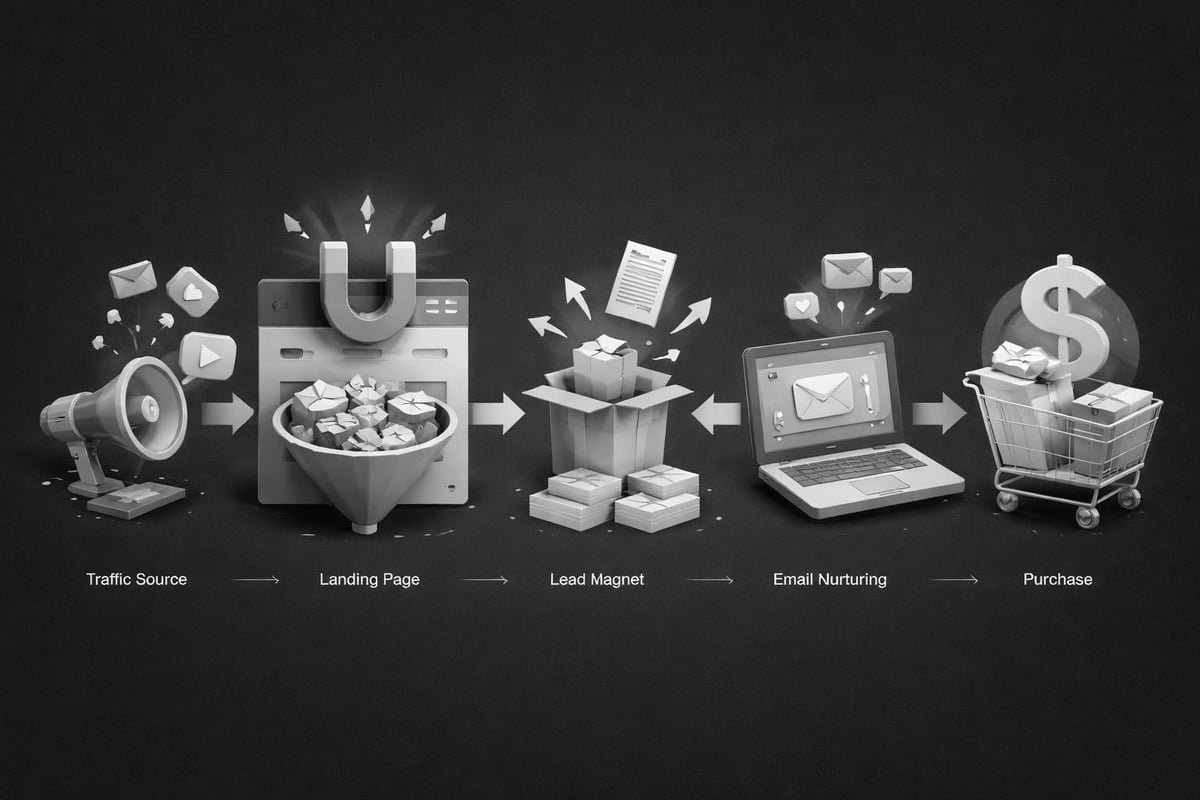
Your lead magnet is often the first transaction someone makes with your business. They trade their email address for something valuable. Make it count. Growth hacking and marketing both depend on building an audience you can communicate with repeatedly.
Bad lead magnets are generic PDFs that could apply to anyone. Great lead magnets solve one specific problem extremely well for your exact target customer. They demonstrate your product's value proposition in miniature.
Lead Magnet Ideas for Digital Product Creators
- Mini versions of paid products - Sample chapters, limited features, trial periods
- Templates and frameworks - Pre-built systems they can customize
- Swipe files - Examples of what great looks like in your niche
- Calculators or tools - Interactive utilities that provide instant value
- Checklists and cheat sheets - Quick reference guides for complex processes
The best lead magnets naturally lead to your paid products. Someone who uses your free Notion template for tracking content will be primed to buy your complete content system. The free version proves value while creating desire for the full solution.
Growth Hacking Your Launch Strategy
Launching a digital product isn't a one-day event. It's a carefully orchestrated campaign that can determine whether your product succeeds or dies in obscurity. Growth hacking and marketing principles turn launches into predictable revenue generators.
Traditional product launches rely on building hype and hoping for the best. Growth-hacked launches use pre-validation, audience building, and strategic timing to guarantee results.
Start building your launch list months before you're ready to sell. Every piece of content should include a way to join your launch notification list. By the time you're ready to sell, you should have hundreds or thousands of people eagerly waiting.
The key stages of a growth-hacked launch:
- Validation phase - Prove people want this before you build it
- Audience building - Grow your list with relevant lead magnets
- Pre-launch content - Educate and excite your audience
- Launch week - Concentrated push with time-limited incentives
- Post-launch optimization - Turn early feedback into improvements
Resources like HubSpot's compilation of growth hacker insights reveal how successful creators orchestrate launches that generate momentum instead of fizzling out.
Optimizing Your Pricing for Maximum Growth
Pricing is both a marketing and product decision. Get it wrong and you'll struggle to acquire customers or leave money on the table. Growth hacking and marketing converge here in powerful ways.
Most digital product creators underprice because they're afraid no one will buy. This creates a vicious cycle: you need more customers to hit revenue goals, so acquisition costs stay high, margins stay low, and you can't afford to invest in growth.
Strategic pricing enables growth:
- Higher prices attract more committed customers who get better results
- Tiered pricing lets customers self-select while maximizing revenue
- Annual plans improve cash flow and reduce churn
- Bundles increase average order value without discounting
Experiment with psychological pricing techniques that influence purchase decisions. The difference between $97 and $100 is psychologically significant even though it's only 3%.
Building Sustainable Growth Systems
One-off growth hacks are fun but unreliable. Sustainable growth comes from systems that compound over time. That's where growth hacking and marketing create lasting business value.
Think of your business as having multiple growth engines that work independently:
- Content engine - Organic traffic that grows monthly
- Email engine - Automated sequences that convert subscribers
- Referral engine - Happy customers bringing new customers
- Partnership engine - Strategic relationships that expand reach
- Product engine - Built-in viral mechanics and natural word-of-mouth
Each engine should have clear metrics, regular optimization, and dedicated time allocation. You might spend Mondays on content, Tuesdays on email, and so on. This prevents the scattered approach that kills momentum.
For creators focused on building a remote business, these systems enable true location independence. You're not trading time for money anymore. You're building assets that generate revenue automatically.
Learning from the Growth Hacking Community
You don't need to figure everything out alone. The growth hacking community actively shares tactics, case studies, and frameworks. Standing on the shoulders of giants lets you skip years of painful experimentation.
Following curated resources helps you stay current without drowning in information. Sites like Growth Rocks and Profoundry's growth hacking collection aggregate insights from practitioners who are actively running experiments.
The best growth hackers share openly because they know execution matters more than ideas. You can know every tactic in the world, but if you don't test and implement, nothing changes. That's why developing an entrepreneurship mindset focused on action and iteration matters so much.
Join communities, follow practitioners, study case studies, but most importantly, run your own experiments. What works for a SaaS company might not work for info products. What works for B2B might fail in B2C. Context matters enormously.
Scaling What Works
Once you find a winning growth channel or tactic, the temptation is to immediately look for the next shiny object. Resist this. Growth hacking and marketing success comes from scaling winners before seeking new opportunities.
If organic content is driving 70% of your qualified leads, double down. Publish more frequently. Hire writers. Build out topic clusters. Go deeper before going wider.
If your referral program converts at 15% while paid ads convert at 2%, put more effort into referrals. Make it easier to share. Increase incentives. Automate the process.
This focused approach lets you master one channel completely before fragmenting your attention. You'll learn nuances that create competitive advantages. Someone who's published 200 blog posts understands SEO and audience building at a level that someone who's published 20 never will.
Growth hacking and marketing give digital product creators superpowers to compete with bigger companies and bigger budgets. By focusing on experimentation, viral mechanics, and systematic optimization, you can build sustainable growth engines that work while you sleep. Ready to turn your knowledge into automated income streams? CreateSell provides the courses, resources, and community support you need to build, launch, and scale your digital product business from scratch.