
Developing an MVP: Your Guide to Building Smart Products

Modest Mitkus
May 21, 2026
You've got this killer product idea bouncing around in your head, and you're ready to dive in headfirst. But here's the thing - building a full-featured product right out of the gate is like trying to build a mansion when you haven't even tested if the land is solid. That's where developing an MVP comes in. It's not about cutting corners or delivering something half-baked. It's about being smart with your resources, testing your assumptions, and actually learning whether people want what you're building before you invest months or years of your life.
What Actually Makes an MVP Different
Let's get real about what we mean when we talk about developing an MVP. A Minimum Viable Product isn't just a stripped-down version of your dream product. It's the smallest thing you can build that still delivers value and lets you learn from real users.
The Core Philosophy Behind MVPs
Think of your MVP as a hypothesis test, not a product launch. You're making educated guesses about what people need, and you're building just enough to validate whether you're right or wrong. The beauty of this approach? You'll fail faster if you're going to fail, and you'll succeed smarter if you're onto something good.
Here's what an MVP should accomplish:
- Solve one specific problem really well
- Get into users' hands quickly
- Generate meaningful feedback
- Require minimal initial investment
- Allow for rapid iteration
The mistake most people make is confusing "minimum" with "barely functional." Your MVP should still be polished in what it does, it just doesn't do everything yet.
Finding Your MVP's Core Value
Before you write a single line of code or design a single screen, you need to nail down exactly what problem you're solving. And I mean exactly. Not "people need better productivity" but "freelance designers need a faster way to organize client feedback on design mockups."
Identifying the One Problem Worth Solving
Start by interviewing potential users. Not your friends who'll be nice to you, but actual strangers who represent your target market. Ask them about their current frustrations, workarounds, and what they'd pay to fix specific problems. You're looking for patterns in the pain points.
Once you've got a clear problem, resist the urge to solve every related issue. Your MVP focuses on the absolute core. Everything else is noise at this stage.
Deciding What Goes In (And What Stays Out)
This is where developing an MVP gets tough. You'll have a million ideas for features, and most of them will seem essential. They're not.
The Feature Prioritization Framework
I like using a simple table to evaluate features:
| Feature | User Value | Development Effort | MVP Priority |
|---|---|---|---|
| User login | Medium | Low | Include |
| Social sharing | Low | Medium | Skip |
| Core function | High | High | Include |
| Email notifications | Medium | Low | Maybe |
| Advanced analytics | Low | High | Skip |
You're looking for high user value combined with reasonable effort. Best practices for MVP development emphasize starting with features that directly support your core value proposition.
Questions to ask about each feature:
- Does this directly solve the main problem?
- Can we launch without it?
- Will its absence prevent users from getting value?
- Is there a simpler version we could build instead?
If a feature doesn't pass these tests, it's not part of your MVP. Write it down for version 2.0 and move on.
Choosing Your Development Approach
Here's where things get practical. How are you actually going to build this thing? You've got options, and the right choice depends on your skills, budget, and timeline.
No-Code and Low-Code Solutions
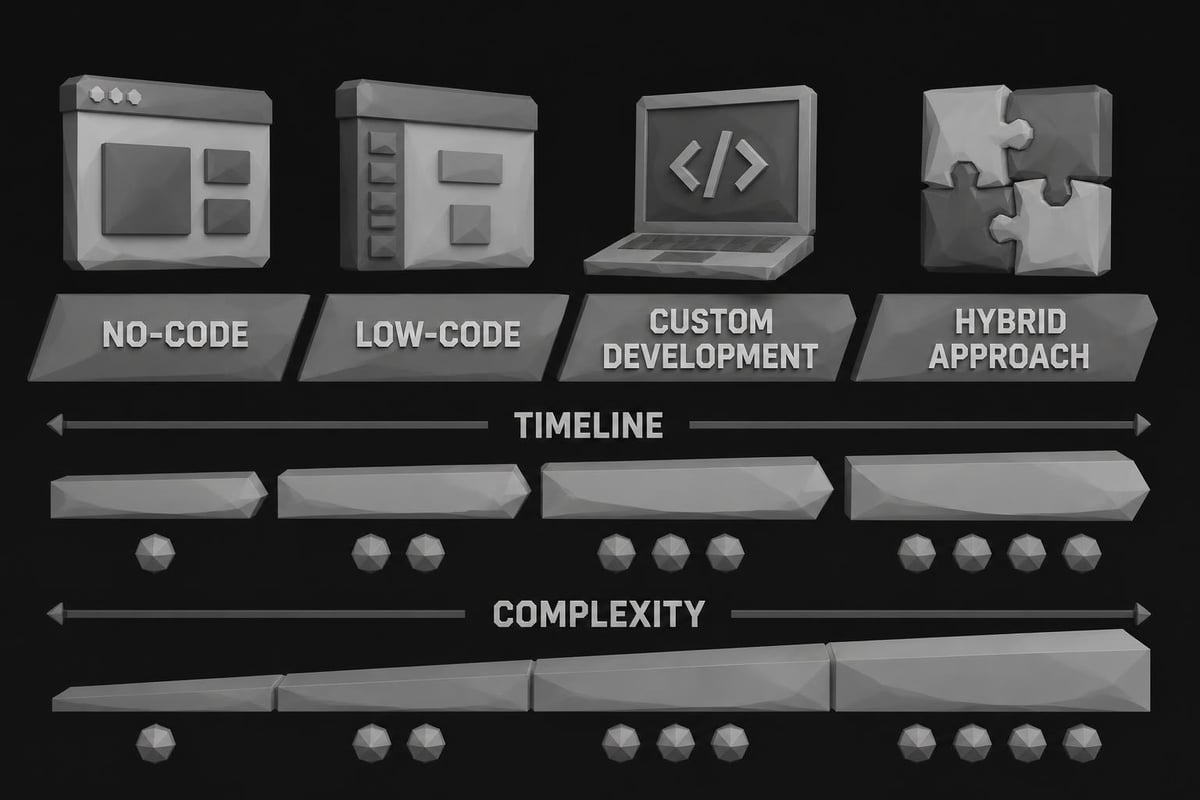
For many digital products, you don't need to be a coding wizard anymore. Tools have evolved to the point where you can build legitimate MVPs using visual builders and pre-built components. This approach lets you validate ideas without burning months learning to code or thousands hiring developers.
The trade-off? You'll have less customization and might hit limitations as you scale. But for an MVP, that's often perfectly fine.
Traditional Development Routes
If you're building something complex or you've got technical chops, coding from scratch gives you maximum control. The key is still keeping scope minimal. Build the simplest version that could possibly work, not the most elegant architecture for future scaling.
When you're developing an MVP through traditional coding, focus on functionality over perfection. That beautiful, scalable database design can wait until you know people actually want your product.
Building Your MVP in Sprints
You can't build forever. Set a deadline and work backward. For digital products, 14 days to 8 weeks is usually the sweet spot for an initial MVP, depending on complexity.
Week-by-Week Breakdown
Weeks 1-2: Foundation and Setup
- Set up your development environment
- Build basic user authentication
- Create the core data structure
Weeks 3-4: Core Functionality
- Implement the main feature
- Basic UI that works
- Essential user flows
Weeks 5-6: Testing and Polish
- Bug fixes
- Basic user testing
- Performance optimization
This structured process for building an MVP keeps you focused and prevents feature creep from derailing your timeline.
Testing With Real Users
Building in isolation is dangerous. You need real feedback from real users, and you need it early. Not from your mom, not from your best friend - from people who represent your actual target market.
Finding Your First Testers
Start with small groups. 5-10 users can give you incredibly valuable insights for an MVP. You can find them through:
- Reddit communities related to your problem space
- Facebook groups for your target audience
- Direct outreach on LinkedIn
- Beta testing platforms
- Your existing network (but be selective)
Watch them use your product. Don't explain anything unless they're completely stuck. Their confusion is data. Their struggles are features you need to fix or add.
Measuring What Matters
Once your MVP is in users' hands, you need to know if it's working. But "working" means different things for different products.
Key Metrics for MVP Validation
| Metric Type | What to Track | Why It Matters |
|---|---|---|
| Engagement | Daily/weekly active users | Are people coming back? |
| Completion | Tasks finished | Does it solve the problem? |
| Retention | 7-day, 30-day return rate | Is the value lasting? |
| Feedback | Survey responses, support tickets | What needs improvement? |
Don't get lost in vanity metrics. You don't need millions of users for an MVP. You need clear evidence that the core value proposition works.
If you're building a SaaS product, for instance, the Build and Launch Your SaaS App in 14 Days course walks through exactly which metrics matter at the MVP stage and how to track them effectively without overcomplicating your analytics setup.
Learning From Successful MVPs
Looking at companies that nailed their MVP strategy can save you from common mistakes. These aren't just inspiring stories - they're blueprints you can adapt.
Real-World Examples That Worked
Dropbox started with a simple video showing their concept before building the full product. They validated demand with essentially zero code. Airbnb began by renting out air mattresses in the founders' apartment. Buffer launched with a landing page and manual posting before automating anything.
Successful MVP examples show a clear pattern: solve one problem, test quickly, iterate based on feedback. The products looked nothing like their final versions, and that's the point.
Common threads in successful MVPs:
- Extremely focused scope
- Quick time to market
- Direct user feedback loops
- Willingness to pivot based on data
- Manual processes before automation
Iterating Based on Feedback
Your first version will have problems. Expect it. Welcome it. The feedback you get is gold if you know how to use it.
The Build-Measure-Learn Loop
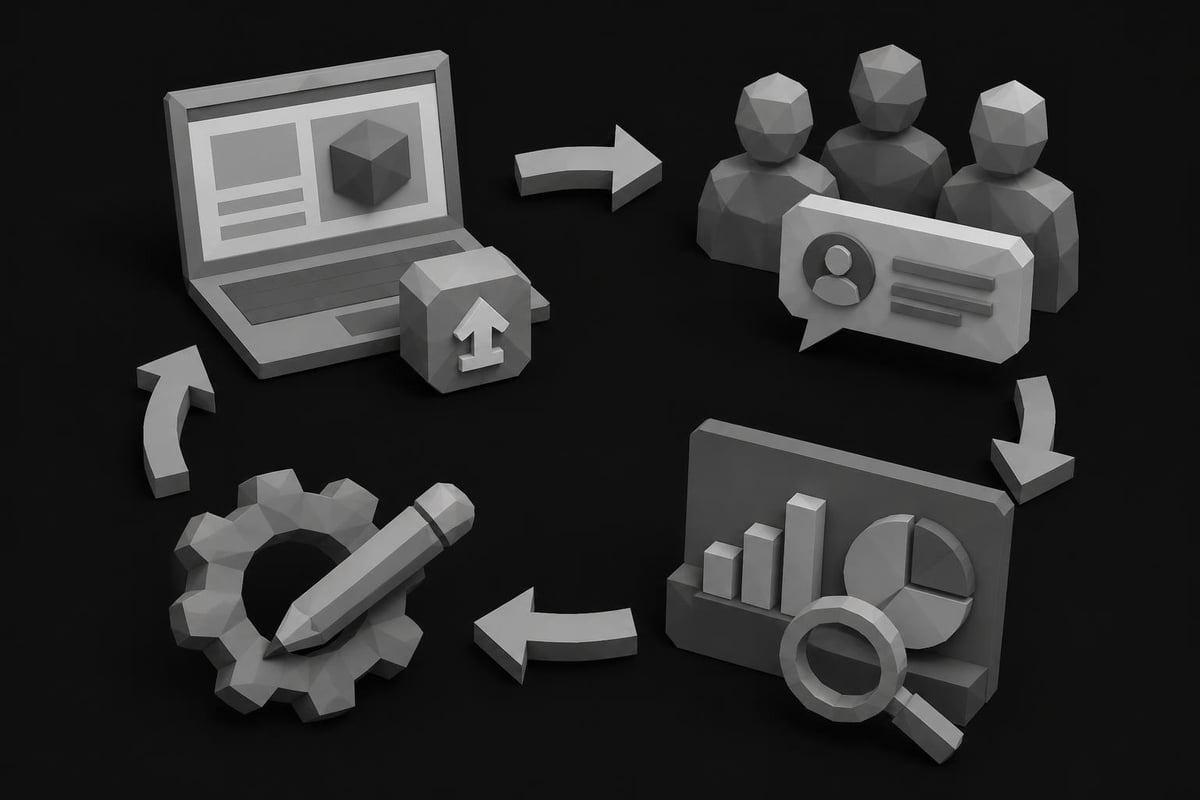
After launching your MVP, you enter a cycle. Build a feature or improvement, measure how it performs, learn from the data, and repeat. This loop should move fast - days or weeks, not months.
Not all feedback is equal. Some users will ask for features that don't align with your vision. Others will point out fundamental flaws you missed. Learning to distinguish between the two takes practice, but here's a shortcut: if multiple unrelated users mention the same issue, it's probably real.
Common MVP Pitfalls to Avoid
Let's talk about where people screw up when developing an MVP, because knowing the traps helps you avoid them.
Feature Creep Is Your Enemy
You'll be tempted to add "just one more thing" before launching. Don't. Every addition delays your learning and increases your risk. MVP app development best practices emphasize shipping with less than you think you need.
Watch out for these red flags:
- Your MVP timeline keeps extending
- You're building features "just in case"
- You haven't talked to users in weeks
- You're perfecting things that don't affect core functionality
- You can't clearly explain your MVP in one sentence
Overengineering the Foundation
Building a system that can handle millions of users when you have zero is wasted effort. Your database doesn't need to be perfectly normalized. Your code doesn't need to be production-ready at scale. It needs to work for the few dozen or few hundred people who'll use your MVP.
Technical Decisions for Your MVP
The tech stack matters less than you think for an MVP, but some choices make your life easier than others.
Picking Technologies That Move Fast
Choose tools you already know or can learn quickly. This isn't the time to master a new programming language or framework. Familiar technologies let you build faster and debug quicker.
For web apps, standard combinations like React with Node.js or Ruby on Rails work great. For mobile apps, consider what mobile app development approaches successful MVPs have used - often cross-platform solutions that let you reach both iOS and Android users.
Database and Infrastructure Choices
Start simple. A basic relational database handles most MVP needs. Cloud hosting services like Heroku or Vercel eliminate infrastructure headaches. You can always migrate to more complex setups later if your product takes off.
Pricing Your MVP
Even if you plan to monetize later, consider charging for your MVP. Paid users give you better feedback than free users because they're more invested. Plus, willingness to pay is the ultimate validation.
Testing Price Points
You don't need to nail pricing immediately. Test different price points with small user groups. A/B test landing pages. See what converts. Following data-driven MVP principles means letting user behavior guide your pricing decisions, not just your gut feeling.
Some MVPs work better with different models:
| Model | Best For | MVP Approach |
|---|---|---|
| One-time purchase | Tools, templates | Simple Stripe checkout |
| Subscription | SaaS, ongoing value | Start with manual invoicing |
| Freemium | Network effects needed | Free MVP, paid features later |
| Usage-based | API, processing services | Manual tracking initially |
Moving Beyond Your MVP
You've launched, you've learned, and now what? Developing an MVP is just the beginning. The real work is figuring out what to build next based on what you've learned.
When to Expand and When to Pivot
If users love your core feature but struggle with everything around it, that's different from users not caring about your solution at all. The first scenario means iterate and improve. The second means pivot or abandon.
Look for strong signals. Are people actively using your product? Are they recommending it to others? Are they asking when certain features will be available? These indicate you're onto something worth developing further.
Planning Your Next Version
Don't just add random features. Prioritize based on what you learned during MVP testing. What did users request most? What friction points did you observe? What would increase retention or engagement?
Developing an MVP taught you about your users and your market. Use that knowledge to build version 2.0 strategically, not impulsively.
Staying Lean as You Grow
The MVP mindset shouldn't end when you move beyond your initial product. Keep testing, keep iterating, keep learning from real users.
Maintaining the Experimental Approach
Even successful products benefit from treating new features as mini-MVPs. Build small, test quickly, learn constantly. This approach has become standard practice because best practices for successful MVPs translate directly into sustainable product development strategies.
Your second version, third version, and tenth version should all incorporate rapid testing and user feedback. The scope gets bigger, but the methodology stays lean.
Developing an MVP is about learning faster and building smarter, not cutting corners. You'll validate your ideas with real users, save months of wasted effort, and increase your chances of building something people actually want. If you're ready to turn your product idea into reality without spending years in development, CreateSell gives you the frameworks and guidance to build and launch digital products quickly. Whether you're creating web apps, mobile apps, or other digital products, you'll learn to ship MVPs that sell while you focus on what matters most - solving real problems for real people.