
Content Marketing for SaaS: Your 2026 Playbook

Modest Mitkus
June 1, 2026
If you're building a SaaS product, you already know the game has changed. Gone are the days when you could throw up a landing page and watch signups roll in. Today's SaaS buyers are savvy, skeptical, and they do their homework before committing to any platform. That's where content marketing for saas becomes your secret weapon. It's not just about cranking out blog posts (though we'll talk plenty about those). It's about creating a content ecosystem that educates, nurtures, and converts your ideal customers while keeping your existing users engaged and happy. Whether you're a solo founder building your first SaaS or a small team trying to scale, the right content strategy can make all the difference between crickets and conversions.
Why Content Marketing for SaaS Is Different
SaaS businesses face unique challenges that make content marketing absolutely essential. You're not selling a one-time purchase. You're asking people to trust you with their workflows, their data, and their recurring budget.
The buying cycle is longer, decision-makers are more cautious, and churn is the monster under every founder's bed. Traditional marketing tactics fall flat because they don't address the real concerns: "Will this actually solve my problem? Is it worth the monthly cost? Can I trust this company?"
The SaaS Customer Journey Needs Content at Every Stage
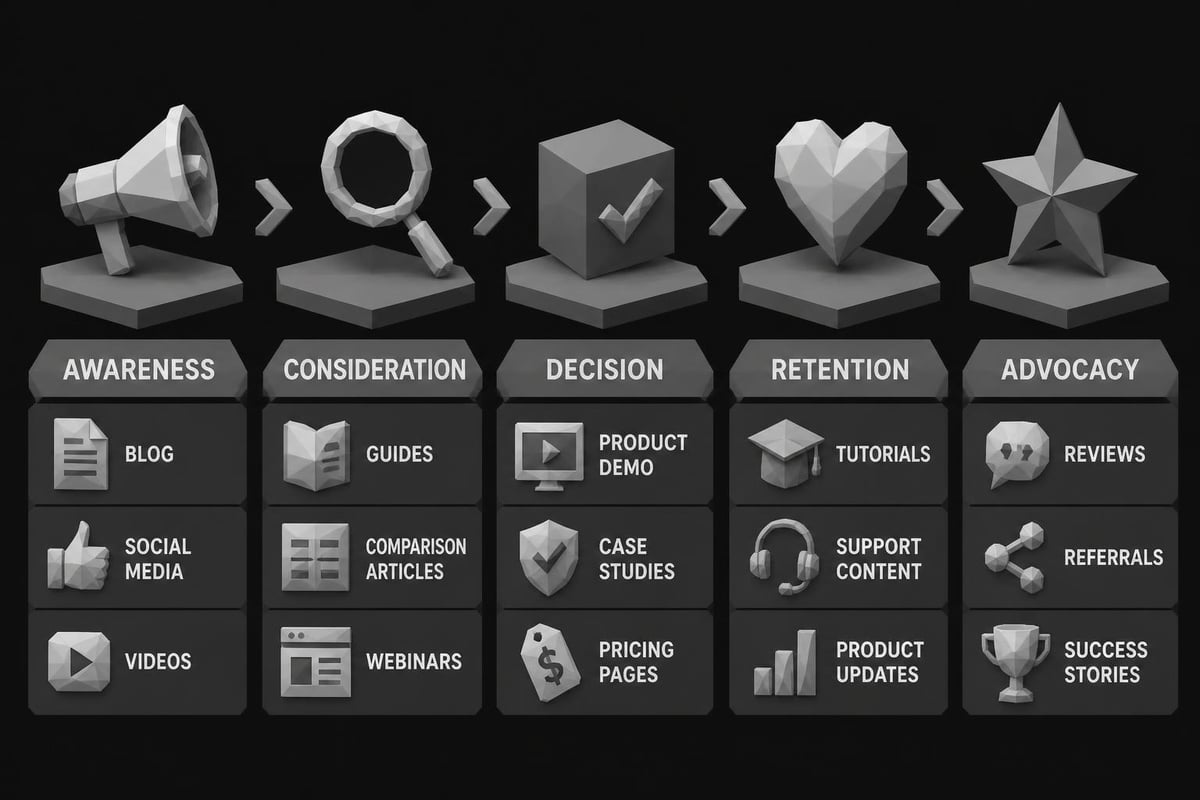
Your potential customers move through distinct phases, and each one demands different content:
- Awareness: They realize they have a problem but don't know solutions exist
- Consideration: They're researching options and comparing features
- Decision: They're ready to choose but need that final push
- Retention: They're users now, and you need to keep them engaged
- Advocacy: Happy customers who'll tell others about you
Here's the thing, most SaaS companies blow their content budget on top-of-funnel stuff and wonder why conversions stay flat. A comprehensive content marketing strategy addresses every single stage with purpose-built content.
Building Your Content Foundation
Before you write a single word, you need to understand who you're talking to. I'm not talking about vague personas like "marketing managers aged 30-45." I mean really understanding their daily frustrations, the language they use, and the questions keeping them up at night.
Start by interviewing your existing customers. If you don't have customers yet, interview people who fit your ideal customer profile. Ask them:
- What problem were they trying to solve when they found you?
- What alternatives did they consider?
- What almost stopped them from signing up?
- What convinced them to pull the trigger?
- What do they wish they'd known earlier?
These conversations are gold. They'll give you content ideas for months and help you speak your customers' language instead of your own.
Map Your Keywords to Intent
Content marketing for saas isn't just about ranking for high-volume keywords. It's about ranking for the right keywords at the right stage of the journey.
| Keyword Type | Example | Stage | Content Type |
|---|---|---|---|
| Problem-aware | "how to automate invoicing" | Awareness | Blog post, guide |
| Solution-aware | "invoicing software comparison" | Consideration | Comparison page |
| Product-aware | "[YourProduct] vs [Competitor]" | Decision | Comparison article |
| Brand-aware | "[YourProduct] tutorial" | Retention | Help docs, videos |
Stop chasing vanity metrics. A keyword with 500 monthly searches that attracts your exact customer is worth way more than one with 50,000 searches that brings tire-kickers.
Creating Content That Actually Converts
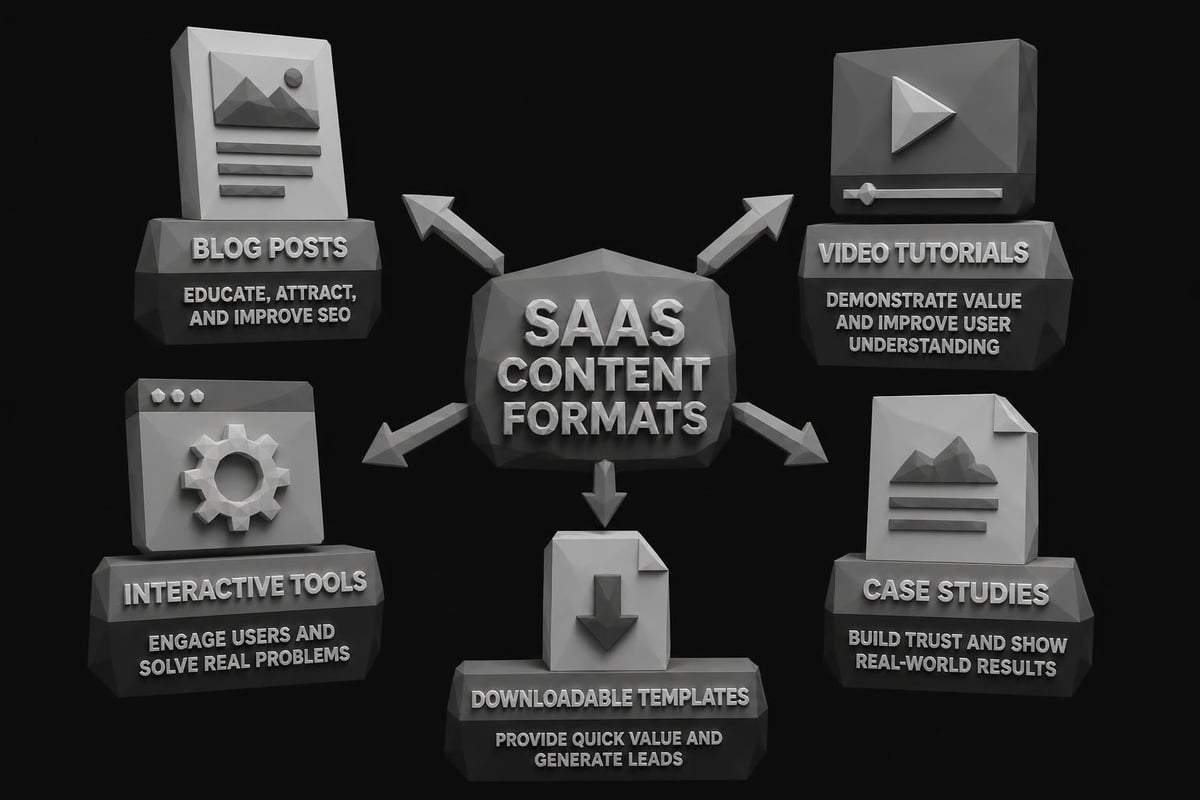
Now we get to the fun part. Writing content that turns readers into paying customers. The key is thinking beyond blog posts and diversifying your content formats.
Blog Posts That Build Trust
Your blog shouldn't be a promotional channel. It should be genuinely helpful. Effective SaaS content marketing focuses on education first, promotion second.
High-converting blog post types:
- How-to guides that solve specific problems your product addresses
- Use case studies showing real results from real customers
- Industry insights that position you as a thought leader
- Comparison posts (but be fair and honest about competitors)
- Process breakdowns that teach your methodology
Here's a pro tip: end every blog post with a relevant next step. Not always a demo request. Sometimes it's downloading a template, trying a calculator, or reading a related guide. Match the CTA to where they are in the journey.
Beyond the Blog
If all you're doing is blogging, you're leaving conversions on the table. Diversify your content formats to reach different learning styles and trust levels.
Video content is huge in 2026. Product demos, feature walkthroughs, customer testimonials, and founder stories all build connection in ways text can't. You don't need fancy equipment. Your phone and decent lighting work fine.
Interactive tools like calculators, assessments, or free versions of your product features give immediate value. They also collect emails and qualify leads better than any form could.
Templates and resources solve immediate problems. Someone who downloads your "SaaS onboarding checklist" is probably building a SaaS and might need your tools.
The SEO Side of SaaS Content
You can write the most brilliant content in the world, but if nobody finds it, does it even matter? SEO for SaaS content isn't optional, it's the distribution channel that keeps giving.
Technical Foundations Matter
Before you publish anything, make sure your technical SEO is solid. Fast page loads, mobile responsiveness, clean site structure, and proper schema markup all impact rankings. Google won't send traffic to a site that frustrates users.
Your SaaS content marketing approach should integrate SEO from the planning stage, not as an afterthought. That means keyword research before writing, strategic internal linking, and optimizing for featured snippets.
Build Topic Clusters, Not Random Posts
Stop publishing random blog posts and start building topic clusters. Pick a core topic relevant to your product, then create a comprehensive pillar page about it. From there, write supporting articles that dive deep into specific subtopics, all linking back to the pillar.
This structure helps Google understand your expertise and makes it easier for readers to find related content. It also keeps people on your site longer, which signals quality to search engines.
Example cluster for a project management SaaS:
- Pillar: "Complete Guide to Project Management for Remote Teams"
- Cluster posts: "Best Communication Tools for Remote Projects," "How to Run Effective Remote Stand-ups," "Time Tracking for Distributed Teams"
Creating Content for Different Funnel Stages
Here's where most SaaS companies mess up. They create tons of top-of-funnel content (because it's easier and gets more traffic) and forget about the bottom of the funnel where money is made.
Top of Funnel: Awareness Content
This content attracts people who don't know you exist yet. They're searching for solutions to problems, not products to buy. Your goal is to be helpful and earn their trust.
What works:
- Ultimate guides on broad topics
- Industry statistics and trends
- Problem-solution articles
- Beginner tutorials
What doesn't: hard selling, gating basic information, keyword stuffing
Middle of Funnel: Consideration Content
Now they know solutions exist and they're evaluating options. This is where strategic SaaS content gets specific about how different approaches work.
Create comparison content, but be honest. If a competitor does something better, acknowledge it while highlighting what you do better. Trust beats manipulation every time.
- Feature comparison pages
- Use case breakdowns
- ROI calculators
- Webinars demonstrating expertise
Bottom of Funnel: Decision Content
They're ready to buy, they just need that final nudge. Remove friction and answer last-minute objections.
- Customer success stories with specific metrics
- Free trial or freemium onboarding
- Product tours and demos
- Pricing transparency and comparison
- Security and compliance documentation
If you're building a SaaS product and want to get from idea to launch fast, programs like Build and Launch Your SaaS App in 14 Days teach you how to create and ship your product quickly without getting bogged down in perfection.
Retention Content: The Forgotten Goldmine
Most content marketing for saas stops at acquisition. That's a massive mistake because reducing churn is way more valuable than increasing signups.
Create content that keeps users engaged:
- Onboarding email sequences teaching core features
- In-app tutorials and tooltips
- Feature announcement blogs and videos
- Advanced use case guides
- Community forums and user-generated content
Your best customers are the ones already paying you. Give them content that makes them more successful with your product, and they'll stick around.
| Content Type | Purpose | Delivery Method | Frequency |
|---|---|---|---|
| Onboarding series | Activate new users | Email + in-app | First 2 weeks |
| Feature tips | Drive adoption | Weekly | |
| Success stories | Inspire usage | Blog + email | Monthly |
| Product updates | Show progress | Email + changelog | When shipped |
Distribution: Getting Eyes on Your Content
Creating great content is half the battle. Getting it in front of the right people is the other half. You need a distribution strategy that's as thoughtful as your creation process.
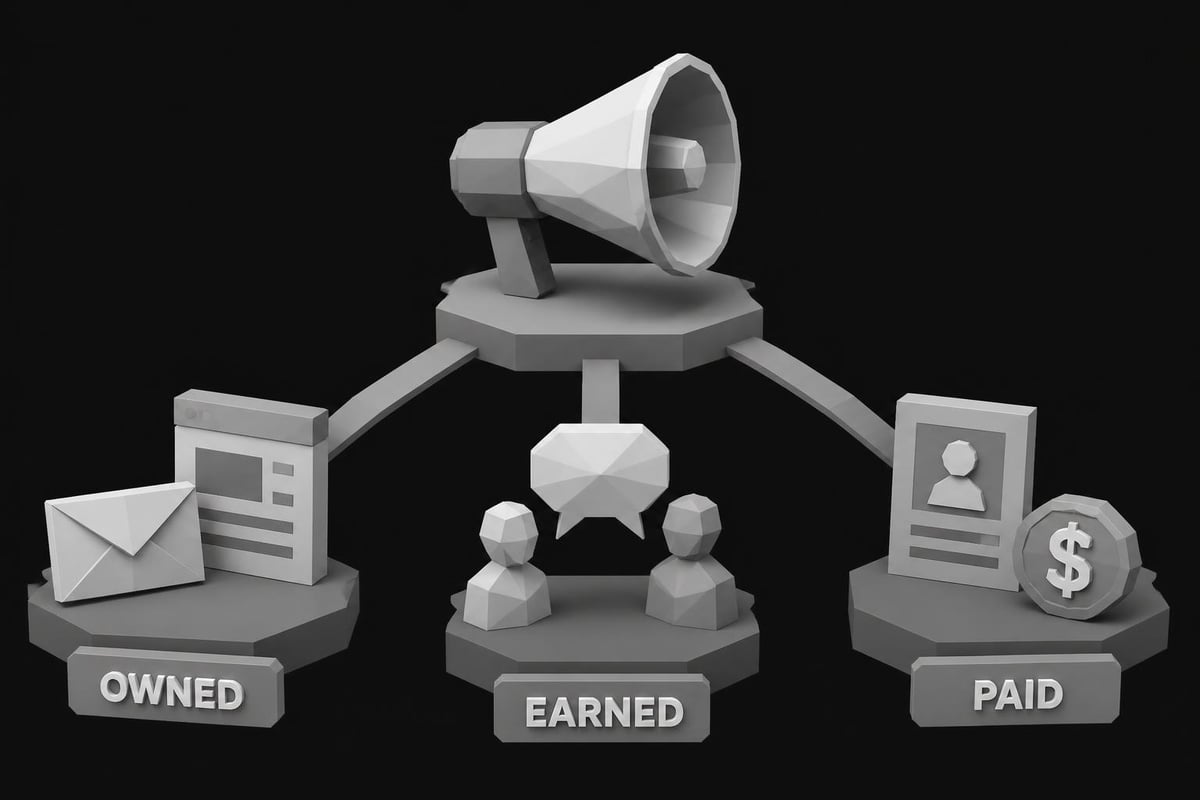
Owned Channels
Start with what you control. Your email list is your most valuable asset. Every piece of content should go to your list with context about why it matters to them.
Your blog is your content hub. Everything should link back here. Social media posts, guest articles, podcast appearances, they all drive to your owned content.
Earned Channels
Guest posting isn't dead, you're just doing it wrong. Stop pitching generic topics to every blog in your industry. Instead, create truly exceptional content for highly relevant publications where your exact customers hang out.
Participate genuinely in communities. Reddit, LinkedIn groups, Slack communities, wherever your people are. Share helpful insights without spamming your links. When you've built credibility, your content gets received differently.
Paid Distribution
Sometimes you need to pay to play. Promoted content on LinkedIn, Reddit ads, or even Google Ads can work if you're promoting genuinely valuable content, not just pushing demos.
The key is matching content to platform. LinkedIn works for B2B thought leadership. Reddit works for solving specific technical problems. Facebook works for... well, maybe not much for SaaS in 2026.
Measuring What Matters
You can't improve what you don't measure, but you also can't obsess over vanity metrics. Traffic is nice, but does it drive signups? Shares feel good, but do they reduce churn?
Key Metrics for Content Marketing Success
Acquisition metrics:
- Organic traffic to conversion rate
- Assisted conversions (content touched before signup)
- Lead quality score
- Time from first visit to trial signup
Engagement metrics:
- Time on page for key articles
- Scroll depth on pillar content
- Return visitor rate
- Pages per session
Retention metrics:
- Feature adoption rate after reading help content
- Support ticket deflection
- Customer satisfaction scores
- Churn rate for content-engaged users
Track these monthly and look for trends over time. Content marketing is a long game. Don't panic if you don't see results in week two.
Building a Sustainable Content Engine
The biggest mistake SaaS founders make is treating content marketing as a sprint. They publish daily for a month, see minimal results, and quit. Building a content marketing strategy that drives real pipeline takes consistency and patience.
Create a Realistic Publishing Schedule
If you're a solo founder:
- Start with one quality blog post per week
- One video or resource per month
- Consistent social sharing of your content
If you have a small team:
- Two blog posts per week
- One major resource (guide, tool, video) monthly
- Active community engagement
- Guest posting quarterly
Quality beats quantity every single time. One exceptional guide that ranks and converts is worth more than fifty mediocre posts nobody reads.
Repurpose Everything
Got a great blog post? Turn it into a Twitter thread, a LinkedIn carousel, a YouTube video, and an email series. Same core content, different formats for different audiences.
Record yourself explaining a concept for a video, then transcribe it for a blog post. Interview a customer for a case study, then pull quotes for social posts and create a webinar around the topic.
Work smarter, not harder.
Staying Ahead in 2026
Content marketing for saas continues evolving. AI writing tools are everywhere, which means generic content is flooding the internet. The opportunity? Create deeply specific, genuinely helpful content that AI can't replicate because it requires real experience and insight.
Trends worth watching:
- Interactive content is becoming table stakes, not nice-to-have
- Community-driven content where users create and share knowledge
- Multimedia integration with video, audio, and text working together
- Personalization that serves different content based on user behavior
- Voice and personality that make your brand memorable
The SaaS companies winning with content in 2026 aren't trying to game algorithms. They're creating educational content that genuinely helps their audience solve problems, with or without buying their product.
Building Your Content Team
You don't need a massive team to win at content marketing, but you do need the right skills. As a founder, you might wear all these hats initially, but eventually you'll want to delegate.
Essential roles for SaaS content:
- Content strategist who plans topics and manages the calendar
- Writer who understands both your product and your audience
- SEO specialist who ensures content gets found
- Designer who makes content visually engaging
- Analyst who tracks performance and optimizes
Start by outsourcing what you're worst at. If you're a great writer but terrible at design, hire a designer. If you can create but hate promotion, bring in someone for distribution.
The key is maintaining quality and consistency. Better to publish less often with excellence than constantly with mediocrity.
Making Content Work for Your SaaS
Look, content marketing for saas isn't a magic bullet. It takes time, effort, and strategic thinking. But it's also one of the few marketing channels that compounds over time instead of disappearing the moment you stop paying for it.
Your blog post from six months ago can still drive signups today. Your comprehensive guide can still rank and convert in 2027. Your customer success stories continue building trust with every new reader.
The SaaS companies that commit to consistent, helpful, strategically planned content build sustainable growth engines. They reduce customer acquisition costs, improve retention, and create valuable assets that keep working long after they're published. Effective SaaS content marketing strategies focus on creating content that serves the customer first and the business second, knowing that approach ultimately serves both.
Start small, stay consistent, and always prioritize helping your audience over promoting your product. The conversions will follow.
Content marketing for SaaS is about playing the long game and building trust through genuinely helpful resources. When you're ready to take your knowledge and turn it into a profitable digital product, CreateSell can help you make that transition. Learn to create and sell web and mobile apps from scratch, turning your ideas into products that generate revenue while you sleep.