
Community Led Growth: Build Your Digital Product Empire

Modest Mitkus
June 8, 2026
If you're building a digital product business in 2026, you've probably noticed something interesting: the most successful creators aren't just selling products anymore. They're building communities that sell for them. That's the magic of community led growth, and it's reshaping how solo entrepreneurs and small teams approach customer acquisition. Instead of pouring money into ads or cold outreach, you're creating a space where your audience becomes your growth engine. Think of it as building a tribe that's so engaged, so invested in what you're creating, that they naturally bring others along for the ride.
What Makes Community Led Growth Different
Community led growth isn't just another marketing buzzword that'll fade away next year. It's fundamentally different from the strategies you might be using right now.
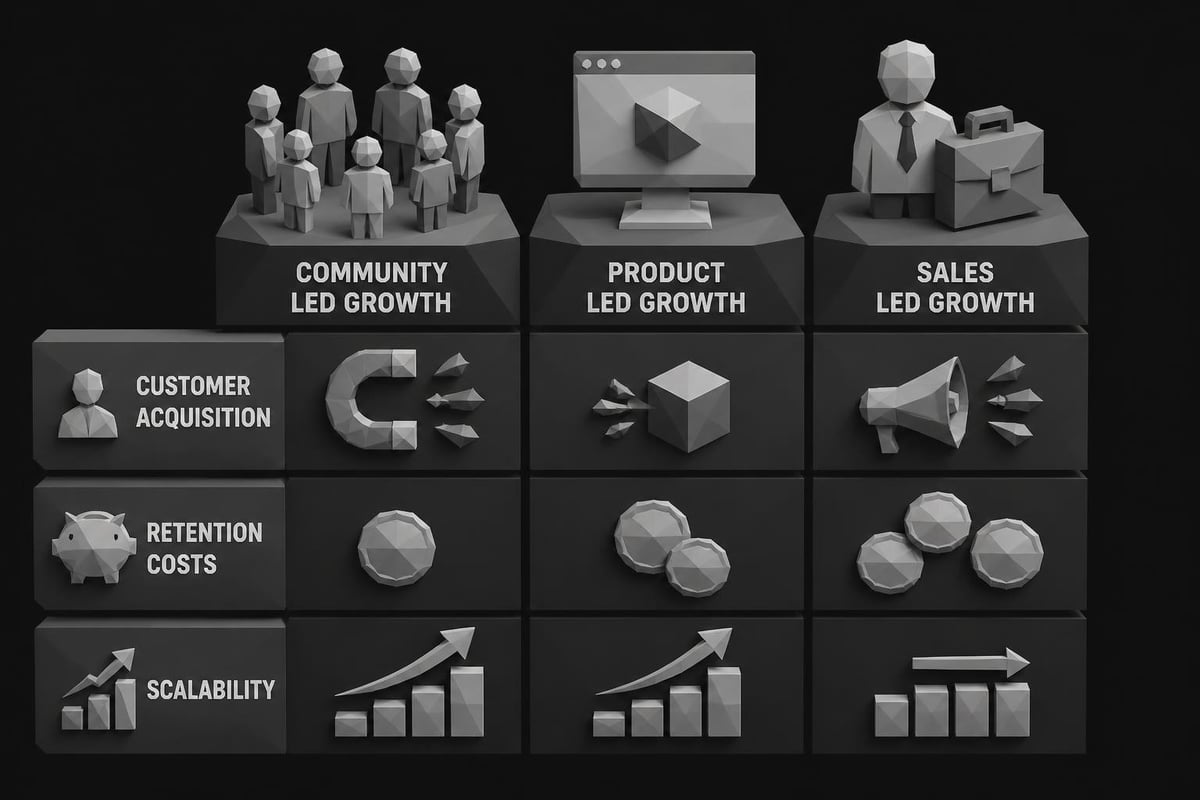
With traditional marketing, you're always chasing the next customer. You run ads, they convert (maybe), and then you start all over again. With product led growth, your product does the talking, offering free trials or freemium models that hook users. But with community led growth, your people become the engine.
Understanding community led growth means recognizing that your engaged members drive acquisition, retention, and expansion. They answer each other's questions. They create content about your products. They give feedback that shapes your roadmap.
Here's what sets it apart:
- Lower acquisition costs: Community members bring their friends and colleagues
- Higher retention: People stay for the connections, not just the product
- Built-in feedback loop: Your community tells you exactly what they need
- Organic advocacy: Happy members promote you without being asked
- Sustainable growth: Communities compound over time instead of requiring constant fuel
The Psychology Behind It
People don't just want products anymore. They want to belong somewhere. When you're selling a course on building mobile apps or a SaaS tool, you're not just delivering features - you're offering transformation. And transformation is scary. It's way less scary when you're surrounded by people on the same journey.
Your community becomes the support system that traditional products can't provide. Someone launches their first app? The community celebrates. Someone hits a roadblock? Twenty people jump in with solutions. That's powerful stuff that no sales funnel can replicate.
Building Your Community Foundation
You can't just throw up a Discord server and call it a community. Well, you can, but it won't drive growth. Let's talk about building something that actually works.
Start With Your Core Purpose
Why does your community exist? "To support my product" isn't good enough. Your community needs a mission that resonates beyond transactions.
For digital product creators, this might be:
- Helping people escape the 9-to-5 through their own apps
- Democratizing tech creation for non-coders
- Building a new generation of indie hackers
- Supporting sustainable, profitable one-person businesses
Notice how none of these are about selling stuff? That's intentional. A successful community led growth strategy puts the community's goals first, knowing that business results follow.
Choose Your Platform Wisely
Where your community lives matters more than you'd think. In 2026, you've got options:
| Platform | Best For | Drawbacks |
|---|---|---|
| Discord | Real-time chat, gaming/tech communities | Can feel overwhelming for newcomers |
| Circle | Courses + community integration | Higher cost for larger communities |
| Slack | Professional communities, B2B | Gets messy at scale |
| Facebook Groups | Broad audiences, older demographics | Limited ownership, algorithm changes |
| Custom Platform | Complete control, branded experience | Requires development resources |
Pick based on where your audience already hangs out. If you're teaching people to build apps, they're probably comfortable with Discord or Slack. If you're serving coaches or consultants, Circle might be your sweet spot.
Set Up the Right Structure
A flat community where everything happens in one channel is chaos. You need structure, but not so much that it feels bureaucratic.
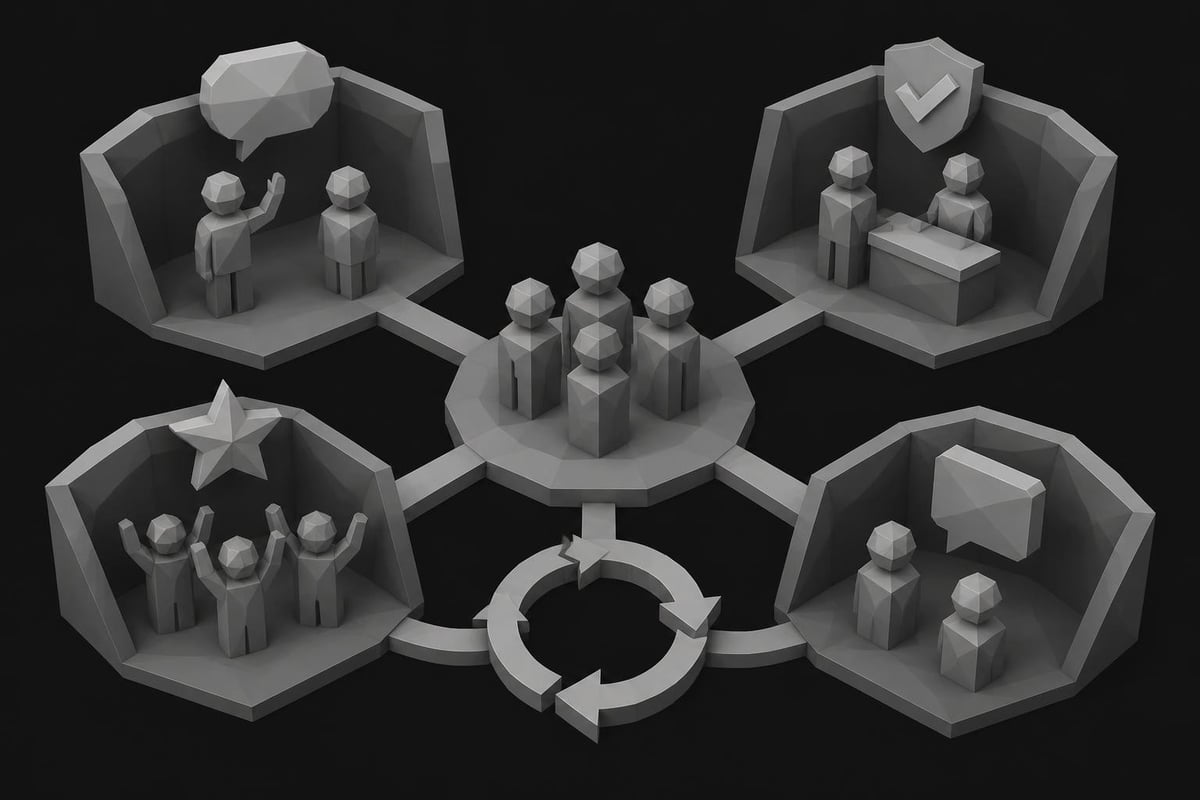
Start with these essential spaces:
- Introductions: Where new members share their story
- Wins: Celebrating launches, milestones, first customers
- Help: Technical questions and troubleshooting
- Feedback: Product ideas and feature requests
- Off-topic: The water cooler for building real relationships
Activating Your Community for Growth
Here's where community led growth gets interesting. You've built the space. Now how do you turn it into an actual growth engine?
Create Your Activation Stack
The community led growth framework includes something called an activation stack - the experiences that transform lurkers into active contributors. Think of it as onboarding, but for community participation.
Week 1: The Welcome
- Automated intro prompt with specific questions
- Founder or community manager personally responds
- Member gets tagged based on their interests/goals
Week 2: The First Win
- Encourage sharing one small project or idea
- Community celebrates and provides feedback
- Member feels validated and seen
Week 3: The Helper
- Nudge them to answer one question
- Recognize their contribution publicly
- They start seeing themselves as part of the fabric
This isn't manipulation. It's creating pathways for people to naturally become invested. And invested members bring others.
Turn Members Into Evangelists
Your best growth hack? Making it easy and rewarding for members to spread the word. When someone in your community launches their first profitable app using what they learned, they're bursting to share that story.
Give them tools:
- Pre-written tweets they can customize
- Referral programs with actual value (not just discounts)
- Member spotlight features in your newsletter
- Co-creation opportunities like guest posts or interviews
CreateSell empowers you to build this kind of self-sustaining ecosystem by teaching you not just how to create digital products, but how to build the community around them that drives continuous growth. When you learn to create and sell web and mobile apps from scratch, you're also learning to build the audience that'll make those products successful.
The Content Flywheel
Community led growth creates a content machine that feeds itself. Here's how it works:
- Member asks a great question in your community
- You or another member provides a detailed answer
- That answer becomes a blog post, video, or tweet
- The content attracts new people who join the community
- Those new people ask more great questions
- Repeat
This is exactly how startups leverage community led growth to scale without massive marketing budgets. Your community is essentially doing your content ideation, creation, and distribution.
Measuring What Matters
If you can't measure it, you can't improve it. But community led growth metrics look different from traditional SaaS dashboards.
The Core Metrics
Forget vanity metrics like total member count. Focus on engagement and impact:
Engagement Depth
- Daily active users (DAU) vs. total members
- Messages per active user
- Response time for questions
- Percentage of members who've posted in the last 30 days
Growth Indicators
- Member-driven referrals
- Net Promoter Score (NPS) specific to community
- Feature requests from community vs. support tickets
- Customer acquisition cost (CAC) for community-sourced leads
Business Impact
- Conversion rate from community member to customer
- Lifetime value (LTV) of community members vs. non-members
- Churn rate comparison
- Support ticket reduction
| Metric | Good Target (2026) | Great Target |
|---|---|---|
| DAU/MAU Ratio | 20-30% | 40%+ |
| Response Time | < 2 hours | < 30 minutes |
| Referral Rate | 10% of members | 25%+ |
| Community CAC | 50% lower than ads | 75% lower |
Qualitative Signals
Numbers don't tell the whole story. Watch for these signals that your community led growth strategy is working:
- Members helping each other without prompting
- Inside jokes and shared language developing
- People sharing personal milestones unrelated to your product
- Community organizing their own events or meetups
- Members defending your brand in public forums
These soft signals often predict growth before the hard metrics move.
Common Pitfalls to Avoid
Let's talk about what kills community led growth, because I've seen these mistakes sink otherwise promising communities.
Over-Moderating
You're not running a dictatorship. If every message needs approval and you're deleting anything slightly off-topic, you'll kill the spontaneity that makes communities thrive. Yes, you need guidelines. No, you don't need to enforce them like a hall monitor.
Set clear rules about respect and spam, then trust your members. The community will often self-police better than you can.
Under-Engaging
The opposite problem is just as bad. If you build a community and then ghost it, hoping it'll run itself, you're dreaming. Especially in the early days, your presence matters.
You don't need to respond to every message, but you should:
- Check in daily, even if just to react to posts
- Host regular events (AMAs, workshops, co-working sessions)
- Recognize top contributors
- Share updates about your products and roadmap
Making It All About Sales
Nothing kills community led growth faster than turning every interaction into a pitch. Building community as a growth strategy means providing value first, always.
The 90/10 rule works well: 90% pure value and community building, 10% promotional. Your launches and offers should feel like natural extensions of helping the community, not interruptions to it.

Ignoring the Quiet Members
The people who never post but read everything? They matter too. Not everyone will be a super-user, and that's okay. Create pathways for different engagement levels.
Some people contribute by:
- Answering questions
- Sharing wins
- Providing feedback
- Simply being present and supportive
All of these count. Don't make people feel bad for lurking.
Scaling Your Community Led Growth
Once you've got momentum, scaling becomes its own challenge. A community that worked great at 50 people can fall apart at 500.
Tier Your Engagement
Create different layers of community involvement:
Public Community
- Free to join
- General discussions and support
- Entry point for new members
- Scaled with automation and peer support
Premium Circle
- Paid membership or course enrollment required
- Deeper access to you and your content
- More focused, higher-quality conversations
- Smaller, more intimate
Inner Circle
- Top contributors and long-time members
- Helps shape product direction
- Gets early access to new features
- Feels ownership of the community's success
This structure lets you maintain community quality while growing, because your most engaged members help steward the larger group.
Empower Community Leaders
You can't do it all yourself. Identify natural leaders who emerge in your community and give them responsibilities:
- Topic moderators who keep specific channels healthy
- Welcome committee members who greet newcomers
- Event organizers who run workshops or study groups
- Content creators who share their journey
Recognize these people publicly and give them perks. They're doing unpaid work that makes your business possible.
Automate the Repetitive Stuff
In 2026, there's no excuse for manual grunt work. Use automation for:
- Welcome sequences for new members
- Recurring event reminders
- Badge/level systems for engagement
- Digest emails of top content
- Analytics and reporting
This frees you up for the high-touch interactions that actually matter - the personal connections that make community led growth work.
Integrating Community With Your Product
The real magic happens when your community and product feed each other. They shouldn't be separate entities.
In-Product Community Hooks
- Link to relevant community discussions from your product
- Show community activity on your dashboard
- Let users share wins directly from the app
- Surface community-created tutorials and templates
Community-Driven Development
- Run feature voting in your community
- Beta test new releases with community members first
- Showcase community-built projects
- Turn community feedback into your roadmap
Community led growth for product-led companies creates a feedback loop that makes your product better while making your community more valuable. When members see their ideas implemented, they're invested in your success.
The Long Game
Community led growth isn't a quick fix. You won't launch a Discord server on Monday and see revenue spike by Friday. This is a long-term strategy that compounds.
The first three months? You might feel like you're shouting into the void. The next three? You'll see green shoots of engagement. By month twelve, you'll have something special. By year two, you'll wonder how you ever built a business without it.
But here's what makes it worth it: traditional marketing stops working the moment you stop paying. Community led growth gets stronger over time. Every new member increases the value for existing members. Every connection made strengthens the network. Every piece of community-generated content attracts more aligned people.
You're not just building a customer base. You're building a movement around digital product creation, around escaping the time-for-money trap, around sustainable one-person businesses. That's powerful enough to sustain growth for years.
The community you build today becomes the foundation for everything you launch tomorrow. Your next course, your next app, your next business idea - you've already got an engaged audience ready to support it. That's the real power of community led growth.
Community led growth transforms how you build and scale a digital product business by making your audience the engine of sustainable growth. If you're ready to stop trading time for money and start building products that sell while you sleep, CreateSell gives you the complete roadmap - from creating your first app to building the community that makes it successful. Learn to turn your knowledge into self-sustaining digital products with expert guidance and proven strategies.