
App Monetization Strategies That Actually Work in 2026

Modest Mitkus
May 18, 2026
You've built an amazing app. You've poured countless hours into development, testing, and polishing every feature. But here's the million-dollar question: how are you actually going to make money from it? Understanding app monetization strategies isn't just about slapping ads on your creation and hoping for the best. It's about finding the right mix of revenue streams that align with your users' needs while building a sustainable business. Whether you're creating a mobile game, productivity tool, or SaaS platform, the monetization approach you choose can make or break your digital product business.
The Freemium Model: Your Gateway to Scale
The freemium approach remains one of the most powerful app monetization strategies in 2026, and for good reason. You're giving users a taste of what your app can do while reserving premium features for paying customers.
Why Freemium Works
Here's the deal: people are naturally hesitant to pay for something they haven't tried. Freemium removes that barrier completely.
- Lower acquisition costs because users can start without commitment
- Viral growth potential as free users share with friends
- Data-driven optimization based on how free users engage
- Natural upgrade path when users hit limitations
The key is finding that sweet spot where your free tier is valuable enough to attract users but limited enough to encourage upgrades. Research shows that product market position significantly impacts freemium pricing strategies, so understanding where your app fits in the competitive landscape matters.

Setting Up Your Freemium Tiers
Think about what features truly matter to your power users. Those are your premium features. Your free tier should solve a real problem but leave room for growth.
| Free Tier | Premium Tier | Enterprise Tier |
|---|---|---|
| Basic features | Advanced analytics | Custom integrations |
| Limited usage | Unlimited usage | Priority support |
| Community support | Email support | Dedicated account manager |
| 1 project | Unlimited projects | Team collaboration |
The conversion rate from free to paid typically hovers around 2-5%, so plan your unit economics accordingly. You'll need a lot of free users to build a sustainable revenue stream.
Subscription Models: Predictable Revenue Streams
Subscriptions have become the backbone of successful app monetization strategies because they create recurring revenue. Instead of one-time purchases, you're building long-term relationships with your customers.
Monthly and annual subscription options give users flexibility while helping you forecast revenue more accurately. The trick is demonstrating ongoing value that justifies the recurring cost.
Pricing Your Subscriptions
Don't just pick random numbers. Your pricing should reflect the value you're delivering and what the market will bear.
Consider these factors:
- Development and maintenance costs
- Customer acquisition cost (CAC)
- Lifetime value (LTV) targets
- Competitive landscape
- Perceived value of your solution
Annual subscriptions typically offer 15-20% discounts compared to monthly rates. This upfront payment helps with cash flow and reduces churn since users have already committed for the year.
Some apps are experimenting with creative approaches like pay-what-you-want pricing and win-back trial cancellations to increase conversions and reduce churn. These tactics might seem counterintuitive, but they can work when executed thoughtfully.
In-App Purchases: Monetizing Engagement
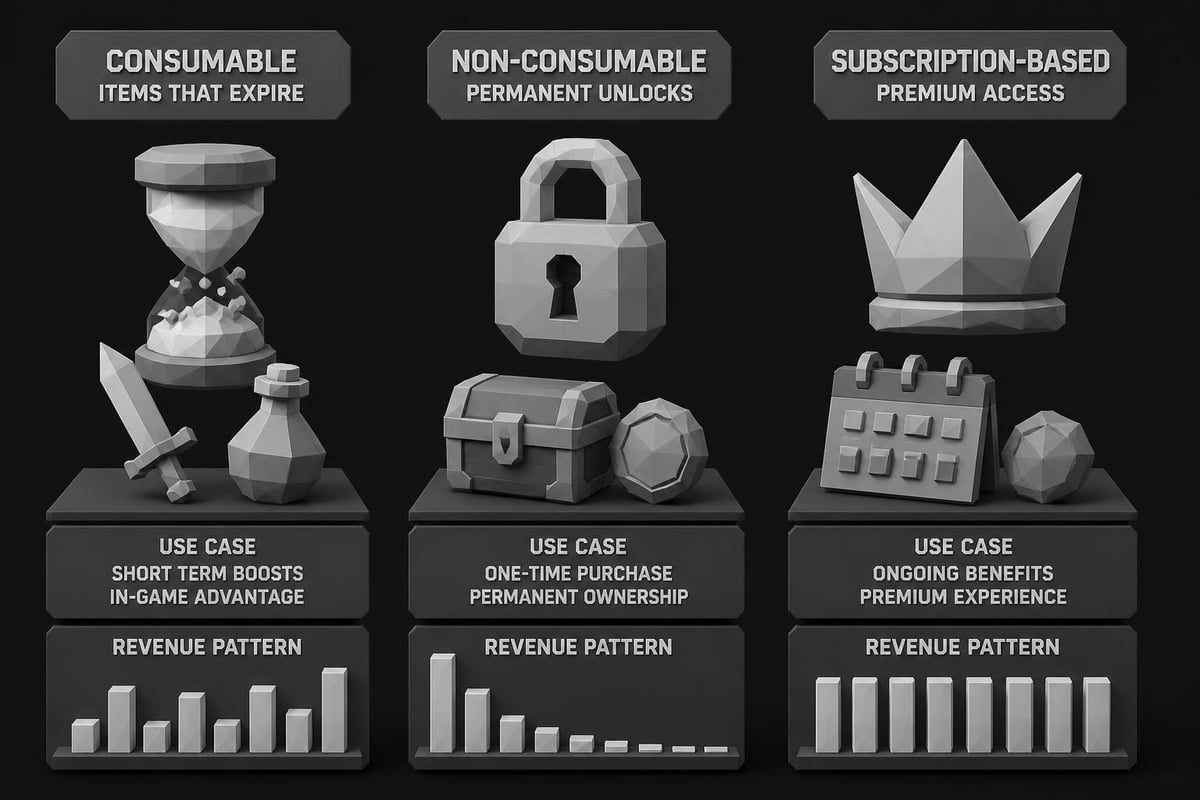
In-app purchases (IAP) work brilliantly for apps where users want to enhance their experience incrementally. Think consumables in games, additional storage in productivity apps, or premium content in education platforms.
The beauty of IAP is that users only pay for what they want, when they want it. There's no subscription fatigue or commitment pressure.
Types of In-App Purchases
Consumables: Items that get used up and need repurchasing (game currency, boosts, extra lives)
Non-consumables: One-time purchases that unlock features permanently (premium filters, advanced tools, ad removal)
Subscriptions: Yes, subscriptions can be sold as IAP too, offering premium content or features on a recurring basis
Research into mobile game monetization reveals how optional microtransactions and wait-time skips influence player behavior and revenue. The ethical consideration here is ensuring you're adding value, not exploiting impatience or creating pay-to-win scenarios.
Advertising: The Free User Revenue Stream
Advertising lets you monetize users who'll never pay a dime. It's one of the most controversial app monetization strategies, but when done right, it can be a significant revenue contributor.
Ad Formats That Don't Suck
Nobody likes intrusive ads that destroy the user experience. Here's how to do it better:
- Banner ads: Persistent but unintrusive, typically at the top or bottom
- Interstitial ads: Full-screen ads at natural transition points
- Rewarded video ads: Users choose to watch for in-app rewards
- Native ads: Blend seamlessly with your app's content
Rewarded video ads are particularly effective because they're user-initiated. Someone who voluntarily watches an ad for extra lives or premium currency isn't annoyed, they're engaged.
The CPM (cost per thousand impressions) varies wildly by geography and category, ranging from $0.50 to $10+. Understanding your audience demographics helps maximize ad revenue.
Hybrid Monetization: The Best of All Worlds
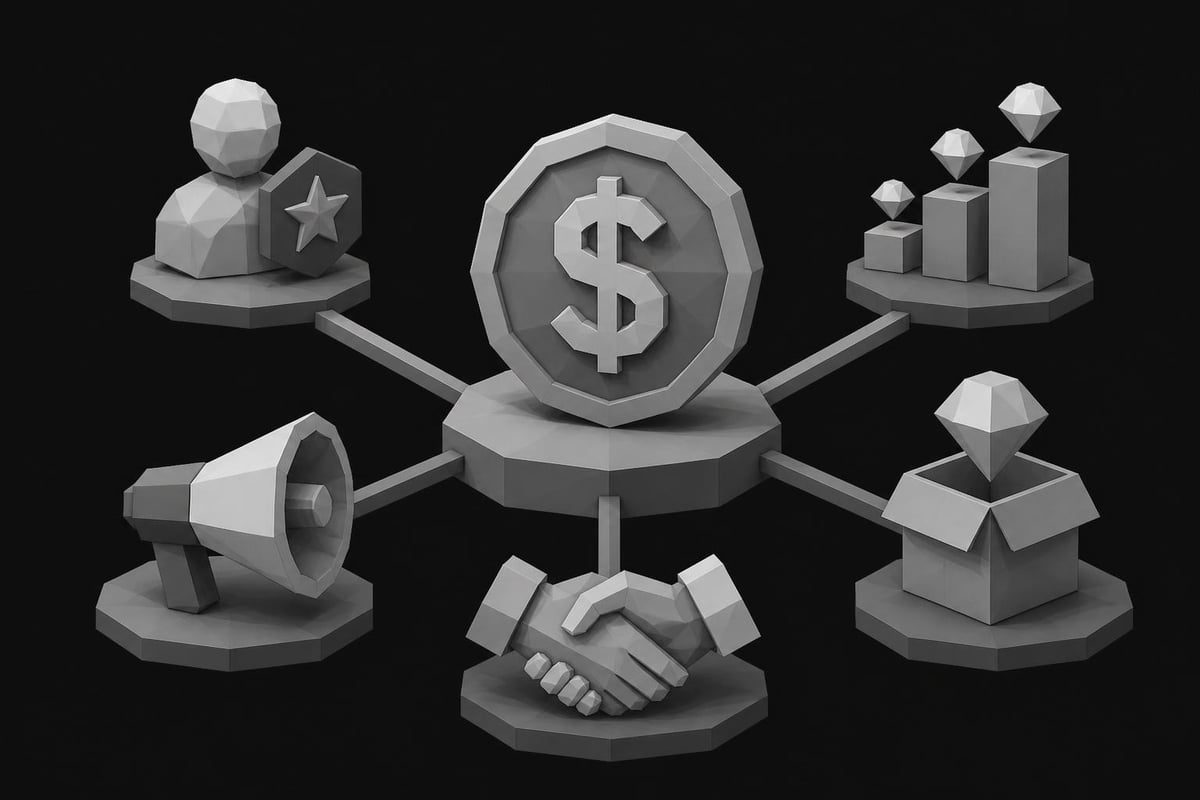
Why choose one approach when you can combine multiple app monetization strategies? The most successful apps in 2026 use hybrid models that diversify revenue streams.
A typical hybrid approach might look like this:
- Freemium base to attract users
- Subscription tiers for power users
- In-app purchases for specific features or content
- Ads for free tier users who don't convert
This strategy recognizes that different user segments have different willingness to pay. Some users will never spend money but will tolerate ads. Others will happily pay monthly for premium features. And some just want to buy that one specific thing they need.
Just be careful not to overcomplicate things. Forbes outlines seven foundational approaches to help you think through which combinations make sense for your specific situation.
Data Products and Licensing: Advanced Strategies
As your app grows and accumulates data, new monetization opportunities emerge. Anonymized, aggregated data can be valuable to researchers, businesses, or partners.
Data monetization opportunities:
- Industry trend reports
- API access to aggregated metrics
- White-label versions for enterprise
- Technology licensing to other developers
Obviously, privacy and ethics are paramount here. You need explicit user consent, bulletproof anonymization, and transparent policies about how data gets used.
White-labeling your app for other businesses or industries can create entirely new revenue streams with minimal additional development. If you've built a solid productivity tool, other companies might pay to customize it for their specific needs.
Sponsorships and Partnerships: Strategic Revenue
Don't overlook sponsorships, especially if you're building a niche app with a clearly defined audience. Brands pay good money to reach engaged, targeted users.
This works particularly well for content-focused apps. If you've built an app that helps chess players improve their game, partnering with resources like Chess Cheat Sheets could provide value to your users while generating sponsorship revenue. The key is ensuring any partnerships genuinely benefit your audience rather than just being cash grabs.
Finding the Right Partners
Look for brands that align with your users' interests and needs. The partnership should feel natural, not forced.
| Partnership Type | Revenue Model | Best For |
|---|---|---|
| Sponsored content | Flat fee or CPM | Content-heavy apps |
| Affiliate commissions | Revenue share | E-commerce integrated apps |
| Co-marketing | Shared user acquisition | Complementary products |
| Feature sponsorships | Monthly retainer | Apps with specific user actions |
The beauty of sponsorships is they don't require changing your core product. You're leveraging the audience you've already built.
Pricing Psychology and Conversion Optimization
How you present pricing matters just as much as the actual numbers. Small changes in presentation can dramatically impact conversion rates.
Psychological pricing tactics:
- Anchoring with a high-priced tier to make mid-tier seem reasonable
- Highlighting "most popular" options to guide decisions
- Annual pricing shown as monthly equivalents ($10/month vs $120/year)
- Free trial periods to reduce perceived risk
Alternative monetization tactics like 3-screen paywalls and reverse trials are gaining traction. A reverse trial gives users full premium access initially, then downgrades to free unless they subscribe, which can dramatically increase conversion by letting users experience the full value first.
Building Your App with Monetization in Mind
The biggest mistake developers make is treating monetization as an afterthought. Your revenue model should influence your product decisions from day one.
If you're planning a subscription model, build features that create ongoing value. For in-app purchases, design natural upgrade points. For ad-supported apps, ensure your UX can accommodate ads without degrading the experience.
If you're just starting your journey into app development, learning to build products with monetization baked in from the start gives you a huge advantage. CreateSell teaches you how to create and sell web and mobile apps from scratch using vibe coding, turning your ideas into products that generate revenue while you sleep. It's about shifting from trading hours for dollars to building digital assets that scale.
Platform-Specific Considerations
Apple's App Store and Google Play have different policies, commission structures, and user behaviors that affect your app monetization strategies.
App Store vs. Google Play differences:
- Apple takes 30% (15% for small businesses under $1M)
- Google Play takes 15% on first $1M, 30% after
- iOS users typically have higher willingness to pay
- Android has larger global market share
- Different review processes affect iteration speed
Alternative app stores and direct distribution channels are emerging, potentially reducing platform dependency. Epic Games' legal battles with Apple have opened conversations about app store monopolies and alternative payment systems.
Web apps deployed as PWAs (Progressive Web Apps) can bypass app store commissions entirely, though you sacrifice some discovery and credibility. For SaaS products, this can be a smart strategy.
Measuring What Matters
You can't optimize what you don't measure. Track these metrics religiously:
- ARPU (Average Revenue Per User): Total revenue divided by total users
- LTV (Lifetime Value): Expected revenue from a user over their entire relationship
- CAC (Customer Acquisition Cost): What you spend to acquire each paying user
- Conversion rate: Percentage of free users who become paying customers
- Churn rate: How many subscribers cancel each month
- Retention cohorts: How long different user groups stick around
The golden rule: LTV should be at least 3x your CAC. If it's not, you've got a problem with either your monetization strategy or your acquisition efficiency.
A/B testing different pricing, trial lengths, and feature sets helps you optimize over time. What works for one app might fail for another, so empirical testing beats assumptions every time.
Ethical Monetization Practices
With great monetization power comes great responsibility. Studies on Korean mobile gaming highlight ethical concerns around aggressive monetization and retention strategies that manipulate user behavior.
Avoid dark patterns like:
- Hiding cancellation options deep in settings
- Auto-renewing trials without clear disclosure
- Creating artificial scarcity or time pressure
- Making free features deliberately frustrating to push upgrades
Building sustainable app monetization strategies means respecting your users. Short-term revenue spikes from manipulative tactics damage long-term trust and brand reputation. The goal is creating value exchange where users feel good about paying because they're getting genuine benefit.
Transparency builds trust. Be clear about what users get at each pricing tier, how their data gets used, and what they're committing to. This might seem like it would reduce conversions, but honest communication actually increases lifetime value by attracting the right users and reducing churn.
Adapting to Market Changes
App monetization strategies that worked in 2020 might not work in 2026, and what works today might be obsolete in 2028. Stay flexible and watch for emerging trends.
Current trends shaping the landscape:
- Privacy regulations limiting tracking and personalization
- Subscription fatigue as users juggle dozens of recurring payments
- Web3 and blockchain creating new monetization possibilities
- AI-powered personalization enabling dynamic pricing
- Platform policies evolving in response to regulatory pressure
The apps that thrive are those that view monetization as an ongoing experiment rather than a set-it-and-forget-it decision. User needs change, markets mature, and competitive dynamics shift. Your revenue model should evolve with them.
Choosing the right app monetization strategies isn't about following a template but understanding your users, your market, and your unique value proposition. Whether you go freemium, subscription, hybrid, or something entirely different, the key is aligning your revenue model with the value you deliver. If you're ready to transform your app idea into a revenue-generating digital product, CreateSell provides the courses and resources you need to build, launch, and monetize apps that work for you around the clock. Stop trading time for money and start building digital assets that scale.