
App Monetization: Turn Your Digital Products Into Profit

Modest Mitkus
June 12, 2026
Building an app is just the beginning of your digital product journey. The real challenge? Figuring out how to actually make money from it. App monetization is the process of generating revenue from your mobile or web application, and it's something every creator needs to nail down before launch. Whether you're building a SaaS tool, a productivity app, or a niche mobile solution, your monetization strategy can make or break your business. The good news is that in 2026, there are more proven ways than ever to turn your app into a profitable digital product that generates income while you sleep.
Understanding the App Monetization Landscape
App monetization has evolved significantly over the past few years. What worked in 2020 might not cut it today, and that's because user expectations have changed dramatically. People are willing to pay for quality apps, but they're also more selective about where their money goes.
The foundation of successful app monetization starts with understanding your audience. Are they price-sensitive students or busy professionals with disposable income? Do they prefer one-time purchases or ongoing subscriptions? These questions matter because your monetization model needs to align with how your users think about value.

The Main Revenue Models
Let's break down the core app monetization strategies you can implement:
- Freemium models offer basic features for free with premium upgrades
- Subscription-based pricing charges users monthly or annually for access
- One-time purchases require a single upfront payment
- In-app purchases let users buy additional features, content, or currency
- Advertising revenue displays ads to free users
- Sponsorships and partnerships integrate brand collaborations
- Affiliate marketing earns commissions from recommended products
Each approach has its place, and many successful apps actually combine multiple strategies. The key is finding the right mix that doesn't alienate your users while maximizing revenue potential.
Subscription Models That Actually Work
Subscriptions have become the gold standard for app monetization in 2026. They provide predictable recurring revenue, which is exactly what you need when building a sustainable digital product business. But here's the thing: not all subscription models are created equal.
The monthly subscription remains popular, but annual plans are where the real value lies. When you offer a significant discount for annual commitments (typically 20-30% off), you're not just locking in revenue-you're increasing customer lifetime value and reducing churn.
| Subscription Type | Best For | Typical Pricing | Conversion Rate |
|---|---|---|---|
| Monthly | New users testing value | $9-$49/month | 2-5% |
| Annual | Committed users | $99-$499/year | 15-25% of monthly |
| Lifetime | Early adopters | $199-$999 once | 1-3% |
According to research on app monetization strategies, the most successful apps often use tiered subscription models. This means offering multiple price points with increasing features, which captures both budget-conscious users and power users willing to pay premium prices.
Creating Value-Based Tiers
Your subscription tiers should be based on actual user needs, not arbitrary feature gates. Think about the problems your app solves and how different user segments experience those problems. A productivity app might have a "Solo" tier for individuals and a "Team" tier for businesses. The pricing difference reflects the value delivered, not just the number of features unlocked.
One clever approach gaining traction is the "reverse trial" model. Instead of limiting features during a trial period, you give users full access upfront and then ask them to subscribe before the trial ends. This builds trust and lets users experience the complete value proposition.
Freemium Done Right
Freemium is probably the most misunderstood app monetization strategy out there. Done poorly, it's just giving away your product for free. Done right, it's a powerful conversion machine that turns curious users into paying customers.
The magic of freemium lies in the balance. Your free tier needs to be genuinely useful-useful enough that people recommend it to others and stick around. But it also needs to have clear limitations that make upgrading feel like a natural next step, not a frustrating wall.
Successful freemium boundaries:
- Usage limits (number of projects, exports per month, storage space)
- Feature restrictions (advanced tools, integrations, collaboration)
- Support levels (community vs. priority support)
- Branding (remove watermarks or "powered by" badges)
The apps that nail freemium understand that the free tier is marketing, not charity. Every free user is a potential paid customer, a word-of-mouth advocate, or both. If you're building a mobile app, the Build and Launch Your Mobile App in 14 Days course can help you structure your freemium offering from day one, ensuring you're not leaving money on the table while still growing your user base organically.
In-App Purchases and Micro-Transactions
In-app purchases represent a massive opportunity for app monetization, especially in certain categories. Gaming apps have perfected this model, but it works for productivity apps, creative tools, and educational platforms too.
The key difference between in-app purchases and subscriptions is the transaction frequency and value perception. In-app purchases are typically smaller, one-time transactions that unlock specific features, content, or consumables. Think of buying additional templates in a design app or unlocking a premium course module.
Types of In-App Purchases
- Consumables: Items that get used up (credits, currency, boosts)
- Non-consumables: Permanent unlocks (features, filters, tools)
- Auto-renewable subscriptions: The hybrid approach we discussed earlier
- Non-renewing subscriptions: Time-limited access that requires manual renewal
Research from App Masters shows that apps using 3-screen paywalls convert significantly better than single-screen options. The psychology behind this is simple: you're building value across multiple touchpoints before asking for money.

Advertising Revenue Without Annoying Users
Let's be honest: nobody likes ads. But advertising remains a viable app monetization strategy when done thoughtfully. The large-scale analysis of in-app advertising reveals that the biggest mistake developers make is prioritizing ad revenue over user experience.
The balance you're looking for is simple: ads should fund the free experience without destroying it. Banner ads at the bottom of a screen? Usually tolerable. Full-screen interstitials every 30 seconds? That's how you tank your retention rate.
Ad placement best practices:
- Native ads that blend with your content
- Rewarded video ads that give users something in return
- Banner ads in non-intrusive locations
- Interstitials only at natural break points (level completion, task finish)
Many successful apps offer an ad-free experience as a premium feature. This creates a built-in conversion path: free users tolerate ads, users who hate ads pay to remove them. It's a win-win that addresses different user preferences.
Hybrid Monetization Strategies
The most successful apps in 2026 don't rely on a single revenue stream. They layer multiple app monetization strategies to maximize revenue while serving different user segments. This approach, sometimes called "hybrid monetization," is becoming the industry standard.
Consider a productivity app that combines:
- Freemium base tier (attracts users)
- In-app purchases for templates (low-commitment monetization)
- Monthly subscription for power features (recurring revenue)
- Annual enterprise plans (high-value customers)
Each layer captures revenue from users at different stages of their journey. A new user might start free, buy a template pack after a week, and eventually upgrade to a subscription when they're hooked on the value.
| Strategy Combination | User Acquisition | Revenue Potential | Complexity |
|---|---|---|---|
| Freemium + Ads | Very High | Low-Medium | Low |
| Freemium + Subscription | High | Medium-High | Medium |
| Free Trial + Subscription | Medium | High | Low |
| Freemium + IAP + Subscription | High | Very High | High |
According to insights from proven mobile app monetization strategies, apps using hybrid models typically see 40-60% higher lifetime value per user compared to single-strategy apps.
Pricing Psychology and Conversion Optimization
App monetization isn't just about choosing a model-it's about implementing it in a way that converts. Pricing psychology plays a huge role in whether users pull out their wallets or bounce from your paywall.
Price anchoring is your friend. When you show three tiers, make the middle one your target. The expensive tier makes the middle seem reasonable, while the cheap tier exists mainly to make the middle tier look feature-rich. Most users will choose the middle option.
Another powerful tactic is the pay-what-you-want model for specific campaigns. Research on innovative monetization tactics shows this can work surprisingly well for new apps building initial traction. Users appreciate the trust, and many pay more than your minimum price.
Trial Length Matters
Seven-day trials convert differently than 30-day trials. Shorter trials create urgency but may not give users enough time to experience value. Longer trials let users fully integrate your app into their workflow but delay revenue. The sweet spot for most apps? 14 days. It's enough time to build a habit without feeling endless.
Platform-Specific Considerations
Your app monetization strategy needs to account for platform differences. iOS users typically have higher purchasing power and willingness to pay compared to Android users. This doesn't mean you should ignore Android-it means your pricing and strategy might need platform-specific adjustments.
Apple's App Store and Google Play Store each have their own guidelines, fee structures, and best practices. Both take a 15-30% cut of revenue (depending on your annual earnings), which you need to factor into your pricing. If you're selling apps globally, services like gosimless.app demonstrate how digital products can serve international audiences effectively, something to consider when planning your own app's reach.
Platform considerations:
- iOS users convert 2-3x better on average
- Android has larger market share globally
- In-app purchase flows differ between platforms
- Subscription management varies by platform
- Regional pricing can significantly impact conversion
Building Trust Through Transparency
One often overlooked aspect of app monetization is transparency. Users in 2026 are savvy-they've been burned by misleading free trials and hidden fees. Being upfront about your pricing builds trust and actually improves conversion rates.
Show your pricing publicly. Don't hide it behind a "contact us" button unless you're selling enterprise solutions. Make it clear what users get at each tier. Explain why you charge what you charge, especially if you're positioning as a premium option.
The dynamics of app stores show that apps with clear, honest monetization strategies maintain better ratings and lower churn rates. Users don't mind paying when they understand the value exchange.
Avoiding Common Monetization Mistakes
Let's talk about what doesn't work. The graveyard of failed apps is full of creators who got app monetization wrong. Here are the mistakes you need to avoid:
Pricing too low: Charging $0.99 for your app sounds accessible, but it signals low value and makes it nearly impossible to build a sustainable business. Unless you're aiming for millions of downloads, price for value, not volume.
Changing models mid-stream: If you launch free and suddenly add a paywall, you'll face user backlash. Plan your monetization from day one and be consistent.
Over-monetizing: Ads everywhere, multiple paywalls, and constant upgrade prompts create a terrible experience. Pick your moments carefully.
Ignoring retention: Acquiring users is expensive. If your monetization strategy doesn't account for keeping users engaged long-term, you're pouring money into a leaky bucket.
Research on incentivized install campaigns reveals that focusing solely on acquisition metrics without retention planning leads to unsustainable growth that collapses once marketing spend decreases.
Measuring What Matters
You can't improve what you don't measure. App monetization requires constant monitoring of key metrics that tell you whether your strategy is working.
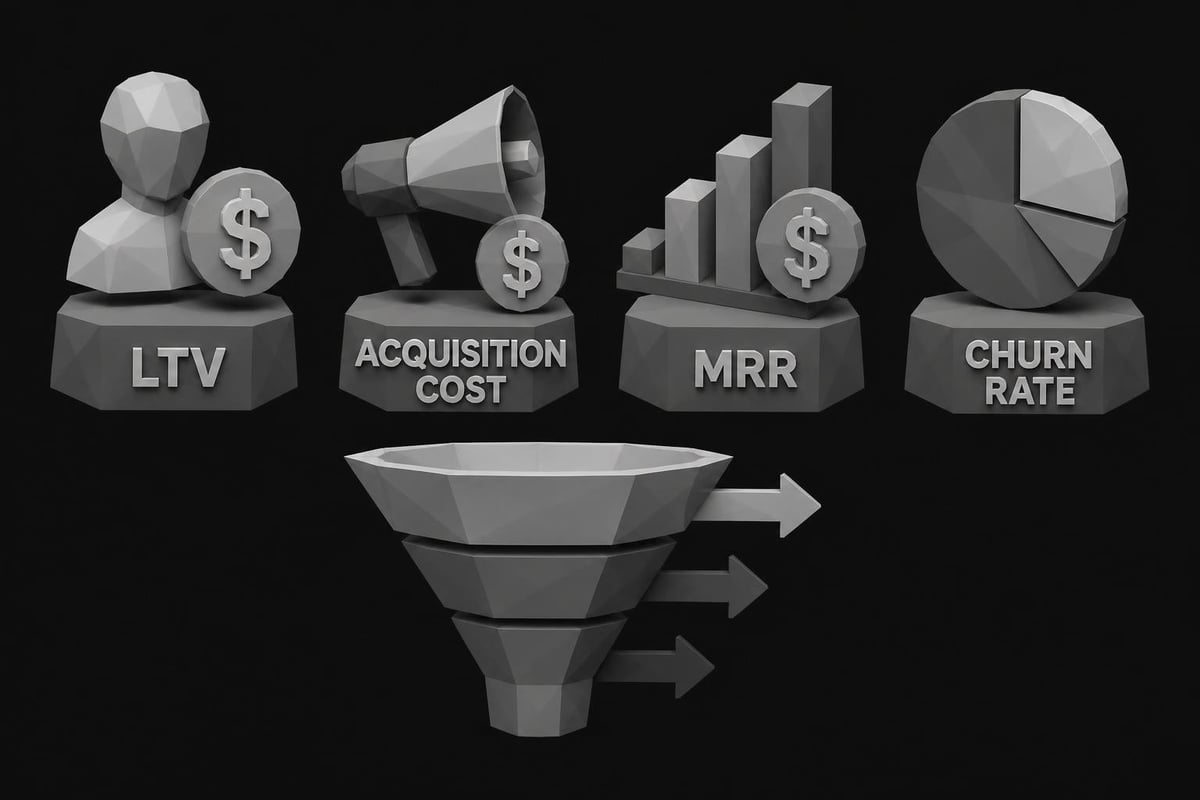
Essential metrics to track:
- Customer Acquisition Cost (CAC): How much you spend to get a paying user
- Lifetime Value (LTV): Total revenue from an average user
- LTV/CAC Ratio: Should be at least 3:1 for healthy growth
- Conversion Rate: Percentage of users who become paying customers
- Churn Rate: Percentage of subscribers who cancel
- Average Revenue Per User (ARPU): Total revenue divided by total users
When your LTV is significantly higher than your CAC, you've got a monetization model worth scaling. When they're close or inverted, something needs to change. This might mean adjusting pricing, improving onboarding, or rethinking your entire approach.
Future-Proofing Your Revenue Strategy
App monetization continues to evolve, and what works today might need adjustment tomorrow. The apps that thrive are those built with flexibility in mind. Design your systems to support multiple monetization models, even if you're not using them all immediately.
Stay informed about platform changes-both Apple and Google regularly update their policies around subscriptions, in-app purchases, and advertising. For example, similar to how platforms like Rentably adapt their property management software to serve specific markets, your app should be positioned to pivot as market conditions change.
Watch emerging trends like Web3 integration and blockchain-based monetization. While still experimental, events like the TEAMZ Summit showcase how technology evolution creates new monetization opportunities. You don't need to jump on every trend, but staying aware prevents you from being caught off-guard.
The nine app monetization strategies for 2026 highlight that sustainable growth comes from balancing user acquisition with revenue optimization. This means testing, iterating, and being willing to adjust based on real data, not assumptions.
Testing and Iteration
Your first monetization strategy won't be perfect. That's fine. What matters is building a system for testing and improving over time. A/B test your pricing, try different trial lengths, experiment with tier structures. Small changes can have massive impact.
Run experiments on cohorts of new users rather than changing things for everyone at once. This gives you clean data and prevents disruption for existing customers. When you find something that works, scale it gradually while monitoring the impact on retention and satisfaction.
Remember that app monetization is not set-it-and-forget-it. The most successful digital product creators treat pricing as a living part of their product that deserves regular attention and optimization.
App monetization doesn't have to be complicated, but it does need to be strategic. The right approach balances user value with business sustainability, creating a foundation for long-term growth. If you're ready to turn your app ideas into profitable digital products, CreateSell provides the courses and guidance you need to build, launch, and monetize apps that generate income on autopilot. Stop selling your time and start building products that work for you.